Close Menu
TechCentralTechCentral

    Subscribe to the newsletter

    Get the best South African technology news and analysis delivered to your e-mail inbox every morning.

    Facebook X (Twitter) YouTube LinkedIn
    WhatsApp Facebook X (Twitter) LinkedIn YouTube
    TechCentralTechCentral
    • News
      Nedbank hires MTN's former tech chief as group CIO - Nikos Angelopoulos

      Nedbank hires MTN’s former tech chief as group CIO

      31 July 2026
      Eskom's diesel bill falls 86% as breakdowns hit eight-year low

      Eskom’s diesel bill falls 86% as breakdowns hit eight-year low

      31 July 2026
      Ramaphosa signs off on taking the grid away from Eskom

      Ramaphosa signs off on taking the grid away from Eskom

      31 July 2026
      Microsoft just had the biggest day in stock market history

      Microsoft just had the biggest day in stock market history

      31 July 2026
      MTN Nigeria's growth engine stalled in second quarter - Karl Toriola

      MTN Nigeria’s growth engine stalled in second quarter

      31 July 2026
    • World
      Meta AI will now tell parents if their teen is in crisis

      Meta AI will now tell parents if their teen is in crisis

      17 July 2026
      IBM shares crash 25% as AI upends software spending - Arvind Krishna

      IBM shares crash 25% as AI upends software spending

      15 July 2026
      Jony Ive's first OpenAI device: an AI smart speaker - Jony Ive and Sam Altman

      Jony Ive’s first OpenAI device: an AI smart speaker

      15 July 2026
      Stripe, Advent in talks to buy PayPal for $53-billion

      Stripe, Advent in talks to buy PayPal for $53-billion

      15 July 2026
      Memory crisis sends smartphone market into steep decline

      Memory crisis sends smartphone market into steep decline

      13 July 2026
    • In-depth
      The plan to stop AI from breaking the world - Google DeepMind CEO Demis Hassabis. Image: John Sears

      The plan to stop AI from breaking the world

      16 July 2026
      The internet has a Strait of Hormuz problem

      The internet has a Strait of Hormuz problem

      15 July 2026
      AI boom sparks rally, frenzy and fear

      AI boom sparks rally, frenzy and fear

      11 June 2026
      Every plug-in hybrid on sale in South Africa, ranked by price - Lamborghini Temerario

      Every plug-in hybrid on sale in South Africa, ranked by price

      7 June 2026
      What Wi-Fi 8 will mean for wireless networks

      What Wi-Fi 8 will mean for wireless networks

      1 June 2026
    • TCS
      TCS+ | Why South African workers must become supervisors of digital labour - Accelera Digital Group Cliff de Wit

      TCS+ | Why South African workers must become supervisors of digital labour

      31 July 2026
      TCS | Rapid deployment rules can't work without municipalities: ACT - Nomvuyiso Batyi

      TCS | Icasa’s rules skip the real bottleneck: ACT

      30 July 2026
      TCS+ | iStore Business on why Apple makes sense for SMEs - Sudesh Pillay and Tamia Nontsikelelo

      TCS+ | iStore Business on why Apple makes sense for SMEs

      30 July 2026
      TCS+ | A smarter approach to cloud for South African businesses - Joel Chacko and Jonathan Oaker

      TCS+ | A smarter approach to cloud for South African businesses

      28 July 2026
      TCS | How Optasia lends billions to people banks can't see - Salvador Anglada

      TCS | How Optasia lends billions to people banks can’t see

      23 July 2026
    • Opinion
      The author, Jannie van Zyl

      Selling vapour is corporate suicide in slow motion

      16 July 2026
      Brazil's online gambling crackdown is a lesson for South Africa

      How Amazon outmanoeuvred Starlink in South Africa

      15 July 2026
      The Popia problem with agentic AI - Herman Haasbroek

      The Popia problem with agentic AI

      14 July 2026
      The author, Fanie van Rooyen

      South Africa can still catch the AI wave – here’s how

      7 July 2026
      The author, Fanie van Rooyen

      The AI utopia South Africa can’t afford

      1 July 2026
    • Company Hubs
      • 1Stream
      • Africa Data Centres
      • AfriGIS
      • Altron Digital Business
      • Altron Document Solutions
      • Altron Group
      • Arctic Wolf
      • Ascent Technology
      • AvertITD
      • BBD
      • Braintree
      • CallMiner
      • CambriLearn
      • CM Telecom
      • Contactable
      • CYBER1 Solutions
      • Digicloud Africa
      • Digimune
      • Domains.co.za
      • ESET
      • Euphoria Telecom
      • HOSTAFRICA
      • Incredible Business
      • iONLINE
      • IQbusiness
      • Iris Network Systems
      • Kaspersky
      • LSD Open
      • Mitel
      • NEC XON
      • Netstar
      • Network Platforms
      • Next DLP
      • Ovations
      • Paracon
      • Paratus
      • Q-KON
      • SevenC
      • SkyWire
      • Solid8 Technologies
      • Telit Cinterion
      • Telviva
      • Tenable
      • Vertiv
      • Videri Digital
      • Vodacom Business
      • Vox
      • Wipro
      • Workday
      • XLink
    • Sections
      • AI and machine learning
      • Banking
      • Broadcasting and Media
      • Cloud services
      • Contact centres and CX
      • Cryptocurrencies
      • Education and skills
      • Electronics and hardware
      • Energy and sustainability
      • Enterprise software
      • Financial services
      • HealthTech
      • Information security
      • Internet and connectivity
      • Internet of Things
      • Investment
      • IT services
      • Lifestyle
      • Policy and regulation
      • Public sector
      • Retail and e-commerce
      • Satellite communications
      • Science
      • SMEs and start-ups
      • Social media
      • Talent and leadership
      • Telecoms
      • Watts & Wheels
    • Events
    • Advertise
    TechCentralTechCentral
    Home » In-depth » You will pay to bail out Eskom

    You will pay to bail out Eskom

    By Lisa Steyn19 April 2014
    Twitter LinkedIn Facebook WhatsApp Email Telegram Copy Link
    News Alerts
    WhatsApp

    Eskom-640-2

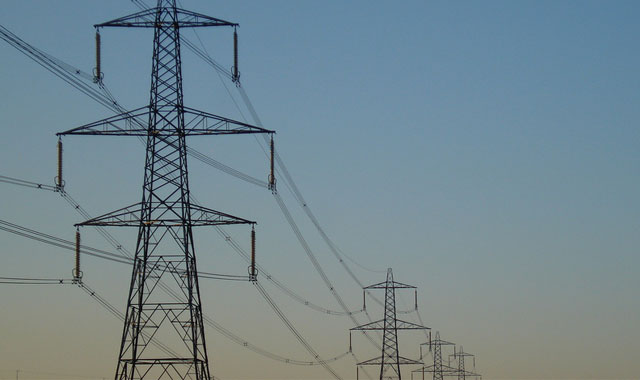
    Financially embattled Eskom has run to the government for additional funding to pay its spiralling bills. But the treasury has refused and said it will not fund the utility from its strained coffers, and the energy regulator couldn’t help even if it wanted to.

    Faced with a shortfall of hundreds of billions of rand, significant delays in bringing new power stations on line, the recent bout of load shedding, escalating costs and now serious talk of a requested bailout, Eskom is in trouble — with seemingly nowhere to turn.

    The treasury has made it clear that its cupboard is bare: it does not have the funds to bail out the power utility. Its view is that the state-owned enterprise must fund its additional costs itself or turn to electricity users.

    But the National Energy Regulator of South Africa (Nersa), an independent body meant to represent consumers in a tariff determination, is standing firm on its decision to grant a far lower electricity tariff increase than what Eskom applied for. In any event, its hands are tied for another year.

    Cost pressures are owed partly to a funding gap of R225bn over five years, which Eskom claimed was not covered when the regulator last year granted it a tariff hike of 8% a year and not the 16% it applied for.

    This leaves a shortfall of R45bn/year.

    Additionally, unforeseen costs are mounting. Among them are an R8bn budget overrun in diesel costs to run open gas cycle turbines and escalating costs related to the construction of new power plants, including R2bn paid in penalties to the mining company Exxaro under a coal supply agreement for the long-delayed Medupi power station.

    The Duvha power station experienced damage to its boiler and feeder coal conveyor, which required trucks to supply the coal to keep it operating.

    The utility has been forced to look at its own cost structure and implement cuts in the hope of saving R1bn/year over five years. But it is small fry compared with the bills that continue to rack up.

    The treasury has said it will not fund costs arising from risks not provided for in the regulator’s tariff determination, such as “further delays in the bringing into operation of the first Medupi units or a decline in electricity usage”.

    It’s hardly a surprising response in light of a budget deficit at 4,7% of GDP and debt service costs expected to account for 10% of government spending.

    “The government has no scope to give Eskom cash in the context of an expenditure ceiling that government has imposed as a matter of necessity,” treasury spokesman Jabulani Sikhakhane said. “So electricity must either fund itself or must be paid for by those who use it, not taxpayers through general revenues.”

    Sikhakhane said the treasury had already given Eskom a R60bn subordinated loan and R350bn in guarantees — against which Eskom has so far raised R122bn. The treasury believed this was sufficient to complete the building programme, provided there were no risks other than those provided for in the determination.

    When the department of public enterprise was approached for comment, spokesman Mayihlome Tshwete said that the sustainability of Eskom “is as much a concern for the treasury and the department of energy as it is for us. I don’t think they would say anything as conclusive as that.”

    Tshwete said the treasury’s response must be referring solely to the R8bn budget overrun on diesel to keep open cycle gas turbines running — and the lights on.

    Nersa said it stands by its tariff determination, although it has said its decision can be taken to the high court for a review.

    An executive at the regulator said Nersa is monitoring Eskom’s financials all the time but, even if a tariff adjustment was in order, “for the first two years of the MYPD [multi-year price determination], there is not much we can do”.

    The discussion between Nersa and Eskom is about the regulatory clearing account, which keeps track of projected and actual costs after the determination period to see whether Eskom experienced an under-recovery or an over-recovery. If the difference is large enough, it could lead to a higher tariff increase or decrease. The discussion currently pertains to the multi-year price determination period, which has passed.

    Despite the regulator’s insistence that it has no plans to raise the electricity price soon, the director of Economists.co.za, Mike Schussler, said Eskom’s current dilemma will inevitably result in a tariff increase. “That’s the way the cookie is going to crumble,” he said.

    “I can’t see this ending in any other way. It’s a stuff-up. This is a monopoly that refused to buy anything from the private sector … [if it had] it could have averted this a long time ago.”

    Nersa’s tariff decision followed representations from businesses that claimed they would suffer, or even go under, if Eskom was granted a 16% increase. But the 8% it granted Eskom raised the concerns of the Energy Intensive User Group.

    “We won’t say we weren’t delighted by the 8% increase but it did raise some concerns and we do anticipate some increases coming,” Shaun Nel, the executive director of the group, said. In its submission to the regulator, it said a 10% increase for five years would have been a fair balance.

    Nel said the situation provided an opportunity to rethink the way the parastatal is funded. “We need to re-look at Eskom’s funding process significantly; we can’t just fund every­thing out of the tariff.”

    Andrew Kinghorn, of Shava Mining Enterprise, said that Eskom’s shortfall is likely to be between R50bn and R100bn a year.

    Schussler said the increase needed to keep Eskom in business would likely be about additional five or six percentage points, raising the tariff to about 14%.

    Eskom’s dire situation may not come as a surprise to most South Africans, but the fact that the utility has about R43bn in the bank, as stated in its interim report, might raise a few eyebrows.

    But Doug Kuni, the chairman of the South African Independent Power Producers’ Association, said these funds were made available to Eskom to complete the new power stations and not to meet its operations and maintenance costs.

    “They are three years late with Medupi, there are running delays with Kusile and Ingula, and capital costs have increased horrendously,” Kuni said. “In order to make up all the revenue to keep their operations running, they cannot dip into money for the new build…

    “The new-build decisions were Brian Dames’s decision as head of generation group and then chief executive and the chickens are now coming home to roost.”

    Kuni said that, although somebody will have to pay for Eskom’s inefficiencies and cost overruns, any bailout would only be a temporary solution as South Africa is far from solving its energy supply problems.

    “Do we throw good money after bad?” Kuni asked. “Where is the economic growth going to come from? When is the new capacity coming on line?” It’s fatal for the economy, he said. “If there is failure to grow in kilowatt hours, there will not be any economic growth.”

    Mark Pickering, MD of Globeleq South Africa, said the governing party is paralysed when it comes to energy.

    “Eskom’s failure to manage itself and its programmes has fundamentally harmed the economy as a whole… [Additionally,] there has not been sufficient momentum behind the ‘change’ argument, or clarity of thought as to what we would change to,” he said.

    “We need to have the policy debate as to where we will take the sector and then fashion legislation. We now have 20 years of almost complete inaction on electricity sector policy.”

    Tshwete said the Nersa determination has had several implications for Eskom and it was too soon to say what the solutions might be.

    “The same people celebrating the 8% increase are now saying it [Eskom’s financial difficulty] is because it has been badly run,” he said. “The challenges Eskom faces outdate the people who are there now; they go as far back as 1998.

    “Eskom has been under immense pressure to keep the lights on; they have worked tirelessly to make that happen and it has happened at quite an expense.”

    Eskom did not comment at the time of publication.  — (c) 2014 Mail & Guardian

    • Visit the Mail & Guardian Online, the smart news source

    Follow TechCentral on Google News Add TechCentral as your preferred source on Google


    Andrew Kinghorn Brian Dames Doug Kuni Eskom Globeleq Mark Pickering Mike Schussler Nersa
    WhatsApp YouTube
    Share. Facebook Twitter LinkedIn WhatsApp Telegram Email Copy Link
    Previous ArticleHome fibre in SA: what’s the hold-up?
    Next Article Absurd claims cloud set-top box debate

    Related Posts

    Eskom's diesel bill falls 86% as breakdowns hit eight-year low

    Eskom’s diesel bill falls 86% as breakdowns hit eight-year low

    31 July 2026
    Ramaphosa signs off on taking the grid away from Eskom

    Ramaphosa signs off on taking the grid away from Eskom

    31 July 2026
    Huawei Connect 2026: taking South African AI beyond pilots

    Huawei Connect 2026: taking South African AI beyond pilots

    29 July 2026
    Company News
    Domains.co.za launches self-hosted n8n VPS hosting

    Domains.co.za launches self-hosted n8n VPS hosting

    31 July 2026
    Smarter.tech '26 shows why smarter technology begins with context - Obsidian Systems

    Context is the missing piece in enterprise AI: Obsidian

    31 July 2026
    Huawei launches 12 intelligent transport solutions in South Africa - Sam Tang

    Huawei launches 12 intelligent transport solutions in South Africa

    30 July 2026
    Opinion
    The author, Jannie van Zyl

    Selling vapour is corporate suicide in slow motion

    16 July 2026
    Brazil's online gambling crackdown is a lesson for South Africa

    How Amazon outmanoeuvred Starlink in South Africa

    15 July 2026
    The Popia problem with agentic AI - Herman Haasbroek

    The Popia problem with agentic AI

    14 July 2026

    Subscribe to Updates

    Get the best South African technology news and analysis delivered to your e-mail inbox every morning.

    Latest Posts
    Nedbank hires MTN's former tech chief as group CIO - Nikos Angelopoulos

    Nedbank hires MTN’s former tech chief as group CIO

    31 July 2026
    Eskom's diesel bill falls 86% as breakdowns hit eight-year low

    Eskom’s diesel bill falls 86% as breakdowns hit eight-year low

    31 July 2026
    Ramaphosa signs off on taking the grid away from Eskom

    Ramaphosa signs off on taking the grid away from Eskom

    31 July 2026
    TCS+ | Why South African workers must become supervisors of digital labour - Accelera Digital Group Cliff de Wit

    TCS+ | Why South African workers must become supervisors of digital labour

    31 July 2026
    © 2009 - 2026 NewsCentral Media
    Built and maintained by Chronon
    • Cookie policy (ZA)
    • TechCentral – privacy and Popia

    Type above and press Enter to search. Press Esc to cancel.

    Manage consent

    TechCentral uses cookies to enhance its offerings. Consenting to these technologies allows us to serve you better. Not consenting or withdrawing consent may adversely affect certain features and functions of the website.

    Functional Always active
    The technical storage or access is strictly necessary for the legitimate purpose of enabling the use of a specific service explicitly requested by the subscriber or user, or for the sole purpose of carrying out the transmission of a communication over an electronic communications network.
    Preferences
    The technical storage or access is necessary for the legitimate purpose of storing preferences that are not requested by the subscriber or user.
    Statistics
    The technical storage or access that is used exclusively for statistical purposes. The technical storage or access that is used exclusively for anonymous statistical purposes. Without a subpoena, voluntary compliance on the part of your Internet Service Provider, or additional records from a third party, information stored or retrieved for this purpose alone cannot usually be used to identify you.
    Marketing
    The technical storage or access is required to create user profiles to send advertising, or to track the user on a website or across several websites for similar marketing purposes.
    • Manage options
    • Manage services
    • Manage {vendor_count} vendors
    • Read more about these purposes
    View preferences
    • {title}
    • {title}
    • {title}