Close Menu
TechCentralTechCentral

    Subscribe to the newsletter

    Get the best South African technology news and analysis delivered to your e-mail inbox every morning.

    Facebook X (Twitter) YouTube LinkedIn
    WhatsApp Facebook X (Twitter) LinkedIn YouTube
    TechCentralTechCentral
    • News
      TechCentral's South African Newsmakers of 2025

      TechCentral’s South African Newsmakers of 2025

      18 December 2025
      Malatsi buries Post Office's long-dead monopoly

      Malatsi buries Post Office monopoly the market ignored

      18 December 2025
      China races to crack EUV as chip war with the West intensifies

      China races to crack EUV lithography as chip war with the West intensifies

      18 December 2025
      Coursera to buy Udemy, in which Prosus is an investor

      Coursera to buy Udemy, in which Prosus is an investor

      18 December 2025
      It has been a year of policy victories, but crypto firms warn momentum could fade without durable US legislation.- Donald Trump

      Crypto’s Trump-era boom faces a 2026 reality check

      18 December 2025
    • World
      Warner Bros slams the door on Paramount

      Warner Bros slams the door on Paramount

      17 December 2025
      X moves to block bid to revive Twitter brand

      X moves to block bid to revive Twitter brand

      17 December 2025
      Oracle’s AI ambitions face scrutiny on earnings miss

      Oracle’s AI ambitions face scrutiny on earnings miss

      11 December 2025
      China will get Nvidia H200 chips - but not without paying Washington first

      China will get Nvidia H200 chips – but not without paying Washington first

      9 December 2025
      IBM reportedly close to $11-billion deal to buy Confluent - Arvind Krishna

      IBM reportedly close to $11-billion deal to buy Confluent

      8 December 2025
    • In-depth
      Black Friday goes digital in South Africa as online spending surges to record high

      Black Friday goes digital in South Africa as online spending surges to record high

      4 December 2025
      Canal+ plays hardball - and DStv viewers feel the pain

      Canal+ plays hardball – and DStv viewers feel the pain

      3 December 2025
      Jensen Huang Nvidia

      So, will China really win the AI race?

      14 November 2025
      Valve's Linux console takes aim at Microsoft's gaming empire

      Valve’s Linux console takes aim at Microsoft’s gaming empire

      13 November 2025
      iOCO's extraordinary comeback plan - Rhys Summerton

      iOCO’s extraordinary comeback plan

      28 October 2025
    • TCS
      TCS+ | Africa's digital transformation - unlocking AI through cloud and culture - Cliff de Wit Accelera Digital Group

      TCS+ | Cloud without culture won’t deliver AI: Accelera’s Cliff de Wit

      12 December 2025
      TCS+ | How Cloud on Demand helps partners thrive in the AWS ecosystem - Odwa Ndyaluvane and Xenia Rhode

      TCS+ | How Cloud On Demand helps partners thrive in the AWS ecosystem

      4 December 2025
      TCS | MTN Group CEO Ralph Mupita on competition, AI and the future of mobile

      TCS | Ralph Mupita on competition, AI and the future of mobile

      28 November 2025
      TCS | Dominic Cull on fixing South Africa's ICT policy bottlenecks

      TCS | Dominic Cull on fixing South Africa’s ICT policy bottlenecks

      21 November 2025
      TCS | BMW CEO Peter van Binsbergen on the future of South Africa's automotive industry

      TCS | BMW CEO Peter van Binsbergen on the future of South Africa’s automotive industry

      6 November 2025
    • Opinion
      Netflix, Warner Bros deal raises fresh headaches for MultiChoice - Duncan McLeod

      Netflix, Warner Bros deal raises fresh headaches for MultiChoice

      5 December 2025
      BIN scans, DDoS and the next cybercrime wave hitting South Africa's banks - Entersekt Gerhard Oosthuizen

      BIN scans, DDoS and the next cybercrime wave hitting South Africa’s banks

      3 December 2025
      Your data, your hardware: the DIY AI revolution is coming - Duncan McLeod

      Your data, your hardware: the DIY AI revolution is coming

      20 November 2025
      Zero Carbon Charge founder Joubert Roux

      The energy revolution South Africa can’t afford to miss

      20 November 2025
      It's time for a new approach to government IT spend in South Africa - Richard Firth

      It’s time for a new approach to government IT spend in South Africa

      19 November 2025
    • Company Hubs
      • Africa Data Centres
      • AfriGIS
      • Altron Digital Business
      • Altron Document Solutions
      • Altron Group
      • Arctic Wolf
      • AvertITD
      • Braintree
      • CallMiner
      • CambriLearn
      • CYBER1 Solutions
      • Digicloud Africa
      • Digimune
      • Domains.co.za
      • ESET
      • Euphoria Telecom
      • Incredible Business
      • iONLINE
      • IQbusiness
      • Iris Network Systems
      • LSD Open
      • NEC XON
      • Netstar
      • Network Platforms
      • Next DLP
      • Ovations
      • Paracon
      • Paratus
      • Q-KON
      • SevenC
      • SkyWire
      • Solid8 Technologies
      • Telit Cinterion
      • Tenable
      • Vertiv
      • Videri Digital
      • Vodacom Business
      • Wipro
      • Workday
      • XLink
    • Sections
      • AI and machine learning
      • Banking
      • Broadcasting and Media
      • Cloud services
      • Contact centres and CX
      • Cryptocurrencies
      • Education and skills
      • Electronics and hardware
      • Energy and sustainability
      • Enterprise software
      • Financial services
      • Information security
      • Internet and connectivity
      • Internet of Things
      • Investment
      • IT services
      • Lifestyle
      • Motoring
      • Public sector
      • Retail and e-commerce
      • Satellite communications
      • Science
      • SMEs and start-ups
      • Social media
      • Talent and leadership
      • Telecoms
    • Events
    • Advertise
    TechCentralTechCentral
    Home » News » United Nations publishes Global Digital Compact

    United Nations publishes Global Digital Compact

    The document excludes key issues but is still a good foundation for digital governance, according to Research ICT Africa.
    By Nkosinathi Ndlovu30 September 2024
    Twitter LinkedIn Facebook WhatsApp Email Telegram Copy Link
    News Alerts
    WhatsApp
    UN publishes Global Digital Compact
    The United Nations building in New York, centre

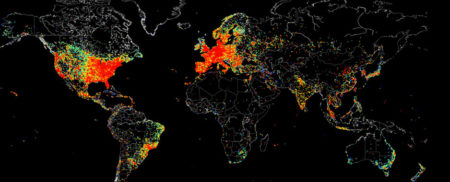
    The United Nations last week adopted a Global Digital Compact (GDC). The 193 member states of the UN General Assembly, which includes South Africa, agreed to the compact, which is aimed at creating an “open, safe and secure digital future for all”.

    Alison Gillwald, executive director of Research ICT Africa, said the GDC stems from the recognition by the UN during the Covid-19 pandemic of the compounding impact digital inequality has on the vulnerable.

    “This is a messy process of consensus but it results in significant compromises,” said Gillwald, describing the negotiation process in drawing up the document and getting member states to agree to its wording.

    Countries including South Africa held for the use of a solidarity fund for AI development

    “Countries including South Africa held for the use of a solidarity fund for AI development. But there is no solidarity fund for infrastructure deficits or to address inequality,” she said.

    According to the UN, digital technologies are dramatically transforming the world, while offering immense potential benefits for the well-being and advancement of people, societies and the planet. These goals can only be achieved, it said, through strengthened international cooperation that closes all digital divides between and within countries.

    Through the GDC, the UN aims to foster intergovernmental cooperation on the access to and use of digital tools. The main objectives outlined in the GDC document are to:

    • Close all digital divides and accelerate progress across the UN’s Sustainable Development Goals;
    • Expand inclusion in and benefits from the digital economy;
    • Foster inclusive, open, safe and secure digital spaces that respect, protect and promote human rights;
    • Advance responsible, equitable and interoperable data governance approaches; and
    • Enhance international governance of artificial intelligence for the benefit of humanity.

    One of the key focus areas of the GDC is supporting the creation of digital public goods and public digital infrastructure. Digital public goods include open-source software, open data, open artificial intelligence models, open standards and open content that “adhere to privacy and other international laws”, per the document. Digital public goods are meant to empower individuals and societies to direct technology towards their developmental needs.

    But according to Gillwald, some of the compromises made in getting to the final version of the document have weakened its efficacy by failing to account for the linkages between the digital divide and deep structural inequalities within societies.

    Gaps

    She said the removal of a solidarity fund for infrastructure and another to address digital inequality, while keeping one for the development of AI, will only exacerbate the gaps between those who are barely connected and those who are already empowered to participate in the digital economy.

    She acknowledged the importance of addressing some demand-side inhibiting factors such as access to devices and data, but emphasised that without education, access on its own is meaningless and will not empower people to “contribute to the wealth of nations”.

    Read: South Africa publishes national AI policy framework

    “There are things you must get in place before you get to the digital economy, digital single markets and the information economy. It’s not just about affordable access but also about meaningful access,” said Gillwald.

    Another key aspect of the GDC is its treatment of issues regarding the impact of digital technologies on climate change. The growth in demand for generative AI tools has once again put carbon emissions by the tech sector in the spotlight. AI workloads require vastly expanded computing power resources to execute, leading to a surge in power consumption.

    Research ICT Africa's Alison Gillwald
    Research ICT Africa’s Alison Gillwald

    The cooling requirements for chips running AI workloads tend to use much more water, too. Unfortunately, parts of the GDC dealing with climate change and technological advancement did not make it into the final version of the document, according to Gillwald.

    She did acknowledge, however, that despite these compromises, the need for global governance structures “that will protect people from the [digital] harms” is so great that the consensus reached by the general council on the GDC is a “peg in the ground” from which further progress can be achieved.  – © 2024 NewsCentral Media

    Don’t miss:

    Ramaphosa promises tech-led reform agenda


    GDC Global Digital Compact UN UN GDC UN Global Digital Compact United Nations United Nations Global Digital Compact
    Subscribe to TechCentral Subscribe to TechCentral
    Share. Facebook Twitter LinkedIn WhatsApp Telegram Email Copy Link
    Previous ArticleCopilot is the new power suit
    Next Article Uber Safari launched in South Africa

    Related Posts

    SA’s shameful vote against Internet freedom

    15 July 2016

    Why SA voted against Internet freedoms at UN

    5 July 2016
    Company News
    Why TechCentral is the most powerful platform for reaching IT decision makers

    Why TechCentral is the most powerful platform for reaching IT decision makers

    17 December 2025
    Business trends to watch in 2026 - Domains.co.za

    Business trends to watch in 2026

    17 December 2025
    MTN Zambia launches world's first 4G cloud smartphone solution - Huawei

    MTN Zambia launches world’s first 4G cloud smartphone solution

    17 December 2025
    Opinion
    Netflix, Warner Bros deal raises fresh headaches for MultiChoice - Duncan McLeod

    Netflix, Warner Bros deal raises fresh headaches for MultiChoice

    5 December 2025
    BIN scans, DDoS and the next cybercrime wave hitting South Africa's banks - Entersekt Gerhard Oosthuizen

    BIN scans, DDoS and the next cybercrime wave hitting South Africa’s banks

    3 December 2025
    Your data, your hardware: the DIY AI revolution is coming - Duncan McLeod

    Your data, your hardware: the DIY AI revolution is coming

    20 November 2025

    Subscribe to Updates

    Get the best South African technology news and analysis delivered to your e-mail inbox every morning.

    Latest Posts
    TechCentral's South African Newsmakers of 2025

    TechCentral’s South African Newsmakers of 2025

    18 December 2025
    Malatsi buries Post Office's long-dead monopoly

    Malatsi buries Post Office monopoly the market ignored

    18 December 2025
    China races to crack EUV as chip war with the West intensifies

    China races to crack EUV lithography as chip war with the West intensifies

    18 December 2025
    Coursera to buy Udemy, in which Prosus is an investor

    Coursera to buy Udemy, in which Prosus is an investor

    18 December 2025
    © 2009 - 2025 NewsCentral Media
    • Cookie policy (ZA)
    • TechCentral – privacy and Popia

    Type above and press Enter to search. Press Esc to cancel.

    Manage consent

    TechCentral uses cookies to enhance its offerings. Consenting to these technologies allows us to serve you better. Not consenting or withdrawing consent may adversely affect certain features and functions of the website.

    Functional Always active
    The technical storage or access is strictly necessary for the legitimate purpose of enabling the use of a specific service explicitly requested by the subscriber or user, or for the sole purpose of carrying out the transmission of a communication over an electronic communications network.
    Preferences
    The technical storage or access is necessary for the legitimate purpose of storing preferences that are not requested by the subscriber or user.
    Statistics
    The technical storage or access that is used exclusively for statistical purposes. The technical storage or access that is used exclusively for anonymous statistical purposes. Without a subpoena, voluntary compliance on the part of your Internet Service Provider, or additional records from a third party, information stored or retrieved for this purpose alone cannot usually be used to identify you.
    Marketing
    The technical storage or access is required to create user profiles to send advertising, or to track the user on a website or across several websites for similar marketing purposes.
    • Manage options
    • Manage services
    • Manage {vendor_count} vendors
    • Read more about these purposes
    View preferences
    • {title}
    • {title}
    • {title}