Close Menu
TechCentralTechCentral

    Subscribe to the newsletter

    Get the best South African technology news and analysis delivered to your e-mail inbox every morning.

    Facebook X (Twitter) YouTube LinkedIn
    WhatsApp Facebook X (Twitter) LinkedIn YouTube
    TechCentralTechCentral
    • News
      Telecoms industry backs Malatsi policy directive, warns on execution - ACT CEO Nomvuyiso Batyi

      Telecoms industry backs Malatsi policy directive, warns on execution

      17 December 2025
      TechCentral's International Newsmakers of 2025

      TechCentral’s International Newsmakers of 2025

      17 December 2025
      Warner Bros slams the door on Paramount

      Warner Bros slams the door on Paramount

      17 December 2025
      Airtel to roll out Starlink direct-to-cell across Africa

      Airtel to roll out Starlink direct-to-cell across Africa

      17 December 2025
      Presidency backs Solly Malatsi in BEE reform fight - Cyril Ramaphosa

      Presidency backs Solly Malatsi in BEE reform fight

      15 December 2025
    • World
      X moves to block bid to revive Twitter brand

      X moves to block bid to revive Twitter brand

      17 December 2025
      Oracle’s AI ambitions face scrutiny on earnings miss

      Oracle’s AI ambitions face scrutiny on earnings miss

      11 December 2025
      China will get Nvidia H200 chips - but not without paying Washington first

      China will get Nvidia H200 chips – but not without paying Washington first

      9 December 2025
      IBM reportedly close to $11-billion deal to buy Confluent - Arvind Krishna

      IBM reportedly close to $11-billion deal to buy Confluent

      8 December 2025
      Amazon and Google launch multi-cloud service for faster connectivity

      Amazon and Google launch multi-cloud service for faster connectivity

      1 December 2025
    • In-depth
      Black Friday goes digital in South Africa as online spending surges to record high

      Black Friday goes digital in South Africa as online spending surges to record high

      4 December 2025
      Canal+ plays hardball - and DStv viewers feel the pain

      Canal+ plays hardball – and DStv viewers feel the pain

      3 December 2025
      Jensen Huang Nvidia

      So, will China really win the AI race?

      14 November 2025
      Valve's Linux console takes aim at Microsoft's gaming empire

      Valve’s Linux console takes aim at Microsoft’s gaming empire

      13 November 2025
      iOCO's extraordinary comeback plan - Rhys Summerton

      iOCO’s extraordinary comeback plan

      28 October 2025
    • TCS
      TCS+ | Africa's digital transformation - unlocking AI through cloud and culture - Cliff de Wit Accelera Digital Group

      TCS+ | Cloud without culture won’t deliver AI: Accelera’s Cliff de Wit

      12 December 2025
      TCS+ | How Cloud on Demand helps partners thrive in the AWS ecosystem - Odwa Ndyaluvane and Xenia Rhode

      TCS+ | How Cloud On Demand helps partners thrive in the AWS ecosystem

      4 December 2025
      TCS | MTN Group CEO Ralph Mupita on competition, AI and the future of mobile

      TCS | Ralph Mupita on competition, AI and the future of mobile

      28 November 2025
      TCS | Dominic Cull on fixing South Africa's ICT policy bottlenecks

      TCS | Dominic Cull on fixing South Africa’s ICT policy bottlenecks

      21 November 2025
      TCS | BMW CEO Peter van Binsbergen on the future of South Africa's automotive industry

      TCS | BMW CEO Peter van Binsbergen on the future of South Africa’s automotive industry

      6 November 2025
    • Opinion
      Netflix, Warner Bros deal raises fresh headaches for MultiChoice - Duncan McLeod

      Netflix, Warner Bros deal raises fresh headaches for MultiChoice

      5 December 2025
      BIN scans, DDoS and the next cybercrime wave hitting South Africa's banks - Entersekt Gerhard Oosthuizen

      BIN scans, DDoS and the next cybercrime wave hitting South Africa’s banks

      3 December 2025
      Your data, your hardware: the DIY AI revolution is coming - Duncan McLeod

      Your data, your hardware: the DIY AI revolution is coming

      20 November 2025
      Zero Carbon Charge founder Joubert Roux

      The energy revolution South Africa can’t afford to miss

      20 November 2025
      It's time for a new approach to government IT spend in South Africa - Richard Firth

      It’s time for a new approach to government IT spend in South Africa

      19 November 2025
    • Company Hubs
      • Africa Data Centres
      • AfriGIS
      • Altron Digital Business
      • Altron Document Solutions
      • Altron Group
      • Arctic Wolf
      • AvertITD
      • Braintree
      • CallMiner
      • CambriLearn
      • CYBER1 Solutions
      • Digicloud Africa
      • Digimune
      • Domains.co.za
      • ESET
      • Euphoria Telecom
      • Incredible Business
      • iONLINE
      • IQbusiness
      • Iris Network Systems
      • LSD Open
      • NEC XON
      • Netstar
      • Network Platforms
      • Next DLP
      • Ovations
      • Paracon
      • Paratus
      • Q-KON
      • SevenC
      • SkyWire
      • Solid8 Technologies
      • Telit Cinterion
      • Tenable
      • Vertiv
      • Videri Digital
      • Vodacom Business
      • Wipro
      • Workday
      • XLink
    • Sections
      • AI and machine learning
      • Banking
      • Broadcasting and Media
      • Cloud services
      • Contact centres and CX
      • Cryptocurrencies
      • Education and skills
      • Electronics and hardware
      • Energy and sustainability
      • Enterprise software
      • Financial services
      • Information security
      • Internet and connectivity
      • Internet of Things
      • Investment
      • IT services
      • Lifestyle
      • Motoring
      • Public sector
      • Retail and e-commerce
      • Satellite communications
      • Science
      • SMEs and start-ups
      • Social media
      • Talent and leadership
      • Telecoms
    • Events
    • Advertise
    TechCentralTechCentral
    Home » Sections » Information security » Passwords are on the way out – good riddance to them

    Passwords are on the way out – good riddance to them

    Passwords, which have been used for decades in the technology industry for authentication, may finally be on their way out.
    By Nkosinathi Ndlovu22 January 2024
    Twitter LinkedIn Facebook WhatsApp Email Telegram Copy Link
    News Alerts
    WhatsApp

    Passwords have been the de facto method for securing access to digital platforms for a great portion of the digital era. However, security experts now advise against them in favour of more robust authentication protocols, which might include the use of biometric tools and third-party password management applications instead.

    In fact, some experts predict that passwords are in the process of being rendered obsolete.

    “Most data breaches can be linked to weak passwords. Although passwords are not quite dead, they will disappear in the next 10 years, with some legacy systems still reliant on them,” said Joseph Carson, chief information security officer at Delinea, an access management solutions company, in a webinar last week.

    “Biometrics are a better identifier. Although my thumbprint is not exactly a secret – in the way a password is – it is better at identifying me than a password is,” he said.

    In the webinar, Carson addressed a few myths about passwords that diminish their efficacy as a digital system’s first line of defence against malicious attacks. These are:

    • Password complexity guarantees security: Complexity forces users to choose very standard ways of developing so-called “strong” passwords, which include “adding that special character which everyone knows is an exclamation mark at the end”.
    • Frequently changing passwords improves security: This gets users in the habit of slightly changing the same password. It also increases the likelihood that a user will have to change their password over an insecure network or in a public area where they can be spied on.
    • Storing passwords in the browser is secure: The security in the browser is usually not enabled, so if their main system is compromised, then the attacker gets access to the credentials for many other systems. Users must ensure they enable browser security.
    • Never changing passwords because two-factor authentication (2FA) is installed: Some users have not changed their passwords for years – or have never changed them at all, because they assume that 2FA will give them better protection, but attackers are finding ways around it.
    • Assuming insignificance: “Why would hackers want my data, I am a nobody,” people say, but attackers look at data from an opportunistic perspective. If they can hack an employee account, that might give them access to the rest of the business.

    Biometrics such as facial recognition, fingerprint scans, iris scans and voice verification are leading the password-less revolution. But Dilenea research shows that multifactor authentication, one-time passwords, “magic links” and passkeys are also seeing increasing adoption rates among organisations.

     Read: FNB backs down on password decision after backlash

    Leading data security practices encourage organisations to move away from a password-management paradigm and adopt an identity management perspective instead. A key identity management principle is to align the level of privilege users have when accessing organisational resources with their functional requirements. This limits the likelihood that a security breach will occur, and more importantly restricts the potential scope of damage should security be compromised.

    “In many organisations, users often have superuser or admin status without the need for it. If those credentials are compromised, hackers gain access to the entire system in one go,” said Carson.

    For many organisations, identity management is strictly an internal matter relating to how and where employees can gain access to company resources. For those companies whose offerings includes the provision of digital services, the scope of their identity management duties extends to their customers as well. Retail banks are a typical example of this.

    “We have been early adopters of passkeys and introduced logging in with fingerprint and face biometrics a year ago. We haven’t removed traditional Pin login totally from our app, and actually force a Pin login now and then to ensure customers remember their Pins. Ever since we have introduced login with biometrics (face and/or fingerprint), we have been tokenising [sensitive data] with keys,” said Yatin Narsai, CEO at Bank Zero.

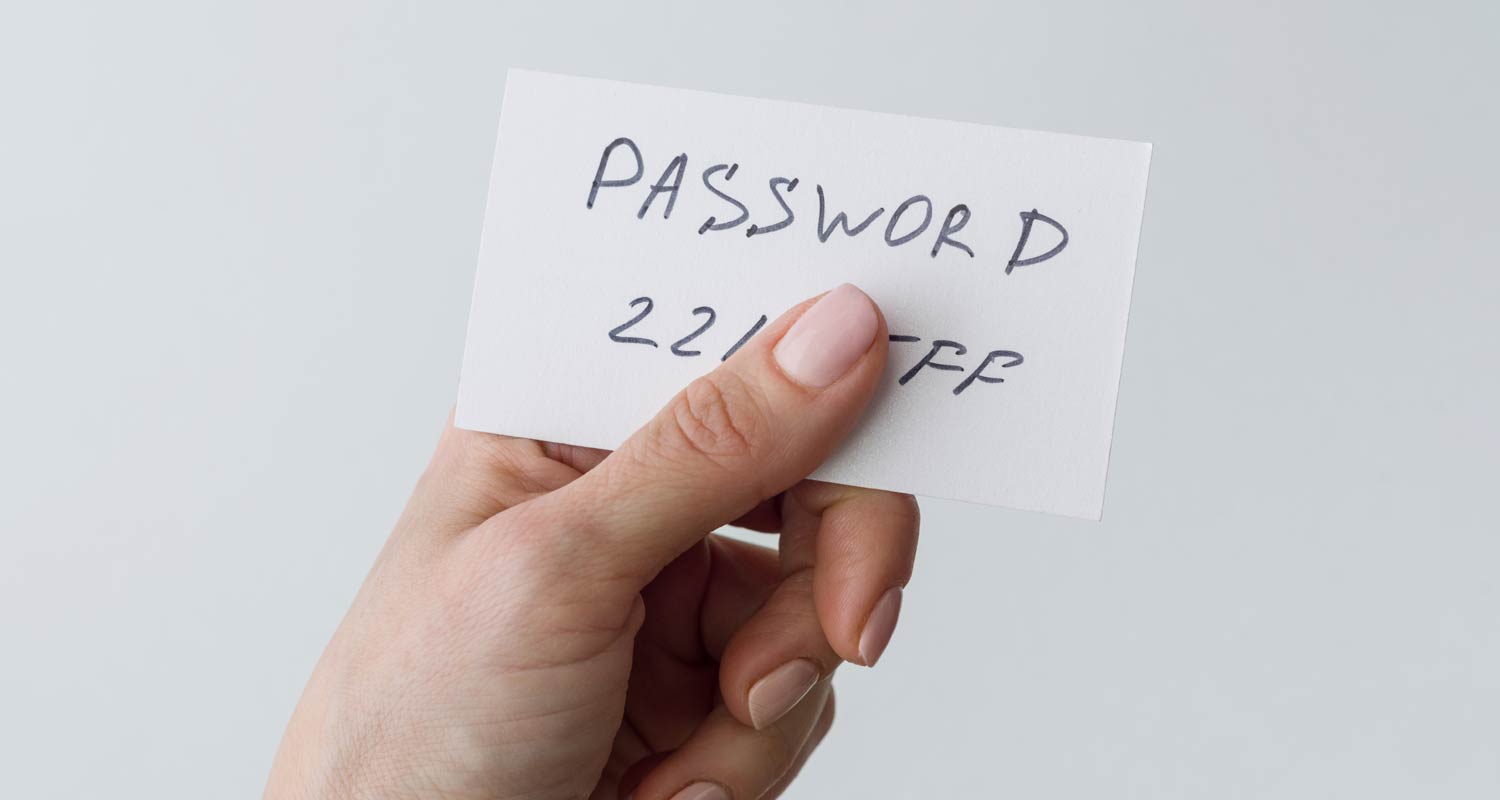
    Password management tools are a great solution to prevent people writing passwords down on paper

    Tokenisation is a way of protecting sensitive data by using a token to represent “real” information. A seemingly nonsensical string of numbers to represent a bank card is one example of a token. If the tokenised data is “stolen” in transit, the token will not be of any value to the attacker since it is meaningless in and of itself. The attacker also does not have the biometric information that authenticates the user to the tokenisation service, so they can’t get the token verified for use. They would not be able to “tap” or “swipe” the tokenised card to make payments.

    TymeBank’s chief technology officer, Bruce Paveley, also attested to the growing significance of biometrics over traditional passwords. He said password managers are a great way for users to manage the myriad username and password combinations they need to remember for the many different sites and apps that they use. Examples of password managers include Dashlane and 1Password.

    Novel solution

    “Password management tools are a great solution to prevent people writing passwords down on paper, which they can’t protect from other people. They allow the person to store multiple passwords for multiple sites and applications securely. Ideally, a separate password should be used for each site or application accessed and you should never share passwords between multiple sites or applications. However, the device and access to the application must then be well controlled and have biometric verification to access the device and the password management application to ensure the person who set it up is the same person accessing it,” said Paveley.

    Read: The most commonly used Internet passwords revealed

    Passkeys, meanwhile, are a more novel solution to the multiple password problem. When a user registers on a website, they authenticate themselves biometrically and then give the site a copy of their public encryption key. The corresponding private key, which is the only key that can decrypt anything encrypted by the public key, is stored safely in the user’s on-device password manager.

    The next time the user wants to login to the website, it challenges them by sending a random string encrypted using their public key. If the user sends it back unencrypted, then they are authenticated.

    Bank Zero’s Yatin Narsai

    Like tokens, passkeys have the advantage that they are not useful to attackers should they be intercepted. Again, biometrics are used as 2FA to permit the user’s password manager to decrypt the incoming string and passwords need to be remembered.

    “Over time, passwords will become a thing of the past and biometrics will dominate which will remove the friction from security customer accounts,” said Paveley.  — (c) 2024 NewsCentral Media

    Get breaking news alerts from TechCentral on WhatsApp


    Bank Zero Delinea Joseph Carson Yatin Narsai
    Subscribe to TechCentral Subscribe to TechCentral
    Share. Facebook Twitter LinkedIn WhatsApp Telegram Email Copy Link
    Previous ArticleChina splurges R768-billion on chip-making machines
    Next Article Supermarkets turn to AI to cut food waste

    Related Posts

    Commission clears Lesaka to buy Bank Zero

    Commission clears Lesaka to buy Bank Zero

    18 November 2025
    TechCentral Nexus S0E4: Takealot's big Post Office jobs plan

    TechCentral Nexus S0E4: Takealot’s big Post Office jobs plan

    4 July 2025
    Optasia chairman Michael Jordaan

    Bank Zero to target a broader market with Lesaka’s backing

    30 June 2025
    Company News
    Why TechCentral is the most powerful platform for reaching IT decision makers

    Why TechCentral is the most powerful platform for reaching IT decision makers

    17 December 2025
    Business trends to watch in 2026 - Domains.co.za

    Business trends to watch in 2026

    17 December 2025
    MTN Zambia launches world's first 4G cloud smartphone solution - Huawei

    MTN Zambia launches world’s first 4G cloud smartphone solution

    17 December 2025
    Opinion
    Netflix, Warner Bros deal raises fresh headaches for MultiChoice - Duncan McLeod

    Netflix, Warner Bros deal raises fresh headaches for MultiChoice

    5 December 2025
    BIN scans, DDoS and the next cybercrime wave hitting South Africa's banks - Entersekt Gerhard Oosthuizen

    BIN scans, DDoS and the next cybercrime wave hitting South Africa’s banks

    3 December 2025
    Your data, your hardware: the DIY AI revolution is coming - Duncan McLeod

    Your data, your hardware: the DIY AI revolution is coming

    20 November 2025

    Subscribe to Updates

    Get the best South African technology news and analysis delivered to your e-mail inbox every morning.

    Latest Posts
    Telecoms industry backs Malatsi policy directive, warns on execution - ACT CEO Nomvuyiso Batyi

    Telecoms industry backs Malatsi policy directive, warns on execution

    17 December 2025
    TechCentral's International Newsmakers of 2025

    TechCentral’s International Newsmakers of 2025

    17 December 2025
    Warner Bros slams the door on Paramount

    Warner Bros slams the door on Paramount

    17 December 2025
    Why TechCentral is the most powerful platform for reaching IT decision makers

    Why TechCentral is the most powerful platform for reaching IT decision makers

    17 December 2025
    © 2009 - 2025 NewsCentral Media
    • Cookie policy (ZA)
    • TechCentral – privacy and Popia

    Type above and press Enter to search. Press Esc to cancel.

    Manage consent

    TechCentral uses cookies to enhance its offerings. Consenting to these technologies allows us to serve you better. Not consenting or withdrawing consent may adversely affect certain features and functions of the website.

    Functional Always active
    The technical storage or access is strictly necessary for the legitimate purpose of enabling the use of a specific service explicitly requested by the subscriber or user, or for the sole purpose of carrying out the transmission of a communication over an electronic communications network.
    Preferences
    The technical storage or access is necessary for the legitimate purpose of storing preferences that are not requested by the subscriber or user.
    Statistics
    The technical storage or access that is used exclusively for statistical purposes. The technical storage or access that is used exclusively for anonymous statistical purposes. Without a subpoena, voluntary compliance on the part of your Internet Service Provider, or additional records from a third party, information stored or retrieved for this purpose alone cannot usually be used to identify you.
    Marketing
    The technical storage or access is required to create user profiles to send advertising, or to track the user on a website or across several websites for similar marketing purposes.
    • Manage options
    • Manage services
    • Manage {vendor_count} vendors
    • Read more about these purposes
    View preferences
    • {title}
    • {title}
    • {title}