Close Menu
TechCentralTechCentral

    Subscribe to the newsletter

    Get the best South African technology news and analysis delivered to your e-mail inbox every morning.

    Facebook X (Twitter) YouTube LinkedIn
    WhatsApp Facebook X (Twitter) LinkedIn YouTube
    TechCentralTechCentral
    • News
      DStv drops premium paywall on Fifa World Cup in Canal+-era shift - SuperSport Rendani Ramovha

      DStv drops premium paywall on Fifa World Cup in Canal+-era shift

      17 April 2026
      How a connectivity levy became a tax on telecoms

      How a connectivity levy became a tax on telecoms

      17 April 2026
      Wits project pits African creators against AI music's blind spots

      Wits project pits African creators against AI music’s blind spots

      17 April 2026
      Prosus offloads 4.5% of Delivery Hero to Uber for €270-million

      Prosus offloads 4.5% of Delivery Hero to Uber for €270-million

      17 April 2026
      Numsa digs in for 8% as Eskom wage pact splits unions

      Numsa digs in as Eskom wage pact splits unions

      17 April 2026
    • World
      Adobe bets on AI agents to fend off cheaper rivals

      Adobe bets on AI agents to fend off cheaper rivals

      16 April 2026
      Google poised to lose ad crown to Meta

      Google poised to lose ad crown to Meta

      14 April 2026
      Grand Theft Data - hackers hit Rockstar Games - Grand Theft Auto

      Grand Theft Data – hackers hit Rockstar Games

      14 April 2026
      UK PM Keir Starmer declares war on doomscrolling

      UK PM Keir Starmer declares war on doomscrolling

      13 April 2026
      Big Tech is going nuclear

      Big Tech is going nuclear

      10 April 2026
    • In-depth
      Africa switches on as Europe dims the lights

      Africa switches on as Europe dims the lights

      9 April 2026
      The biggest untapped EV market on Earth is hiding in plain sight

      The biggest untapped EV market on Earth is hiding in plain sight

      1 April 2026
      The R18-billion tech giant hiding in plain sight - Jens Montanana

      The R16-billion tech giant hiding in plain sight

      26 March 2026
      The last generation of coders

      The last generation of coders

      18 February 2026
      Sentech is in dire straits

      Sentech is in dire straits

      10 February 2026
    • TCS
      TCS | Werner Lindemann on how AI is rewriting the infosec rulebook

      TCS | Werner Lindemann on how AI is rewriting the infosec rulebook

      15 April 2026
      TCS | Donovan Marsh on AI and the future of filmmaking

      TCS | Donovan Marsh on AI and the future of filmmaking

      7 April 2026
      TCS+ | Vodacom Business moves to crack the SME tech gap - Andrew Fulton, Sannesh Beharie

      TCS+ | Vodacom Business moves to crack the SME tech gap

      7 April 2026
      TCS | MTN's Divysh Joshi on the strategy behind Pi - Divyesh Joshi

      TCS | MTN’s Divyesh Joshi on the strategy behind Pi

      1 April 2026
      Anoosh Rooplal

      TCS | Anoosh Rooplal on the Post Office’s last stand

      27 March 2026
    • Opinion
      The conflict of interest at the heart of PayShap's slow adoption - Cheslyn Jacobs

      The conflict of interest at the heart of PayShap’s slow adoption

      26 March 2026
      South Africa's energy future hinges on getting wheeling right - Aishah Gire

      South Africa’s energy future hinges on getting wheeling right

      10 March 2026
      Hold the doom: the case for a South African comeback - Duncan McLeod

      Apple just dropped a bomb on the Windows world

      5 March 2026
      R230-million in the bag for Endeavor's third Harvest Fund - Alison Collier

      VC’s centre of gravity is shifting – and South Africa is in the frame

      3 March 2026
      Hold the doom: the case for a South African comeback - Duncan McLeod

      Hold the doom: the case for a South African comeback

      26 February 2026
    • Company Hubs
      • 1Stream
      • Africa Data Centres
      • AfriGIS
      • Altron Digital Business
      • Altron Document Solutions
      • Altron Group
      • Arctic Wolf
      • Ascent Technology
      • AvertITD
      • BBD
      • Braintree
      • CallMiner
      • CambriLearn
      • CYBER1 Solutions
      • Digicloud Africa
      • Digimune
      • Domains.co.za
      • ESET
      • Euphoria Telecom
      • HOSTAFRICA
      • Incredible Business
      • iONLINE
      • IQbusiness
      • Iris Network Systems
      • Kaspersky
      • LSD Open
      • Mitel
      • NEC XON
      • Netstar
      • Network Platforms
      • Next DLP
      • Ovations
      • Paracon
      • Paratus
      • Q-KON
      • SevenC
      • SkyWire
      • Solid8 Technologies
      • Telit Cinterion
      • Telviva
      • Tenable
      • Vertiv
      • Videri Digital
      • Vodacom Business
      • Wipro
      • Workday
      • XLink
    • Sections
      • AI and machine learning
      • Banking
      • Broadcasting and Media
      • Cloud services
      • Contact centres and CX
      • Cryptocurrencies
      • Education and skills
      • Electronics and hardware
      • Energy and sustainability
      • Enterprise software
      • Financial services
      • HealthTech
      • Information security
      • Internet and connectivity
      • Internet of Things
      • Investment
      • IT services
      • Lifestyle
      • Motoring
      • Policy and regulation
      • Public sector
      • Retail and e-commerce
      • Satellite communications
      • Science
      • SMEs and start-ups
      • Social media
      • Talent and leadership
      • Telecoms
    • Events
    • Advertise
    TechCentralTechCentral
    Home » Sections » Electronics and hardware » Qualcomm is struggling to meet smartphone chip demand: sources

    Qualcomm is struggling to meet smartphone chip demand: sources

    By Agency Staff12 March 2021
    Twitter LinkedIn Facebook WhatsApp Email Telegram Copy Link
    News Alerts
    WhatsApp

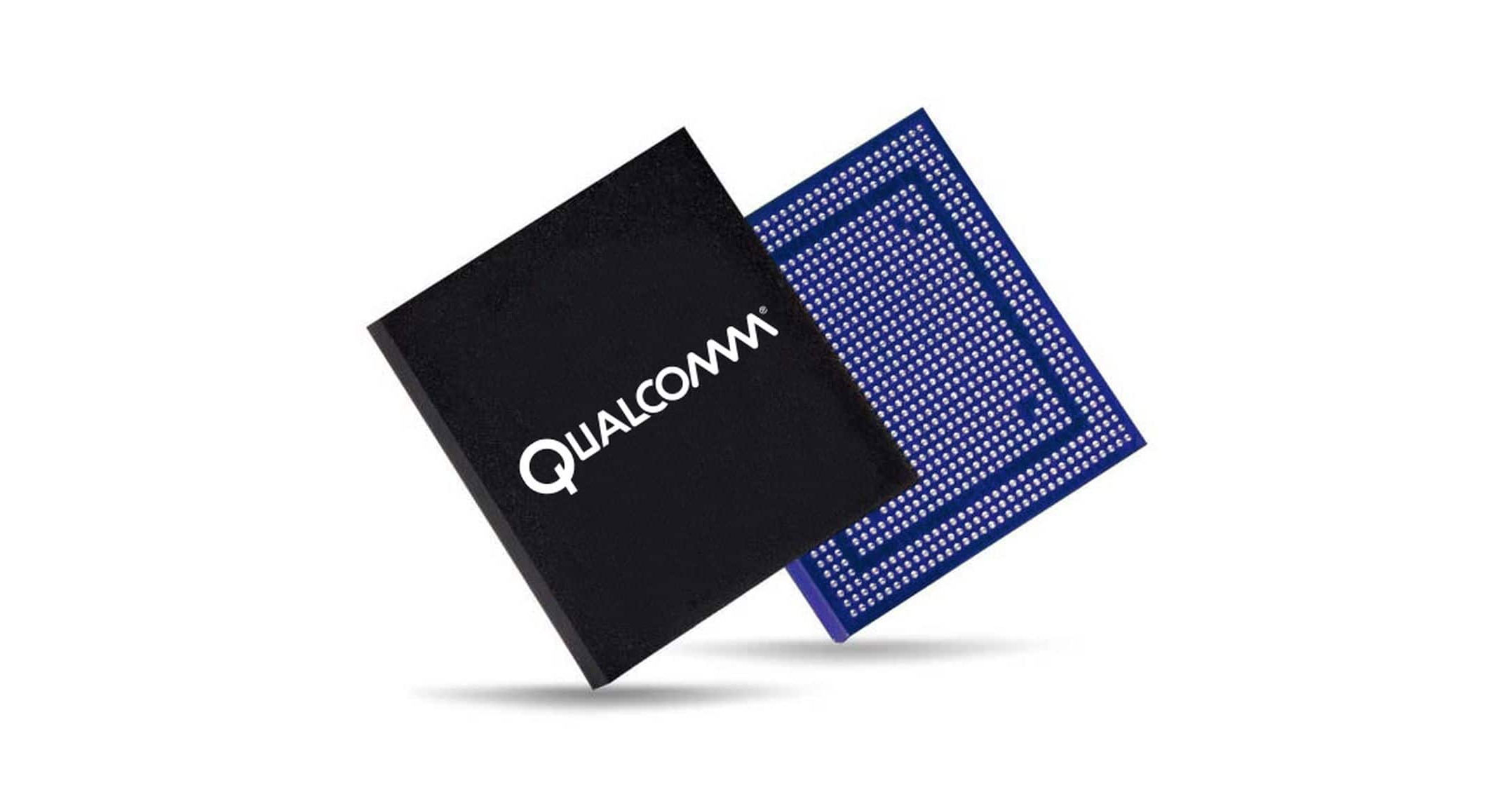
    Qualcomm is struggling to keep up with demand for its processor chips used in smartphones and gadgets, as a chip shortage that first hit the car industry spreads across the electronics business, industry sources said.

    Samsung Electronics, the world’s largest smartphone maker, is experiencing a shortage of Qualcomm’s application processors, the heart of smartphones, two people at suppliers for the South Korean giant said.

    Demand for Qualcomm’s chips has soared in the past months as Android phone makers seek to win over customers abandoning phones produced by Huawei Technologies due to US sanctions. Qualcomm has found it hard to meet this higher-than-expected demand, in part due to a shortage of some subcomponents used in its chips.

    One person at a Samsung supplier said a Qualcomm chip shortage was hitting production of mid- and low-end Samsung models

    One person at a Samsung supplier said a Qualcomm chip shortage was hitting production of mid- and low-end Samsung models. The second person, at another supplier, said there was a shortage of Qualcomm’s new flagship chip, the Snapdragon 888, but did not say whether this was affecting the manufacturing of Samsung’s high-end phones.

    A Samsung Electronics spokesman declined to comment. A Qualcomm spokesman pointed to public comments by executives on Wednesday in which they reiterated they believe they can hit a fiscal second quarter sales forecast given in February.

    Surge in demand

    Separately, a senior executive at a top contract manufacturer for several major smartphone brands said it was facing a shortage of a range of components from Qualcomm and would cut handset shipments this year. The executive spoke on condition of anonymity.

    Last month, Lu Weibing, a vice president for Chinese handset maker Xiaomi, lamented the chip crunch. “It’s not a shortage, it’s an extreme shortage,” he wrote on Weibo, China’s Twitter-like social network.

    A surge in demand for consumer electronics has driven a global chip shortage that has idled car factories. The shortage has so far centred largely on chips made using older technology rather than the advanced phone processors Qualcomm designs.

    But Qualcomm’s constraints show how problems in one area of the complex chip supply chain can bleed into others and how fast-changing market dynamics can trip up chip companies that must set mass production plans years in advance.

    “We still have our demand basically higher than supply,” Qualcomm incoming CEO Cristiano Amon told investors during the company’s annual meeting on Wednesday.

    Qualcomm’s flagship application processor, the Snapdragon 888, is still new. Key parts of it come from Samsung Electronics’ separate chip-making division and use a new 5-nanonmetre manufacturing process that is hard to scale up quickly.

    You need a full kit. If you can’t get them, you can’t build whatever it is you want to build. Supply chains are global and very tightly integrated

    A Samsung factory in Texas, which makes some of Qualcomm’s radio frequency transceivers, was also forced to halt operations last month due to power shortages caused by winter storms, though it is unclear whether the effects of that stoppage have yet trickled down to smartphone makers.

    Qualcomm’s entire line-up of application processors contain power management chips made with older technology by companies including China’s Semiconductor Manufacturing International Corp and Taiwan Semiconductor Manufacturing Co.

    ‘Set up for efficiency’

    “You need a full kit,” said Stacy Rasgon, an analyst with brokerage Bernstein. “If you can’t get them, you can’t build whatever it is you want to build. Supply chains are global and very tightly integrated. It’s set up for efficiency, but it’s less resilient.”

    Qualcomm is directing supply of these power management chips towards its highly profitable Snapdragon 888 application processors to match what Samsung’s foundries can build, but that is hurting supplies of lower-end Qualcomm application processors, sources said.

    China’s Xiaomi procures the majority of its chips from Qualcomm and Taiwan’s MediaTek.
    The chip shortage, which has prompted panic buying, is further squeezing capacity and driving up costs of even the cheapest components of nearly all microchips, industry experts said.

    For instance, a commonly used microcontroller-unit chip from STMicroelectronics originally priced at US$2 now sells for $14, according to Case Engelen, CEO of Titoma, a contract designer and manufacturer.

    Simon Wan, co-founder of the Chinese robotic vacuum cleaner brand Roborock, said the company’s chip suppliers are asking for larger deposits on chip orders. He’s paying to ensure stock.

    We have seen components where we see a six-week lead time, and then the week after it’s 10 weeks, and then a week later it’s one year

    “Everyone is placing orders like crazy, when in fact they can’t even use up all their chips,” said Wan, who declined to name his chip suppliers.

    Smaller companies are hurting more.

    Fabien Gaussorgues, who runs an electronics factory in the southern Chinese city of Dongguan, said supply issues have worsened since December.

    His company was on track to mass produce a smart-home device designed by an overseas client before the Chinese New Year. But a shortage of key chipsets from Japan’s Murata delayed the launch by three weeks, he said, forcing him to eventually use a slightly weaker chipset as a substitute. Murata did not respond to request for comment.

    Meanwhile, some of his other clients have delayed projects indefinitely.

    “We have seen components where we see a six-week lead time, and then the week after it’s 10 weeks, and then a week later it’s one year,” he said.  — Reported by Josh Horwitz, Stephen Nellis, Hyunjoo Jin, Heekyong Yang, Joyce Lee, Yimou Lee and Pei Li, (c) 2021 Reuters


    Follow TechCentral on Google News Add TechCentral as your preferred source on Google


    Case Engelen Qualcomm Samsung SMIC Titoma top TSMC
    WhatsApp YouTube
    Share. Facebook Twitter LinkedIn WhatsApp Telegram Email Copy Link
    Previous ArticleTim Berners-Lee says ‘fad’ of Internet giants will pass
    Next Article China hits out at new Huawei curbs, says US can’t be trusted

    Related Posts

    How consumers can identify a true QLED TV

    How consumers can identify a true QLED TV

    30 March 2026
    AI chip boom is pushing up costs for telecoms operators

    AI chip boom is pushing up costs for telecoms operators

    17 March 2026
    Samsung's trifold gamble ends in retreat

    Samsung’s trifold gamble ends in retreat

    17 March 2026
    Company News
    Fibre: the backbone of South Africa's digital health ecosystem - Mweb

    Fibre: the backbone of South Africa’s digital health ecosystem

    16 April 2026
    New man to accelerate wholesale connectivity in the DRC - Gaetan Soltesz, FAST Congo

    New man to accelerate wholesale connectivity in the DRC

    15 April 2026
    Avast Business and Avert IT Distribution rewrite the SMB cybersecurity playbook

    Avast Business and Avert IT Distribution rewrite the SMB cybersecurity playbook

    15 April 2026
    Opinion
    The conflict of interest at the heart of PayShap's slow adoption - Cheslyn Jacobs

    The conflict of interest at the heart of PayShap’s slow adoption

    26 March 2026
    South Africa's energy future hinges on getting wheeling right - Aishah Gire

    South Africa’s energy future hinges on getting wheeling right

    10 March 2026
    Hold the doom: the case for a South African comeback - Duncan McLeod

    Apple just dropped a bomb on the Windows world

    5 March 2026

    Subscribe to Updates

    Get the best South African technology news and analysis delivered to your e-mail inbox every morning.

    Latest Posts
    DStv drops premium paywall on Fifa World Cup in Canal+-era shift - SuperSport Rendani Ramovha

    DStv drops premium paywall on Fifa World Cup in Canal+-era shift

    17 April 2026
    How a connectivity levy became a tax on telecoms

    How a connectivity levy became a tax on telecoms

    17 April 2026
    Wits project pits African creators against AI music's blind spots

    Wits project pits African creators against AI music’s blind spots

    17 April 2026
    Prosus offloads 4.5% of Delivery Hero to Uber for €270-million

    Prosus offloads 4.5% of Delivery Hero to Uber for €270-million

    17 April 2026
    © 2009 - 2026 NewsCentral Media
    • Cookie policy (ZA)
    • TechCentral – privacy and Popia

    Type above and press Enter to search. Press Esc to cancel.

    Manage consent

    TechCentral uses cookies to enhance its offerings. Consenting to these technologies allows us to serve you better. Not consenting or withdrawing consent may adversely affect certain features and functions of the website.

    Functional Always active
    The technical storage or access is strictly necessary for the legitimate purpose of enabling the use of a specific service explicitly requested by the subscriber or user, or for the sole purpose of carrying out the transmission of a communication over an electronic communications network.
    Preferences
    The technical storage or access is necessary for the legitimate purpose of storing preferences that are not requested by the subscriber or user.
    Statistics
    The technical storage or access that is used exclusively for statistical purposes. The technical storage or access that is used exclusively for anonymous statistical purposes. Without a subpoena, voluntary compliance on the part of your Internet Service Provider, or additional records from a third party, information stored or retrieved for this purpose alone cannot usually be used to identify you.
    Marketing
    The technical storage or access is required to create user profiles to send advertising, or to track the user on a website or across several websites for similar marketing purposes.
    • Manage options
    • Manage services
    • Manage {vendor_count} vendors
    • Read more about these purposes
    View preferences
    • {title}
    • {title}
    • {title}