
Close Menu
TechCentralTechCentral

    Subscribe to the newsletter

    Get the best South African technology news and analysis delivered to your e-mail inbox every morning.

    Facebook X (Twitter) YouTube LinkedIn
    WhatsApp Facebook X (Twitter) LinkedIn YouTube
    TechCentralTechCentral
    • News
      Africa's most popular phones have a tracking problem

      Africa’s most popular phones have a tracking problem

      24 July 2026
      Vodacom taps UJ, AWS to build its AI talent pipeline - Vodacom Group CEO Shameel Joosub

      Vodacom taps UJ, AWS to build its AI talent pipeline

      24 July 2026
      Intel is back in the game - Intel CEO Lip-Bu Tan. Laure Andrillon/Reuters

      Intel is back in the game

      24 July 2026
      Fat bonuses at Telkom despite group missing own targets - Serame Taukobong

      Fat bonuses at Telkom despite group missing own targets

      23 July 2026
      Massive changes coming to Amazon Prime Video - Jeff Bezos

      Massive changes coming to Amazon Prime Video

      23 July 2026
    • World
      Meta AI will now tell parents if their teen is in crisis

      Meta AI will now tell parents if their teen is in crisis

      17 July 2026
      IBM shares crash 25% as AI upends software spending - Arvind Krishna

      IBM shares crash 25% as AI upends software spending

      15 July 2026
      Jony Ive's first OpenAI device: an AI smart speaker - Jony Ive and Sam Altman

      Jony Ive’s first OpenAI device: an AI smart speaker

      15 July 2026
      Stripe, Advent in talks to buy PayPal for $53-billion

      Stripe, Advent in talks to buy PayPal for $53-billion

      15 July 2026
      Memory crisis sends smartphone market into steep decline

      Memory crisis sends smartphone market into steep decline

      13 July 2026
    • In-depth
      The plan to stop AI from breaking the world - Google DeepMind CEO Demis Hassabis. Image: John Sears

      The plan to stop AI from breaking the world

      16 July 2026
      The internet has a Strait of Hormuz problem

      The internet has a Strait of Hormuz problem

      15 July 2026
      AI boom sparks rally, frenzy and fear

      AI boom sparks rally, frenzy and fear

      11 June 2026
      Every plug-in hybrid on sale in South Africa, ranked by price - Lamborghini Temerario

      Every plug-in hybrid on sale in South Africa, ranked by price

      7 June 2026
      What Wi-Fi 8 will mean for wireless networks

      What Wi-Fi 8 will mean for wireless networks

      1 June 2026
    • TCS
      TCS | How Optasia lends billions to people banks can't see - Salvador Anglada

      TCS | How Optasia lends billions to people banks can’t see

      23 July 2026
      The rands-and-cents case for electric trucks - William Kelly Watts & Wheels with Wills

      The rands-and-cents case for electric trucks

      20 July 2026
      Watts & Wheels S1E7: 'Ferrari's EV breaks the internet'

      Watts & Wheels S1E7: ‘Ferrari’s EV breaks the internet’

      8 July 2026
      TCS | Pick n Pay's Enrico Ferigolli on Penny, the AI that shops for you

      TCS | Pick n Pay’s Enrico Ferigolli on Penny, the AI that shops for you

      2 July 2026
      TCS+ | How Tracker is turning vehicle data into business strategy - Silvia Schollenberger

      TCS+ | How Tracker is turning vehicle data into business strategy

      1 July 2026
    • Opinion
      Selling vapour is corporate suicide in slow motion - Jannie van Zyl

      Selling vapour is corporate suicide in slow motion

      16 July 2026
      Brazil's online gambling crackdown is a lesson for South Africa

      How Amazon outmanoeuvred Starlink in South Africa

      15 July 2026
      The Popia problem with agentic AI - Herman Haasbroek

      The Popia problem with agentic AI

      14 July 2026
      The author, Fanie van Rooyen

      South Africa can still catch the AI wave – here’s how

      7 July 2026
      The author, Fanie van Rooyen

      The AI utopia South Africa can’t afford

      1 July 2026
    • Company Hubs
      • 1Stream
      • Africa Data Centres
      • AfriGIS
      • Altron Digital Business
      • Altron Document Solutions
      • Altron Group
      • Arctic Wolf
      • Ascent Technology
      • AvertITD
      • BBD
      • Braintree
      • CallMiner
      • CambriLearn
      • CM Telecom
      • Contactable
      • CYBER1 Solutions
      • Digicloud Africa
      • Digimune
      • Domains.co.za
      • ESET
      • Euphoria Telecom
      • HOSTAFRICA
      • Incredible Business
      • iONLINE
      • IQbusiness
      • Iris Network Systems
      • Kaspersky
      • LSD Open
      • Mitel
      • NEC XON
      • Netstar
      • Network Platforms
      • Next DLP
      • Ovations
      • Paracon
      • Paratus
      • Q-KON
      • SevenC
      • SkyWire
      • Solid8 Technologies
      • Telit Cinterion
      • Telviva
      • Tenable
      • Vertiv
      • Videri Digital
      • Vodacom Business
      • Vox
      • Wipro
      • Workday
      • XLink
    • Sections
      • AI and machine learning
      • Banking
      • Broadcasting and Media
      • Cloud services
      • Contact centres and CX
      • Cryptocurrencies
      • Education and skills
      • Electronics and hardware
      • Energy and sustainability
      • Enterprise software
      • Financial services
      • HealthTech
      • Information security
      • Internet and connectivity
      • Internet of Things
      • Investment
      • IT services
      • Lifestyle
      • Policy and regulation
      • Public sector
      • Retail and e-commerce
      • Satellite communications
      • Science
      • SMEs and start-ups
      • Social media
      • Talent and leadership
      • Telecoms
      • Watts & Wheels
    • Events
    • Advertise
    TechCentralTechCentral
    Home » Opinion » David Glance » We’ve already hit peak Pokémon

    We’ve already hit peak Pokémon

    By David Glance18 July 2016
    Twitter LinkedIn Facebook WhatsApp Email Telegram Copy Link
    News Alerts
    WhatsApp

    david-glance-180Despite the fact that Pokémon Go has become the world’s biggest mobile game, it has already started its certain decline. This is despite the fact that the game is showing a greater ability to retain users than most mobile games.

    Although it may be stating the obvious that all mobile games will eventually become less popular, it is the way in which this attrition of users happens which turns out to be absolutely constant. Craig Palli of Fiksu has shown that user retention decline in games follows a distinct pattern. The figure below is for five games, each with over 20m downloads.
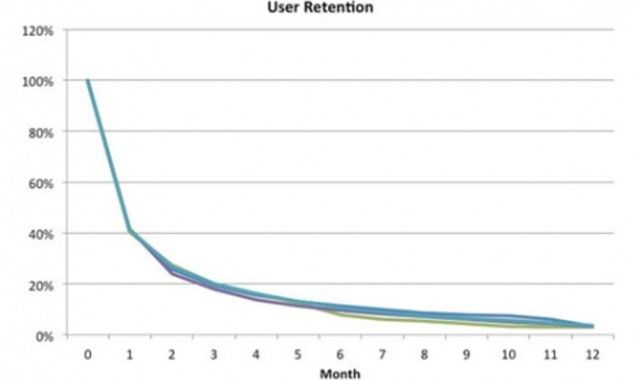
    Game user retention, via Pocketgamer
    Game user retention, via Pocketgamer

    The pattern is identical to one colleagues at UWA and I found for users dropping out of doing massive open online courses (Moocs). A feature of Mooc attrition is the extremely high attrition rate whose rate of decline was constant across different Moocs with different initial enrolment sizes. Like free-to-play games, Moocs cost nothing to enrol and have no consequences for leaving.
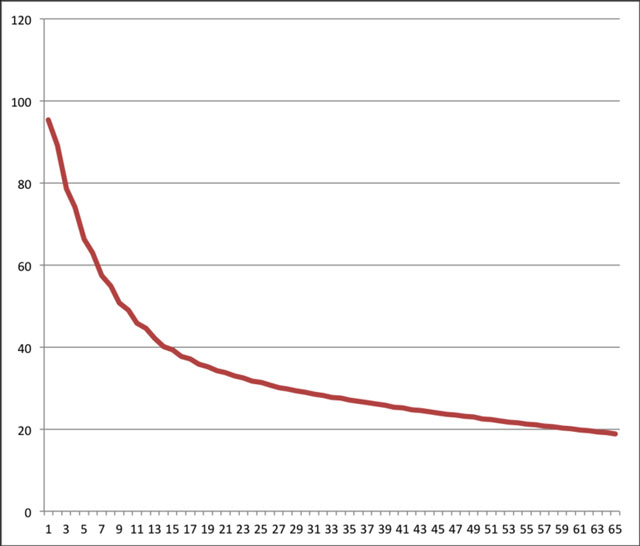
    Mooc attrition
    Mooc attrition

    Although it might be tempting to think that Pokémon Go is different, the graph shown above includes the data for Candy Crush, which users still spend more time playing than Pokémon Go.

    Pokémon Go has enjoyed a boost in its initial success in part because the players themselves have been far more visible as it plays out in public. This has led to large gatherings of thousands of players sharing the gaming experience. In the initial days of playing, when the novelty is at its height and going through the lower levels is straightforward, the rewards of playing are such that people are highly motivated to get out and play.

    Attrition curves for games show a typical fast loss of users followed by a slower, more gradual decline. The fast initial loss of users comes from those who downloaded the game and, because it hasn’t cost them anything, give it up just as easily. In the case of Pokémon Go, these users may simply be those who have downloaded the game because of the publicity but aren’t gamers or aren’t captivated by the game.

    The slower decline comes from users who do persist and get to a point in the game where the difficulty requires either skill and perseverance, or paying for features that accelerate progress.

    With Pokémon Go, there is a clear point where catching the same Pokémon becomes repetitive and the combat in the PokéGym too competitive until a player reaches the higher levels, which of course they can’t do unless they start paying or putting in much more effort. At this point, the intrinsic motivation that was driving the play diminishes and the likelihood of giving up increases.

    This is especially the case because of “ego-depletion” which is a theory that suggests that we have a limited amount of self-control and that this pool is reduced every time we exert it. Basically, things that we are not highly motivated to do become very much harder if we have already exerted self-control doing other things. The physical activity element of Pokémon Go, while being an initial drawcard for the game, becomes another hurdle to overcome once ego-depletion kicks in and the self-control needed exceeds the intrinsic benefits.

    pokemon-go-640

    Ego-depletion and the decline of users in games are invariants. There are very few ways to avoid the dynamics of people giving up doing something which has no sunk cost and no life-altering benefits. Pokémon has started off from a higher base of users than any other game, but its decline will follow the same course, and over the same relative path as other games.

    Compounding the normal attrition of users is the reaching of the “peak Pokémon” point at which the media loses interest and stop reporting stories on the “phenomenon”, including the bizarre things people are doing with the game. Google Trends illustrates the peak in searches for the game occurring last week.
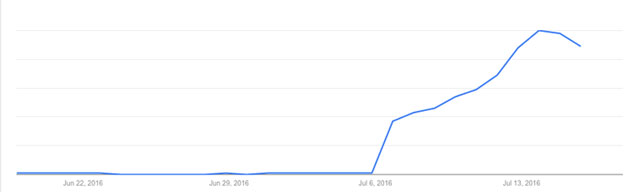
    Google Trends for Pokémon Go
    Google Trends for Pokémon Go

    Niantic, the makers of the game, will undoubtedly make a great deal of money out of the users who do stick around. And, of course, creating new versions which will kick off the whole process again. Given that the current version of the game is a far cry from what was promised in the promotional videos, there are bound to be more enhancements to come. It seems less likely that subsequent versions will enjoy quite the same degree of public and media interest however, but even if they do, their eventual course will be the same.The Conversation

    • David Glance is director of the UWA Centre for Software Practice, University of Western Australia
    • This article was originally published on The Conversation

    Follow TechCentral on Google News Add TechCentral as your preferred source on Google


    David Glance Niantic Niantic Labs Pokemon Pokemon Go
    WhatsApp YouTube
    Share. Facebook Twitter LinkedIn WhatsApp Telegram Email Copy Link
    Previous ArticleBill Gates: Africa’s youth can change the future
    Next Article Cape Town clamps down on Uber

    Related Posts

    What should gov’t be doing about the rise of AI?

    6 November 2017

    So, what exactly is an initial coin offering?

    28 September 2017

    Cars becoming like phones, needing regular software updates

    11 September 2017
    Company News
    Why Europe is turning to South Africa for cross-border innovation - BBD Software

    Why Europe is turning to South Africa for cross-border innovation

    24 July 2026
    Green dashboards, stalled change: the CIO's blind spot - Change Logic Marchant van den Heever

    Green dashboards, stalled change: the CIO’s blind spot

    24 July 2026
    Why Africa's cloud needs more than one path - Africa Data Centres

    Why Africa’s cloud needs more than one path

    23 July 2026
    Opinion
    Selling vapour is corporate suicide in slow motion - Jannie van Zyl

    Selling vapour is corporate suicide in slow motion

    16 July 2026
    Brazil's online gambling crackdown is a lesson for South Africa

    How Amazon outmanoeuvred Starlink in South Africa

    15 July 2026
    The Popia problem with agentic AI - Herman Haasbroek

    The Popia problem with agentic AI

    14 July 2026

    Subscribe to Updates

    Get the best South African technology news and analysis delivered to your e-mail inbox every morning.

    Latest Posts
    Africa's most popular phones have a tracking problem

    Africa’s most popular phones have a tracking problem

    24 July 2026
    Vodacom taps UJ, AWS to build its AI talent pipeline - Vodacom Group CEO Shameel Joosub

    Vodacom taps UJ, AWS to build its AI talent pipeline

    24 July 2026
    Intel is back in the game - Intel CEO Lip-Bu Tan. Laure Andrillon/Reuters

    Intel is back in the game

    24 July 2026
    Why Europe is turning to South Africa for cross-border innovation - BBD Software

    Why Europe is turning to South Africa for cross-border innovation

    24 July 2026
    © 2009 - 2026 NewsCentral Media
    Built and maintained by Chronon
    • Cookie policy (ZA)
    • TechCentral – privacy and Popia

    Type above and press Enter to search. Press Esc to cancel.

    Manage consent

    TechCentral uses cookies to enhance its offerings. Consenting to these technologies allows us to serve you better. Not consenting or withdrawing consent may adversely affect certain features and functions of the website.

    Functional Always active
    The technical storage or access is strictly necessary for the legitimate purpose of enabling the use of a specific service explicitly requested by the subscriber or user, or for the sole purpose of carrying out the transmission of a communication over an electronic communications network.
    Preferences
    The technical storage or access is necessary for the legitimate purpose of storing preferences that are not requested by the subscriber or user.
    Statistics
    The technical storage or access that is used exclusively for statistical purposes. The technical storage or access that is used exclusively for anonymous statistical purposes. Without a subpoena, voluntary compliance on the part of your Internet Service Provider, or additional records from a third party, information stored or retrieved for this purpose alone cannot usually be used to identify you.
    Marketing
    The technical storage or access is required to create user profiles to send advertising, or to track the user on a website or across several websites for similar marketing purposes.
    • Manage options
    • Manage services
    • Manage {vendor_count} vendors
    • Read more about these purposes
    View preferences
    • {title}
    • {title}
    • {title}