Close Menu
TechCentralTechCentral

    Subscribe to the newsletter

    Get the best South African technology news and analysis delivered to your e-mail inbox every morning.

    Facebook X (Twitter) YouTube LinkedIn
    WhatsApp Facebook X (Twitter) LinkedIn YouTube
    TechCentralTechCentral
    • News
      ICT is becoming the centre of gravity at Reunert - Anthonie de Beer and Rob Godlonton

      ICT is becoming the centre of gravity at Reunert

      6 August 2026
      Why Discovery is going slow on AI coding agents - Derek Wilcocks

      Why Discovery is going slow on AI coding agents

      6 August 2026
      Google's Gemini leadership team has left the building - Demis Hassabis

      Google’s Gemini leadership team has left the building

      6 August 2026
      SpaceX shares keep sliding - Elon Musk

      SpaceX shares keep sliding

      6 August 2026
      Solly Malatsi stakes South Africa's AI future on staying neutral

      Solly Malatsi stakes South Africa’s AI future on staying neutral

      5 August 2026
    • World
      Meta AI will now tell parents if their teen is in crisis

      Meta AI will now tell parents if their teen is in crisis

      17 July 2026
      IBM shares crash 25% as AI upends software spending - Arvind Krishna

      IBM shares crash 25% as AI upends software spending

      15 July 2026
      Jony Ive's first OpenAI device: an AI smart speaker - Jony Ive and Sam Altman

      Jony Ive’s first OpenAI device: an AI smart speaker

      15 July 2026
      Stripe, Advent in talks to buy PayPal for $53-billion

      Stripe, Advent in talks to buy PayPal for $53-billion

      15 July 2026
      Memory crisis sends smartphone market into steep decline

      Memory crisis sends smartphone market into steep decline

      13 July 2026
    • In-depth
      The plan to stop AI from breaking the world - Google DeepMind CEO Demis Hassabis. Image: John Sears

      The plan to stop AI from breaking the world

      16 July 2026
      The internet has a Strait of Hormuz problem

      The internet has a Strait of Hormuz problem

      15 July 2026
      AI boom sparks rally, frenzy and fear

      AI boom sparks rally, frenzy and fear

      11 June 2026
      Every plug-in hybrid on sale in South Africa, ranked by price - Lamborghini Temerario

      Every plug-in hybrid on sale in South Africa, ranked by price

      7 June 2026
      What Wi-Fi 8 will mean for wireless networks

      What Wi-Fi 8 will mean for wireless networks

      1 June 2026
    • TCS
      TCS+ | How AI is turning hardware into a subscription service - Shane van der Merwe Merchant West

      TCS+ | How AI is turning hardware into a subscription service

      6 August 2026
      TCS+ | Why South African workers must become supervisors of digital labour - Accelera Digital Group Cliff de Wit

      TCS+ | Why South African workers must become supervisors of digital labour

      31 July 2026
      TCS | Rapid deployment rules can't work without municipalities: ACT - Nomvuyiso Batyi

      TCS | Icasa’s rules skip the real bottleneck: ACT

      30 July 2026
      TCS+ | iStore Business on why Apple makes sense for SMEs - Sudesh Pillay and Tamia Nontsikelelo

      TCS+ | iStore Business on why Apple makes sense for SMEs

      30 July 2026
      TCS+ | A smarter approach to cloud for South African businesses - Joel Chacko and Jonathan Oaker

      TCS+ | A smarter approach to cloud for South African businesses

      28 July 2026
    • Opinion
      The author, Jannie van Zyl

      Selling vapour is corporate suicide in slow motion

      16 July 2026
      Brazil's online gambling crackdown is a lesson for South Africa

      How Amazon outmanoeuvred Starlink in South Africa

      15 July 2026
      The Popia problem with agentic AI - Herman Haasbroek

      The Popia problem with agentic AI

      14 July 2026
      The author, Fanie van Rooyen

      South Africa can still catch the AI wave – here’s how

      7 July 2026
      The author, Fanie van Rooyen

      The AI utopia South Africa can’t afford

      1 July 2026
    • Company Hubs
      • 1Stream
      • Africa Data Centres
      • AfriGIS
      • Altron Digital Business
      • Altron Document Solutions
      • Altron Group
      • Arctic Wolf
      • Ascent Technology
      • AvertITD
      • BBD
      • Braintree
      • CallMiner
      • CambriLearn
      • CM Telecom
      • Contactable
      • CYBER1 Solutions
      • Digicloud Africa
      • Digimune
      • Domains.co.za
      • ESET
      • Euphoria Telecom
      • HOSTAFRICA
      • Incredible Business
      • iONLINE
      • IQbusiness
      • Iris Network Systems
      • Kaspersky
      • LSD Open
      • Mitel
      • NEC XON
      • Netstar
      • Network Platforms
      • Next DLP
      • Ovations
      • Paracon
      • Paratus
      • Q-KON
      • SevenC
      • SkyWire
      • Solid8 Technologies
      • Telit Cinterion
      • Telviva
      • Tenable
      • Vertiv
      • Videri Digital
      • Vodacom Business
      • Vox
      • Wipro
      • Workday
      • XLink
    • Sections
      • AI and machine learning
      • Banking
      • Broadcasting and Media
      • Cloud services
      • Contact centres and CX
      • Cryptocurrencies
      • Education and skills
      • Electronics and hardware
      • Energy and sustainability
      • Enterprise software
      • Financial services
      • HealthTech
      • Information security
      • Internet and connectivity
      • Internet of Things
      • Investment
      • IT services
      • Lifestyle
      • Policy and regulation
      • Public sector
      • Retail and e-commerce
      • Satellite communications
      • Science
      • SMEs and start-ups
      • Social media
      • Talent and leadership
      • Telecoms
      • Watts & Wheels
    • Events
    • Advertise
    TechCentralTechCentral
    Home » Sections » AI and machine learning » Jensen Huang vs Lisa Su: Nvidia and AMD chiefs go to war

    Jensen Huang vs Lisa Su: Nvidia and AMD chiefs go to war

    The deepening rivalry may decide the direction of artificial intelligence design and adoption.
    By Agency Staff3 June 2024
    Twitter LinkedIn Facebook WhatsApp Email Telegram Copy Link
    News Alerts
    WhatsApp
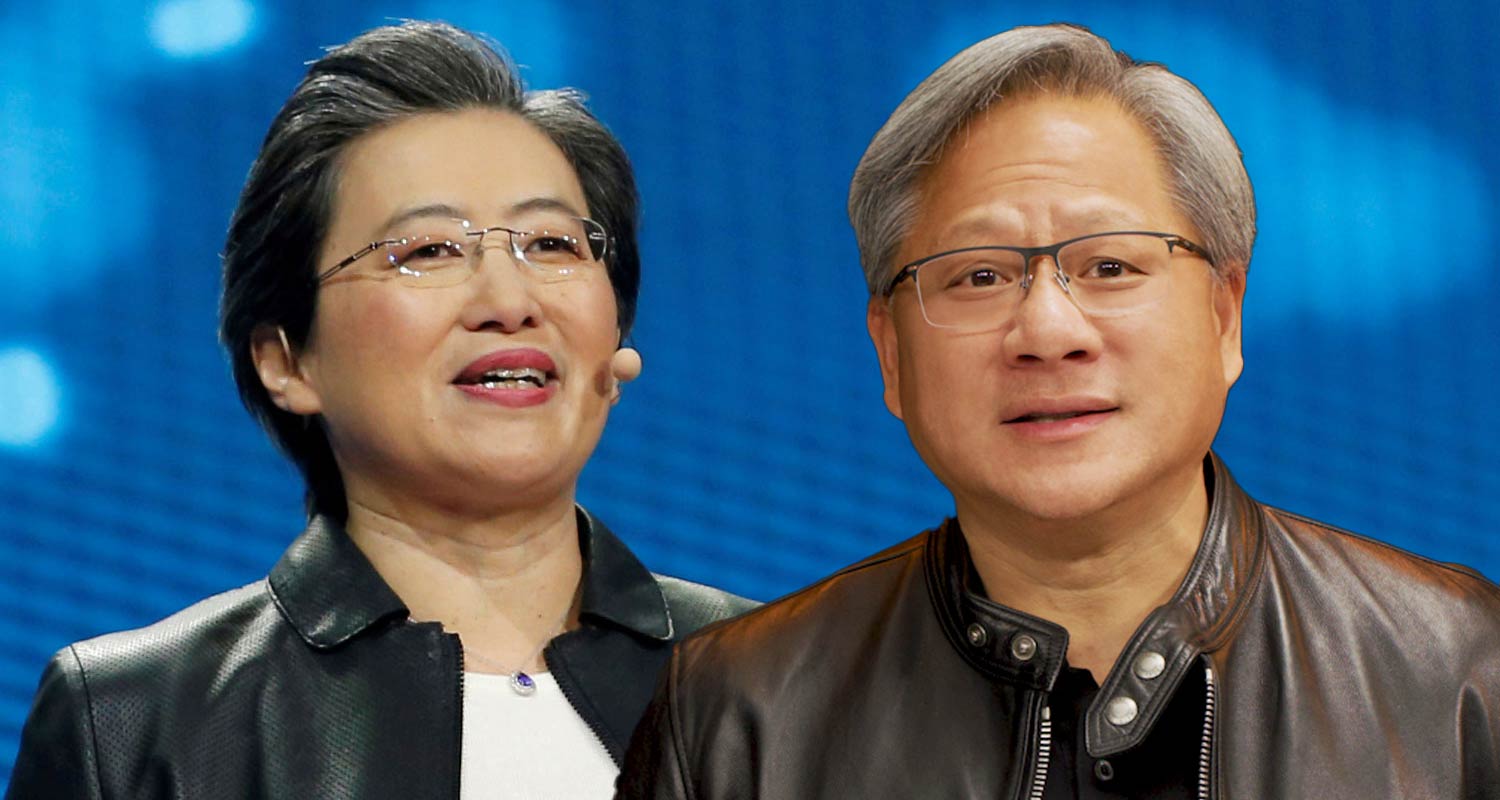
    Lisa Su and Jensen Huang

    Nvidia and AMD’s chiefs showcased new generations of the chips powering the global boom in AI development, deepening a rivalry that may decide the direction of artificial intelligence design and adoption.

    Jensen Huang and Lisa Su — both born in Taiwan and now local celebrities for leading US tech powerhouses — employed different tacks in conveying their expertise during back-to-back shows at the world’s largest computing conference this week in Taipei.

    Nvidia’s CEO repeatedly voiced his US$2.7-trillion company’s dominance in the accelerators that OpenAI and Microsoft rely on to build generative AI services like ChatGPT. Huang went as far as to tease a chip envisioned for 2026 he dubbed Rubin — after Vera Rubin, the American woman who helped discover dark matter. The chip, which will succeed the Blackwell family, will be key to sustaining its runaway leadership.

    AMD still has that underdog element about the business, and with AI it’s very much true

    While Huang headlined much of his own two-hour presentation on Sunday, AMD’s Su chose to make hers more of a team effort. She brought out a stream of big-name partners from HP CEO Enrique Lores to Lenovo Group’s Luca Rossi to convey the company’s focus on designing neural processors — a type of chip that runs AI services directly from laptops. At one point during her Computex address, Asustek Computer chairman Jonney Shih called her “the pride of Taiwan” — a characterisation often associated with Huang of Nvidia, whose market valuation is now about 10 times that of AMD’s.

    “People see Nvidia as a personification of Jensen. And while Lisa is the saviour of AMD, she’s very clear that it’s about everyone around her,” said Ian Cutress, chief analyst at the consultancy More Than Moore. “AMD still has that underdog element about the business, and with AI it’s very much true.”

    Growing stakes

    The back-to-back presentations — attended by hundreds and watched by thousands more across the globe — underscore the growing stakes in a technology that has the potential to redefine a slew of industries and create new devices that can near-instantly generate video and other content from simple commands.

    There’s a personal component to the competition, too. Su and Huang are not only both Taiwanese, they were born in the same city of roughly 1.8 million on Taiwan’s southern coast and are distant relatives. That hasn’t made either one more willing to cede ground to the other.

    Read: Nvidia seeks to expand its AI dominance

    Su was originally tapped by organisers to kick off the week-long conference, one of the most important summits for tech executives around the world. Instead, the Nvidia CEO organised his own presentation the Sunday night before the gathering’s official opening to talk about the chip maker’s strategic plans.

    Huang, who had keynoted Computex a year earlier, spoke at National Taiwan University just hours before the conference opened, essentially stealing the spotlight from his closest competitor. AMD’s Su on Monday referred obliquely to the episode during an OpenAI demo of a chatbot.
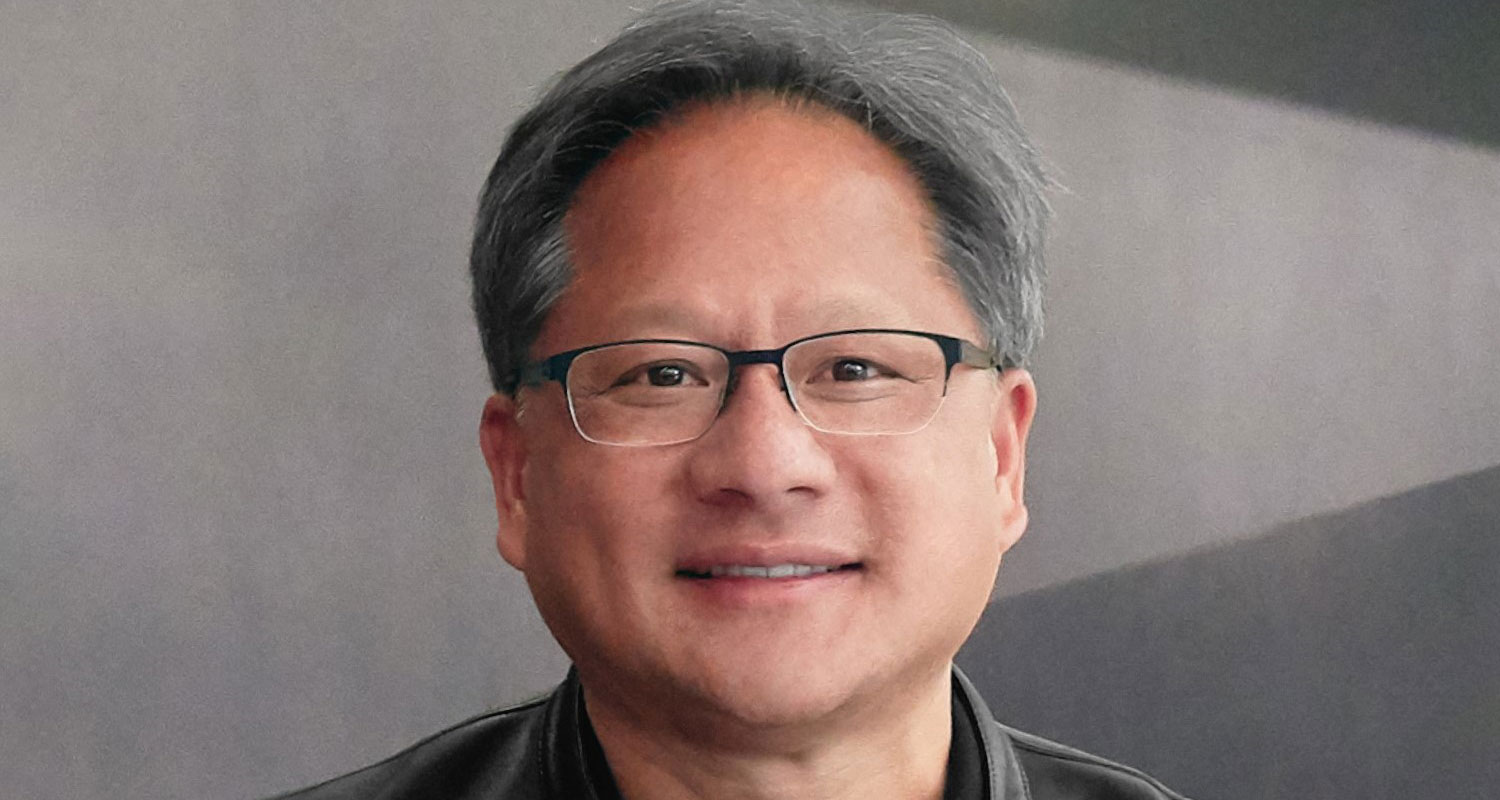
    Jensen Huang

    “Let’s start by letting the tool know that we’re interested in Taiwan, and that we’re going to be attending Computex,” Su said. “And you might ask something about the opening keynote,” she quipped, drawing laughter from the audience.

    Nvidia sees the rise of generative AI as a new Industrial Revolution and expects to play a major role as the technology shifts to PCs, the CEO said in his keynote address at National Taiwan University. He returned to themes he set out a year ago at the same venue, including the idea that those without AI capabilities will be left behind.

    Delegates to Computex remarked that Huang’s performance drove home Nvidia’s continued dominance — a position that appeared difficult for AMD or any other rival to shake in the short run. One fund manager said that Huang generated a lot of buzz in particular around Rubin, even though the CEO didn’t go into detail about a chip slated for 2026.

    Teasing out Rubin was extremely clever and is indicative of its commitment to a year-over-year refresh cycle

    Shares of TSMC and other suppliers rose after the announcement. TSMC’s stock climbed 3.1%, while Wistron gained 1.8%.

    Nvidia is selling customers a fully proprietary system, where businesses can buy its chips, networking gear and everything else required to run advanced AI development in data centres Huang has called AI factories. AMD, on the other hand, touts open standards that make its hardware interoperable with that of rivals like Intel.

    Huang said the upcoming Rubin AI platform will use HBM4, the next iteration of the essential high-bandwidth memory that’s grown into a bottleneck for AI accelerator production. Leading manufacturer SK Hynix is largely sold out through 2025. He otherwise didn’t offer detailed specifications for Nvidia’s upcoming products.

    Cadence of innovation

    “Teasing out Rubin and Rubin Ultra was extremely clever and is indicative of its commitment to a year-over-year refresh cycle,” said Dan Newman, CEO and chief analyst at Futurum Group. “What I feel he hammered home most clearly is the cadence of innovation, and the company’s relentless pursuit of maximising the limit of technology including software, process, packaging and partnerships to protect and expand its moat and market position.”

    But it was Su who commanded a broader, star-studded supporting line-up. She was joined onstage by Microsoft Windows chief Pavan Davuluri, a key leader of a company that’s regarded as stealing a march on Google and Baidu in the generative AI revolution.

    She and her partners used their Computex slot to show off new laptops with AI enhancements branded Copilot+. The majority of those devices coming to market are based on NPUs, which are more efficient at handling AI tasks and thus help extend battery life. Qualcomm was among the first out of the gate with Copilot+ PCs, but AMD’s response will be on the market from July. Nvidia has no comparable offering.
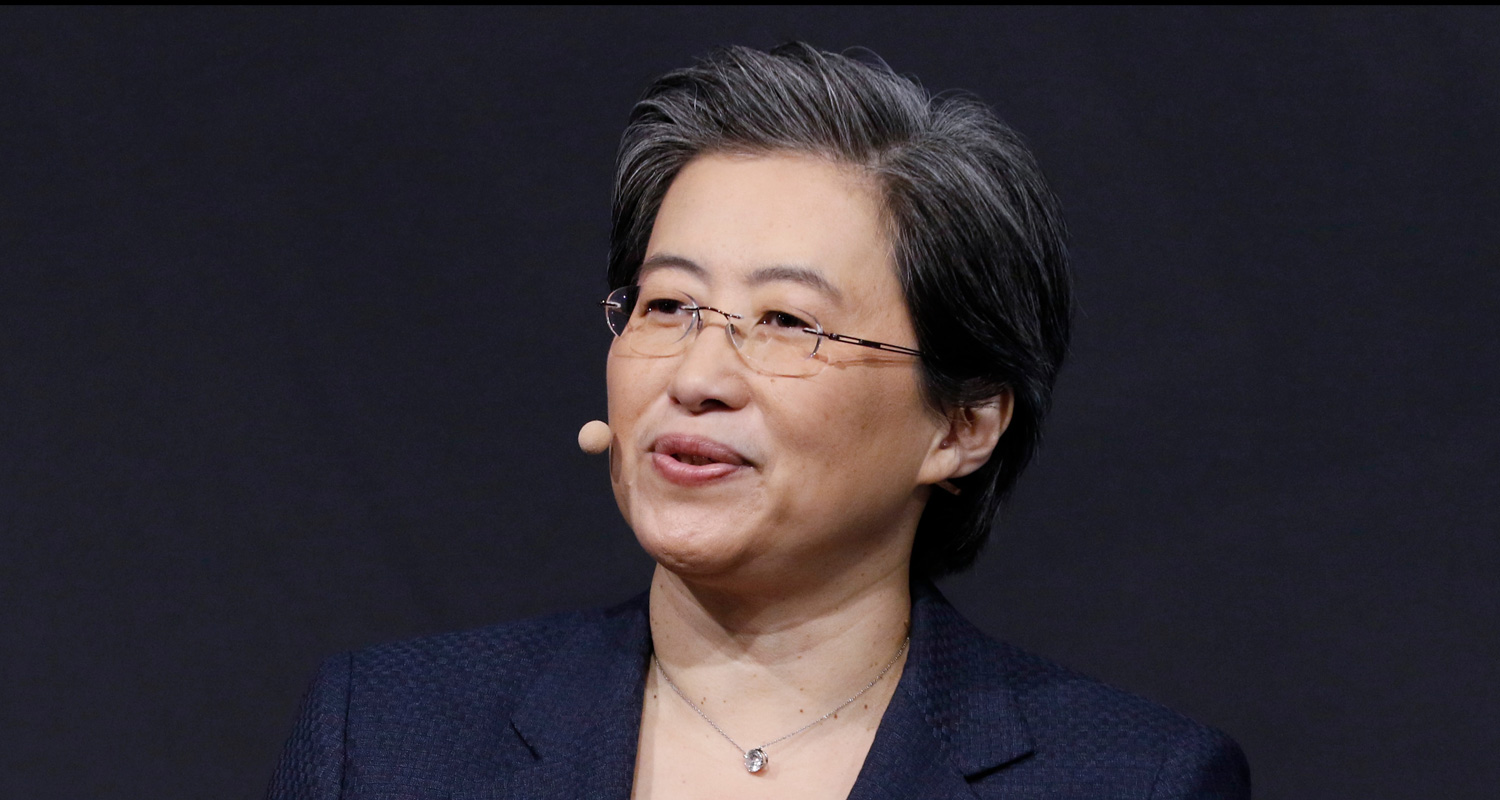
    Lisa Su

    Su concluded her keynote by returning to a key sphere of competition: data centres and AI training. She matched Huang’s annual upgrade timeline by announcing new AI chips for 2025 and 2026 and promising to speed up the rate of improvement from her company’s semiconductors.

    “The major difference between the two to me is that Jensen is not only technical and visionary, he’s also a salesman. Lisa is much more execution focused,” said Dave Altavilla, principal analyst at HotTech Vision and Analysis. “She has her work cut out for her, and they’re picking spots where it matters, and the data centre is obviously where the high margin is.”  — Vlad Savov, Jane Lanhee Lee and Takashi Mochizuki, with Ian King and Nick Turner, (c) 2024 Bloomberg LP

    Read next: AMD throws down the gauntlet to rival Nvidia

    Follow TechCentral on Google News Add TechCentral as your preferred source on Google


    AMD Asus Enrique Lores HP Jensen Huang Lenovo Lisa Su Luca Rossi Microsoft Nvidia Pavan Davuluri
    WhatsApp YouTube
    Share. Facebook Twitter LinkedIn WhatsApp Telegram Email Copy Link
    Previous ArticleState scraps plan for own cloud data centres
    Next Article Technology’s unsung heroes

    Related Posts

    Solly Malatsi stakes South Africa's AI future on staying neutral

    Solly Malatsi stakes South Africa’s AI future on staying neutral

    5 August 2026
    Microsoft just had the biggest day in stock market history

    Microsoft just had the biggest day in stock market history

    31 July 2026
    Meta cash flow collapses as AI bill hits $145-billion - Mark Zuckerberg

    Meta cash flow collapses as AI bill hits $145-billion

    30 July 2026
    Company News
    What a cloud review reveals about how a company actually runs - LSD Open

    What a cloud review reveals about how a company actually runs

    6 August 2026
    Manufacturing from a garage is now a realistic business plan - MaxLaser

    Manufacturing from a garage is now a realistic business plan

    6 August 2026
    South Africa agrees on a shared language for location - AfriGIS

    South Africa agrees on a shared language for location

    5 August 2026
    Opinion
    The author, Jannie van Zyl

    Selling vapour is corporate suicide in slow motion

    16 July 2026
    Brazil's online gambling crackdown is a lesson for South Africa

    How Amazon outmanoeuvred Starlink in South Africa

    15 July 2026
    The Popia problem with agentic AI - Herman Haasbroek

    The Popia problem with agentic AI

    14 July 2026

    Subscribe to Updates

    Get the best South African technology news and analysis delivered to your e-mail inbox every morning.

    Latest Posts
    ICT is becoming the centre of gravity at Reunert - Anthonie de Beer and Rob Godlonton

    ICT is becoming the centre of gravity at Reunert

    6 August 2026
    Why Discovery is going slow on AI coding agents - Derek Wilcocks

    Why Discovery is going slow on AI coding agents

    6 August 2026
    Google's Gemini leadership team has left the building - Demis Hassabis

    Google’s Gemini leadership team has left the building

    6 August 2026
    SpaceX shares keep sliding - Elon Musk

    SpaceX shares keep sliding

    6 August 2026
    © 2009 - 2026 NewsCentral Media
    Built and maintained by Chronon
    • Cookie policy (ZA)
    • TechCentral – privacy and Popia

    Type above and press Enter to search. Press Esc to cancel.

    Manage consent

    TechCentral uses cookies to enhance its offerings. Consenting to these technologies allows us to serve you better. Not consenting or withdrawing consent may adversely affect certain features and functions of the website.

    Functional Always active
    The technical storage or access is strictly necessary for the legitimate purpose of enabling the use of a specific service explicitly requested by the subscriber or user, or for the sole purpose of carrying out the transmission of a communication over an electronic communications network.
    Preferences
    The technical storage or access is necessary for the legitimate purpose of storing preferences that are not requested by the subscriber or user.
    Statistics
    The technical storage or access that is used exclusively for statistical purposes. The technical storage or access that is used exclusively for anonymous statistical purposes. Without a subpoena, voluntary compliance on the part of your Internet Service Provider, or additional records from a third party, information stored or retrieved for this purpose alone cannot usually be used to identify you.
    Marketing
    The technical storage or access is required to create user profiles to send advertising, or to track the user on a website or across several websites for similar marketing purposes.
    • Manage options
    • Manage services
    • Manage {vendor_count} vendors
    • Read more about these purposes
    View preferences
    • {title}
    • {title}
    • {title}