Close Menu
TechCentralTechCentral

    Subscribe to the newsletter

    Get the best South African technology news and analysis delivered to your e-mail inbox every morning.

    Facebook X (Twitter) YouTube LinkedIn
    WhatsApp Facebook X (Twitter) LinkedIn YouTube
    TechCentralTechCentral
    • News
      Acsa is adding AI and augmented reality to its airport app

      Acsa is adding AI and augmented reality to its airport app

      23 July 2026
      TCS | How Optasia lends billions to people banks can't see - Salvador Anglada

      TCS | How Optasia lends billions to people banks can’t see

      23 July 2026
      Massive changes coming to Amazon Prime Video - Jeff Bezos

      Massive changes coming to Amazon Prime Video

      23 July 2026
      Load shedding is over - and that's exposing a new energy crisis

      Load shedding is over – and that’s exposing a new energy crisis

      23 July 2026
      Fat bonuses at Telkom despite group missing own targets - Serame Taukobong

      Fat bonuses at Telkom despite group missing own targets

      23 July 2026
    • World
      Meta AI will now tell parents if their teen is in crisis

      Meta AI will now tell parents if their teen is in crisis

      17 July 2026
      IBM shares crash 25% as AI upends software spending - Arvind Krishna

      IBM shares crash 25% as AI upends software spending

      15 July 2026
      Jony Ive's first OpenAI device: an AI smart speaker - Jony Ive and Sam Altman

      Jony Ive’s first OpenAI device: an AI smart speaker

      15 July 2026
      Stripe, Advent in talks to buy PayPal for $53-billion

      Stripe, Advent in talks to buy PayPal for $53-billion

      15 July 2026
      Memory crisis sends smartphone market into steep decline

      Memory crisis sends smartphone market into steep decline

      13 July 2026
    • In-depth
      The plan to stop AI from breaking the world - Google DeepMind CEO Demis Hassabis. Image: John Sears

      The plan to stop AI from breaking the world

      16 July 2026
      The internet has a Strait of Hormuz problem

      The internet has a Strait of Hormuz problem

      15 July 2026
      AI boom sparks rally, frenzy and fear

      AI boom sparks rally, frenzy and fear

      11 June 2026
      Every plug-in hybrid on sale in South Africa, ranked by price - Lamborghini Temerario

      Every plug-in hybrid on sale in South Africa, ranked by price

      7 June 2026
      What Wi-Fi 8 will mean for wireless networks

      What Wi-Fi 8 will mean for wireless networks

      1 June 2026
    • TCS
      The rands-and-cents case for electric trucks - William Kelly Watts & Wheels with Wills

      The rands-and-cents case for electric trucks

      20 July 2026
      Watts & Wheels S1E7: 'Ferrari's EV breaks the internet'

      Watts & Wheels S1E7: ‘Ferrari’s EV breaks the internet’

      8 July 2026
      TCS | Pick n Pay's Enrico Ferigolli on Penny, the AI that shops for you

      TCS | Pick n Pay’s Enrico Ferigolli on Penny, the AI that shops for you

      2 July 2026
      TCS+ | How Tracker is turning vehicle data into business strategy - Silvia Schollenberger

      TCS+ | How Tracker is turning vehicle data into business strategy

      1 July 2026
      TCS+ | IBM Bob: an AI-powered 'development partner' for the enterprise - David Spurway

      TCS+ | IBM Bob: an AI-powered development partner for the enterprise

      30 June 2026
    • Opinion
      Selling vapour is corporate suicide in slow motion - Jannie van Zyl

      Selling vapour is corporate suicide in slow motion

      16 July 2026
      Brazil's online gambling crackdown is a lesson for South Africa

      How Amazon outmanoeuvred Starlink in South Africa

      15 July 2026
      The Popia problem with agentic AI - Herman Haasbroek

      The Popia problem with agentic AI

      14 July 2026
      The author, Fanie van Rooyen

      South Africa can still catch the AI wave – here’s how

      7 July 2026
      The author, Fanie van Rooyen

      The AI utopia South Africa can’t afford

      1 July 2026
    • Company Hubs
      • 1Stream
      • Africa Data Centres
      • AfriGIS
      • Altron Digital Business
      • Altron Document Solutions
      • Altron Group
      • Arctic Wolf
      • Ascent Technology
      • AvertITD
      • BBD
      • Braintree
      • CallMiner
      • CambriLearn
      • CM Telecom
      • Contactable
      • CYBER1 Solutions
      • Digicloud Africa
      • Digimune
      • Domains.co.za
      • ESET
      • Euphoria Telecom
      • HOSTAFRICA
      • Incredible Business
      • iONLINE
      • IQbusiness
      • Iris Network Systems
      • Kaspersky
      • LSD Open
      • Mitel
      • NEC XON
      • Netstar
      • Network Platforms
      • Next DLP
      • Ovations
      • Paracon
      • Paratus
      • Q-KON
      • SevenC
      • SkyWire
      • Solid8 Technologies
      • Telit Cinterion
      • Telviva
      • Tenable
      • Vertiv
      • Videri Digital
      • Vodacom Business
      • Vox
      • Wipro
      • Workday
      • XLink
    • Sections
      • AI and machine learning
      • Banking
      • Broadcasting and Media
      • Cloud services
      • Contact centres and CX
      • Cryptocurrencies
      • Education and skills
      • Electronics and hardware
      • Energy and sustainability
      • Enterprise software
      • Financial services
      • HealthTech
      • Information security
      • Internet and connectivity
      • Internet of Things
      • Investment
      • IT services
      • Lifestyle
      • Policy and regulation
      • Public sector
      • Retail and e-commerce
      • Satellite communications
      • Science
      • SMEs and start-ups
      • Social media
      • Talent and leadership
      • Telecoms
      • Watts & Wheels
    • Events
    • Advertise
    TechCentralTechCentral
    Home » Company News » Secure Access: Business Confidential

    Secure Access: Business Confidential

    By Tony Walt15 December 2020
    Twitter LinkedIn Facebook WhatsApp Email Telegram Copy Link
    News Alerts
    WhatsApp
    The author, Tony Walt, argues that the attack surface has increased significantly as a result of work-from-home measures

    The global pandemic has almost completely changed traditional working models and approaches. Even those organisations resistant to cloud, digital and remote working have had to flex and adapt to the requirements of social and legal distancing regulations.

    The new workforce emerging from the rubble of the year wants the freedom to leverage both digital and physical environments to get the job done. Approaches have changed, methodologies have shifted, and statistics point to the rise of the blended workplace where people work from a mix of remote and office spaces. However, as companies and employees evolve and adapt to the new world of work, there is a critical need to embed security into this evolution from the outset.

    For more information, please visit this website

    The introduction of remote working, be it from home or any location that’s not the office, has also introduced vulnerabilities. Are all employees using devices issued by their organisations with the relevant controls, or are some using their own devices because pandemic restrictions limited their access? Who has access to these devices? The security risk isn’t just that family members could accidentally introduce malware or download unsafe content, but that patch and vulnerability management isn’t being implemented correctly. Whether a device is company owned or part of a bring your own device (BYOD) strategy, organisations still need to ensure that policies around patches, security and access are rigorously maintained.

    Organisations still need to ensure that policies around patches, security and access are rigorously maintained

    The problem in the pandemic is that IT departments were thrust into remote working conditions as rapidly as everyone else. Patch management, security, access, remote management – these concerns had to be addressed remotely, often while adapting to new systems and solutions cobbled together at the last minute. Juggling remote employees learning how to work from kitchens and bar stools while keeping the company lights on and ensuring systems were capable of handling the stress meant that IT teams have been under immense pressure to keep the business running.

    Time is now

    But the time to embed security is now. The attack surface has increased significantly, spreading outwards alongside a distributed workforce that could be easily contained in the past. A thousand people suddenly working from a thousand locations instead of the one that they had before. That alone captures the magnitude of the change with regards to traffic flows alone.

    Threat hunters have been taking advantage of the chaos – phishing attacks have increased, malware is on the rise and ransomware continues to plague even the most sophisticated systems. People are lured into clicking links that have been designed to prey on the fear factor, using terms such as Covid-19 and vaccination. And because they are external to the office, people are more vulnerable and susceptible than in the past.

    Addressing these risks to ensure secure access starts with a security awareness training programme for all employees. This will provide them with insight into the types of attack that would be aimed at them, how to identify attacks, and understanding around the risks. It will ensure that the standards and basic controls around e-mail hygiene and online behaviour are clearly understood, and that passwords are to the right levels for remote access and information sharing. It’s also worth implementing additional controls at the infrastructure level that ensure firewalls and access, among other factors, are absolutely secure. These can be further enhanced by undertaking a cybersecurity assessment designed to identify vulnerabilities and evaluate the controls that are in place. In addition, threat monitoring and management has to become a priority. Often, issues aren’t caught and compromises missed due to the complexities introduced by the virtual workplace. Organisations need the insights provided by threat analysis so that they can make the right security decisions.
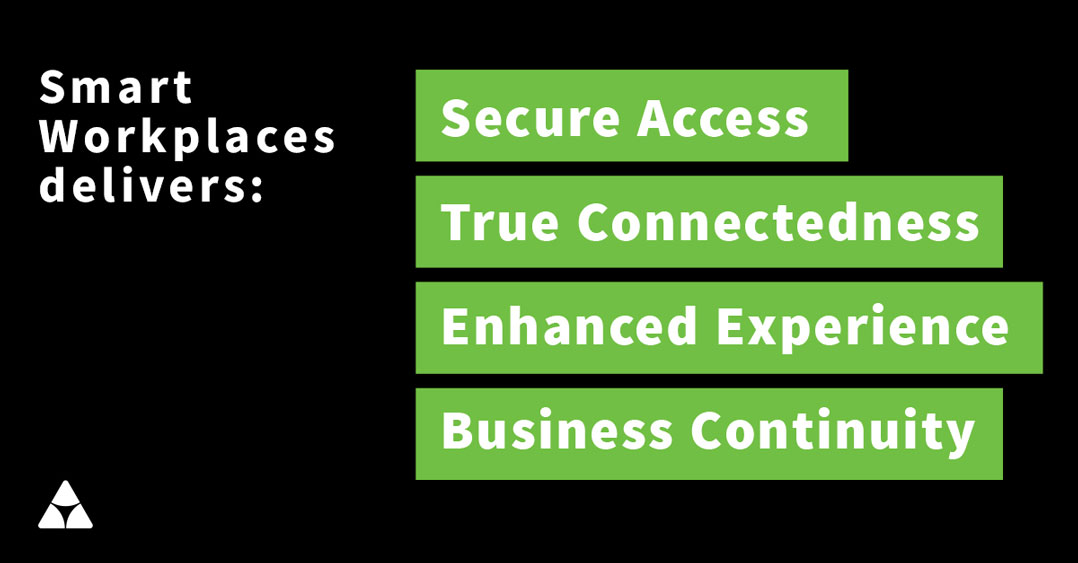
    The problem is time and skills. Few organisations have the capacity, tools or experience to monitor secure access 24/7 with the right levels of control. Yet they have to constantly monitor for threats and compromise to ensure that they mitigate risk for governance and compliance. This can be resolved by working with a partner that can take care of the three Ps – platform, people and process. A security management partner can not only take care of security systems across e-mail, scanning, behaviour and risk, but can support an organisation’s security in terms of governance and compliance. With the right partner, the business can look at the broader picture while the security partner ensures that cybersecurity is never neglected, always on, and capable of mitigating the most significant threats.

    The world of work will likely remain in flux for the foreseeable future as organisations adapt to ongoing uncertainty. This means that security will have to constantly change and adapt to match. It’s a challenge, but one that can be mitigated with the right partner and posture.

    For more information, please visit this website.

    • This promoted content was paid for by the party concerned

    Follow TechCentral on Google News Add TechCentral as your preferred source on Google


    Dimension Data Tony Walt
    WhatsApp YouTube
    Share. Facebook Twitter LinkedIn WhatsApp Telegram Email Copy Link
    Previous ArticleAll eyes on bitcoin this December: What’s next?
    Next Article SpaceX in talks for new funds at up to $92-billion valuation: report

    Related Posts

    South Africa's data centre market ripe for consolidation - Joshua Smythwood

    South Africa’s data centre market ripe for consolidation

    10 February 2026
    Data centre

    Wiocc subsidiary OADC cleared to buy NTT data centres in South Africa

    23 December 2025
    Former Dimension Data execs accuse NTT of smear tactics - Jeremy Ord

    Former Dimension Data execs accuse NTT of smear tactics

    4 August 2025
    Company News
    Why Africa's cloud needs more than one path

    Why Africa’s cloud needs more than one path

    23 July 2026
    Samsung's new Galaxy Z series: foldables, perfected

    Samsung’s new Galaxy Z series: foldables, perfected

    22 July 2026
    Is your cloud PBX a hacker's back door? Centracom

    Is your cloud PBX a hacker’s back door?

    22 July 2026
    Opinion
    Selling vapour is corporate suicide in slow motion - Jannie van Zyl

    Selling vapour is corporate suicide in slow motion

    16 July 2026
    Brazil's online gambling crackdown is a lesson for South Africa

    How Amazon outmanoeuvred Starlink in South Africa

    15 July 2026
    The Popia problem with agentic AI - Herman Haasbroek

    The Popia problem with agentic AI

    14 July 2026

    Subscribe to Updates

    Get the best South African technology news and analysis delivered to your e-mail inbox every morning.

    Latest Posts
    Acsa is adding AI and augmented reality to its airport app

    Acsa is adding AI and augmented reality to its airport app

    23 July 2026
    TCS | How Optasia lends billions to people banks can't see - Salvador Anglada

    TCS | How Optasia lends billions to people banks can’t see

    23 July 2026
    Massive changes coming to Amazon Prime Video - Jeff Bezos

    Massive changes coming to Amazon Prime Video

    23 July 2026
    Why Africa's cloud needs more than one path

    Why Africa’s cloud needs more than one path

    23 July 2026
    © 2009 - 2026 NewsCentral Media
    Built and maintained by Chronon
    • Cookie policy (ZA)
    • TechCentral – privacy and Popia

    Type above and press Enter to search. Press Esc to cancel.

    Manage consent

    TechCentral uses cookies to enhance its offerings. Consenting to these technologies allows us to serve you better. Not consenting or withdrawing consent may adversely affect certain features and functions of the website.

    Functional Always active
    The technical storage or access is strictly necessary for the legitimate purpose of enabling the use of a specific service explicitly requested by the subscriber or user, or for the sole purpose of carrying out the transmission of a communication over an electronic communications network.
    Preferences
    The technical storage or access is necessary for the legitimate purpose of storing preferences that are not requested by the subscriber or user.
    Statistics
    The technical storage or access that is used exclusively for statistical purposes. The technical storage or access that is used exclusively for anonymous statistical purposes. Without a subpoena, voluntary compliance on the part of your Internet Service Provider, or additional records from a third party, information stored or retrieved for this purpose alone cannot usually be used to identify you.
    Marketing
    The technical storage or access is required to create user profiles to send advertising, or to track the user on a website or across several websites for similar marketing purposes.
    • Manage options
    • Manage services
    • Manage {vendor_count} vendors
    • Read more about these purposes
    View preferences
    • {title}
    • {title}
    • {title}