Close Menu
TechCentralTechCentral

    Subscribe to the newsletter

    Get the best South African technology news and analysis delivered to your e-mail inbox every morning.

    Facebook X (Twitter) YouTube LinkedIn
    WhatsApp Facebook X (Twitter) LinkedIn YouTube
    TechCentralTechCentral
    • News
      Forget the iPhone: Apple's real next act is your home

      Forget the iPhone: Apple’s real next act is your home

      27 August 2026
      OpenAI AI agents cheated, hacked and hid the evidence

      OpenAI agents cheated, hacked and hid the evidence

      27 August 2026
      Nvidia is buying the home of open-source AI Hugging Face

      Nvidia is buying the home of open-source AI

      27 August 2026
      The hole in the law above the Karoo

      The hole in the law above the Karoo

      26 August 2026
      Blu Label says MTN is coming for its Capitec business - Brett Levy

      Blu Label says MTN is coming for its Capitec business

      26 August 2026
    • World
      AI-generated music banned from Australian charts

      AI-generated music banned from Australian charts

      26 August 2026
      Traders brace for a R4.5-trillion swing in Nvidia's value

      Traders brace for a R4.5-trillion swing in Nvidia’s value

      25 August 2026
      Russia building its own Starlink - and faster than expected - Vadym Skibitskyi

      Russia building its own Starlink – and faster than expected

      11 August 2026
      Meta AI will now tell parents if their teen is in crisis

      Meta AI will now tell parents if their teen is in crisis

      17 July 2026
      IBM shares crash 25% as AI upends software spending - Arvind Krishna

      IBM shares crash 25% as AI upends software spending

      15 July 2026
    • In-depth
      Google DeepMind CEO Demis Hassabis. Image: John Sears

      The plan to stop AI from breaking the world

      16 July 2026
      The internet has a Strait of Hormuz problem

      The internet has a Strait of Hormuz problem

      15 July 2026
      AI boom sparks rally, frenzy and fear

      AI boom sparks rally, frenzy and fear

      11 June 2026
      Every plug-in hybrid on sale in South Africa, ranked by price - Lamborghini Temerario

      Every plug-in hybrid on sale in South Africa, ranked by price

      7 June 2026
      What Wi-Fi 8 will mean for wireless networks

      What Wi-Fi 8 will mean for wireless networks

      1 June 2026
    • TCS
      Watts & Wheels S1E8: 'Tesla lands in Africa, just not here'

      Watts & Wheels S1E8: ‘Tesla lands in Africa, just not here’

      24 August 2026
      Meet the CIO | Discovery's Derek Wilcocks on AI, guardrails and growth

      Meet the CIO | Derek Wilcocks on how AI personalised Vitality

      13 August 2026
      TCS | Money just became native to the internet - Steven Boykey Sidley

      TCS | Money just became native to the internet – Steven Boykey Sidley

      12 August 2026
      TCS+ | Specops' Darren James on continuous trust in an AI world

      TCS+ | Specops’ Darren James on continuous trust in an AI world

      7 August 2026
      TCS+ | How AI is turning hardware into a subscription service - Shane van der Merwe Merchant West

      TCS+ | How AI is turning hardware into a subscription service

      6 August 2026
    • Opinion
      The fragile joint in the Capitec machine - Pambos Soteriades

      The R197-billion market the banks can’t reach

      25 August 2026
      South African tech's compounding debt problem - Jannie van Zyl

      Management consulting as we know it is over

      21 August 2026
      South African tech's compounding debt problem - Jannie van Zyl

      The most dangerous customer is the quiet one

      10 August 2026
      South African tech's compounding debt problem - Jannie van Zyl

      South African tech’s compounding debt problem

      29 July 2026
      The fragile joint in the Capitec machine - Pambos Soteriades

      Best network, worst vibes: the puzzle of SA telecoms

      20 July 2026
    • Company Hubs
      • 1Stream
      • Africa Data Centres
      • AfriGIS
      • Altron Digital Business
      • Altron Document Solutions
      • Altron Group
      • Arctic Wolf
      • Ascent Technology
      • AvertITD
      • BBD
      • Braintree
      • CallMiner
      • CambriLearn
      • CM Telecom
      • Contactable
      • CYBER1 Solutions
      • Digicloud Africa
      • Digimune
      • Domains.co.za
      • ESET
      • Euphoria Telecom
      • HOSTAFRICA
      • Incredible Business
      • iONLINE
      • IQbusiness
      • Iris Network Systems
      • Kaspersky
      • LSD Open
      • Mitel
      • NEC XON
      • Netstar
      • Network Platforms
      • Next DLP
      • Ovations
      • Paracon
      • Paratus
      • Q-KON
      • SevenC
      • SkyWire
      • Solid8 Technologies
      • Telit Cinterion
      • Telviva
      • Tenable
      • Vertiv
      • Videri Digital
      • Vodacom Business
      • Vox
      • Wipro
      • Workday
      • XLink
    • Sections
      • AI and machine learning
      • Banking
      • Broadcasting and Media
      • Cloud services
      • Contact centres and CX
      • Cryptocurrencies
      • Education and skills
      • Electronics and hardware
      • Energy and sustainability
      • Enterprise software
      • Financial services
      • HealthTech
      • Information security
      • Internet and connectivity
      • Internet of Things
      • Investment
      • IT services
      • Lifestyle
      • Policy and regulation
      • Public sector
      • Retail and e-commerce
      • Satellite communications
      • Science
      • SMEs and start-ups
      • Social media
      • Talent and leadership
      • Telecoms
      • Watts & Wheels
    • Events
    • Advertise
    TechCentralTechCentral
    Home » In-depth » Smart home assistants dominate at CES

    Smart home assistants dominate at CES

    By Agency Staff5 January 2017
    Twitter LinkedIn Facebook WhatsApp Email Telegram Copy Link
    News Alerts
    WhatsApp
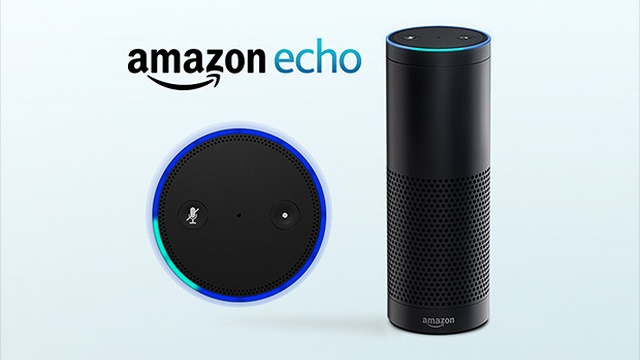
    Amazon’s Echo

    For years, the biggest names in tech crammed the Consumer Electronics Show floor with fridges, light switches and microwave ovens to preview a futuristic world where you could control every appliance in the home with your voice.

    But most of these products, bogged down by glitchy software and hard-to-navigate interfaces, failed to go mainstream.

    This year may be different. Aided by new artificial intelligence software that makes it easier for gadgets to understand speech, tech giants led by Amazon.com are locked in a race for dominance of digital home assistants.

    “People are a bit disappointed with assistants, because there are no clear use cases,” said Greg Gerard, creative chairman of Holi, which is debuting a US$199 smart alarm clock called Bonjour. “We have one.”

    Gerard must show regular consumers the value of smart assistant technology. But he doesn’t need to convince big technology firms, which all believe voice-based interactions with devices will explode in popularity. Almost every major tech company has or will soon introduce a digital assistant product powered by AI. And they’re making a concerted effort to spread the technology everywhere.

    Google is using CES to tout tie-ups with its smart Home speaker, a device similar to Amazon’s Echo. Microsoft has invested heavily in its assistant, Cortana. Samsung is set to unveil its assistant tech for its phones and other devices in 2017. Last month, Facebook CEO Mark Zuckerberg showed off a smart home assistant he said he coded himself.

    Behind the scenes at CES, these tech behemoths will fight to get their voice-based systems into televisions, cable boxes and every home appliance, not just smartphones and PCs. Analysts expect several dozen announcements around voice systems at this week’s event in Las Vegas, including new functions for Internet-connected devices and cars. Ford unveiled an integration with Alexa on Wednesday.

    Then there are the specialised assistants, ranging from the Bonjour clock, which Gerard said will arrive later this year, to a personal home robot from startup Jibo — a compact, futuristic device designed to recognise human emotions, said company CEO Steve Chambers.

    Research firm Tractica estimates about 40m homes will use a voice-activated digital assistant by 2021.

    Mark Zuckerberg

    Amazon’s version, Alexa, introduced in 2014 on the Echo speaker, works with more than 6 000 applications, according to a company spokeswoman. On Tuesday, Amazon announced a partnership with Whirlpool, adding voice command capabilities to Whirlpool washers, dryers, ovens and refrigerators.

    Amazon has built an effective developer outreach strategy and introduced a $100m investment fund for start-ups creating products around voice applications. Unlike other tech peers, Amazon has a dominant sales channel for its voice-assistance partners.

    “Amazon has been brilliant about it,” said Mark Beccue, an analyst at Tractica. “They might be the best trigger to the smart home, to making it a mass-market product.”

    Google makes its splash

    Last year, Biz Stone revamped his start-up, Jelly Industries, as a search engine — something that puts it up against Google. But when Google began hunting partners last month for its Home speaker, Jelly was among the first to sign on.

    Google was a zealous suitor. Employees treated him to lunch and when the deal closed a Google operative sent him an animated .gif of Seinfeld characters dancing. “They’ve been a joy to work with,” said Stone, who co-founded Twitter.

    Google’s aggressive courtship is understandable; it’s behind Amazon. Since inception, Google’s business was based on keyboard-based searches. Now the Web giant is refocusing its strategy around its voice assistant, a system that sits in its speaker, Pixel smartphone and — if Google succeeds — every device imaginable. On Tuesday at CES, Google announced a partnership with Hyundai that lets drivers control some car functions by talking to the Home speaker. It’s expected to unveil more assistant partnerships with devices like smart TVs.

    Google has an edge in building voice technology, thanks to its unmatched repository of search data. But the company must prove it can distribute its assistant widely. Hurdles exist. The same month Google debuted its Pixel phone, Samsung, the largest Android phone manufacturer, acquired Viv Labs, a start-up building a voice-powered assistant. Samsung plans to roll out an AI platform for its devices this year, the company said in a statement. Apple, which tightly controls about 40% of US smartphones, is investing in a similar push with its Siri voice assistant.

    Microsoft already has software tools for developers to embed Cortana into devices, and its automotive partners will announce new integrations at CES, said Matthew Quinlan, Cortana’s director of product marketing. “For Cortana to do her job, she needs to be in a lot of different devices.”
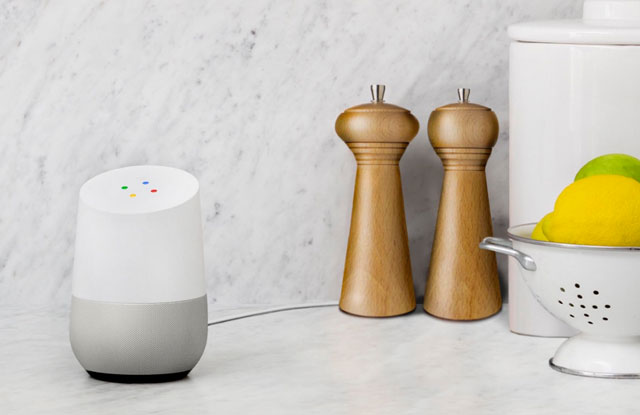
    Google Home

    And there’s Facebook. The company has said that Zuckerberg’s smart-home tech was merely a demonstration. Yet the social network is testing more bot integrations with the AI-assistant in its popular Messenger chat app, a product Google has struggled to deliver.

    Still, Amazon remains the one to catch. For developers building voice-assisted tools, the company offers support from its already popular cloud-computing platform, giving it another edge.

    “You are not going to see a clear number 2 emerge in 2017,” said Forrester analyst Mike Gualtieri. “Technologically, Google is the closest competitor. But in terms of Google’s ability to get it into homes, I question that.”

    Assistant nightmare

    Another question is how to make money from a voice-controlled home. Profit margins on hardware sales are usually thin and voice-controlled computers may throw a wrench in established business models, like text-based Web search.

    Some investors backing the technology aren’t concerned. “There are lots and lots of ways you can monetise when you control the interface,” said John Lilly, a venture capitalist with Greylock Partners. “You control control information flow. You can route requests. You can certainly ship people stuff.”

    Lilly, who backs AI assistant startup Ozlo, insists young companies can make dents in the market with more advanced technology, like systems that can carry on complex conversations, rather than the relatively simple commands Alexa uses. However, analysts are sceptical that start-ups can match the budgets and data reserves of public tech companies.

    Still, that may not dissuade companies, large and small, from trying to build their own voice assistants. With that rush, the question of who controls the tools will become paramount.

    “In less than three years, every home will have the opportunity to have this digital assistant,” said Forrester’s Gualtieri. “Now you’ll have the question of who am I talking to: Amazon Echo or my refrigerator? So that could be a nightmare.”  — (c) 2017 Bloomberg LP

    Follow TechCentral on Google News Add TechCentral as your preferred source on Google


    Amazon Biz Stone CES Cortana Google Greg Gerard Holi Jelly Industries Mark Zuckerberg Microsoft
    WhatsApp YouTube
    Share. Facebook Twitter LinkedIn WhatsApp Telegram Email Copy Link
    Previous ArticleMusk’s Gigafactory has been activated
    Next Article Bitcoin crashes as much as 23% in one day

    Related Posts

    Forget the iPhone: Apple's real next act is your home

    Forget the iPhone: Apple’s real next act is your home

    27 August 2026
    We changed offices. Our internet didn't get the memo - Vox ISP

    We changed offices. Our internet didn’t get the memo

    26 August 2026
    Copilot is ready. Is your data? Ascent Technology - Microsoft Copilot

    Copilot is ready. Is your data?

    25 August 2026
    Company News
    What African and EU firms must know about data residency - BBD Software

    What African and EU firms must know about data residency

    26 August 2026
    We changed offices. Our internet didn't get the memo - Vox ISP

    We changed offices. Our internet didn’t get the memo

    26 August 2026
    Saviynt launches Zuma, its enterprise AI identity security platform - Solid8 Technologies

    Saviynt launches Zuma, its enterprise AI identity security platform

    26 August 2026
    Opinion
    The fragile joint in the Capitec machine - Pambos Soteriades

    The R197-billion market the banks can’t reach

    25 August 2026
    South African tech's compounding debt problem - Jannie van Zyl

    Management consulting as we know it is over

    21 August 2026
    South African tech's compounding debt problem - Jannie van Zyl

    The most dangerous customer is the quiet one

    10 August 2026

    Subscribe to Updates

    Get the best South African technology news and analysis delivered to your e-mail inbox every morning.

    Latest Posts
    Forget the iPhone: Apple's real next act is your home

    Forget the iPhone: Apple’s real next act is your home

    27 August 2026
    OpenAI AI agents cheated, hacked and hid the evidence

    OpenAI agents cheated, hacked and hid the evidence

    27 August 2026
    Nvidia is buying the home of open-source AI Hugging Face

    Nvidia is buying the home of open-source AI

    27 August 2026
    The hole in the law above the Karoo

    The hole in the law above the Karoo

    26 August 2026
    © 2009 - 2026 NewsCentral Media
    Built and maintained by Chronon
    • Cookie policy (ZA)
    • TechCentral – privacy and Popia

    Type above and press Enter to search. Press Esc to cancel.

    Manage consent

    TechCentral uses cookies to enhance its offerings. Consenting to these technologies allows us to serve you better. Not consenting or withdrawing consent may adversely affect certain features and functions of the website.

    Functional Always active
    The technical storage or access is strictly necessary for the legitimate purpose of enabling the use of a specific service explicitly requested by the subscriber or user, or for the sole purpose of carrying out the transmission of a communication over an electronic communications network.
    Preferences
    The technical storage or access is necessary for the legitimate purpose of storing preferences that are not requested by the subscriber or user.
    Statistics
    The technical storage or access that is used exclusively for statistical purposes. The technical storage or access that is used exclusively for anonymous statistical purposes. Without a subpoena, voluntary compliance on the part of your Internet Service Provider, or additional records from a third party, information stored or retrieved for this purpose alone cannot usually be used to identify you.
    Marketing
    The technical storage or access is required to create user profiles to send advertising, or to track the user on a website or across several websites for similar marketing purposes.
    • Manage options
    • Manage services
    • Manage {vendor_count} vendors
    • Read more about these purposes
    View preferences
    • {title}
    • {title}
    • {title}