Close Menu
TechCentralTechCentral

    Subscribe to the newsletter

    Get the best South African technology news and analysis delivered to your e-mail inbox every morning.

    Facebook X (Twitter) YouTube LinkedIn
    WhatsApp Facebook X (Twitter) LinkedIn YouTube
    TechCentralTechCentral
    • News
      Africa's most popular phones have a tracking problem

      Africa’s most popular phones have a tracking problem

      24 July 2026
      Vodacom taps UJ, AWS to build its AI talent pipeline - Vodacom Group CEO Shameel Joosub

      Vodacom taps UJ, AWS to build its AI talent pipeline

      24 July 2026
      Intel is back in the game - Intel CEO Lip-Bu Tan. Laure Andrillon/Reuters

      Intel is back in the game

      24 July 2026
      Fat bonuses at Telkom despite group missing own targets - Serame Taukobong

      Fat bonuses at Telkom despite group missing own targets

      23 July 2026
      Massive changes coming to Amazon Prime Video - Jeff Bezos

      Massive changes coming to Amazon Prime Video

      23 July 2026
    • World
      Meta AI will now tell parents if their teen is in crisis

      Meta AI will now tell parents if their teen is in crisis

      17 July 2026
      IBM shares crash 25% as AI upends software spending - Arvind Krishna

      IBM shares crash 25% as AI upends software spending

      15 July 2026
      Jony Ive's first OpenAI device: an AI smart speaker - Jony Ive and Sam Altman

      Jony Ive’s first OpenAI device: an AI smart speaker

      15 July 2026
      Stripe, Advent in talks to buy PayPal for $53-billion

      Stripe, Advent in talks to buy PayPal for $53-billion

      15 July 2026
      Memory crisis sends smartphone market into steep decline

      Memory crisis sends smartphone market into steep decline

      13 July 2026
    • In-depth
      The plan to stop AI from breaking the world - Google DeepMind CEO Demis Hassabis. Image: John Sears

      The plan to stop AI from breaking the world

      16 July 2026
      The internet has a Strait of Hormuz problem

      The internet has a Strait of Hormuz problem

      15 July 2026
      AI boom sparks rally, frenzy and fear

      AI boom sparks rally, frenzy and fear

      11 June 2026
      Every plug-in hybrid on sale in South Africa, ranked by price - Lamborghini Temerario

      Every plug-in hybrid on sale in South Africa, ranked by price

      7 June 2026
      What Wi-Fi 8 will mean for wireless networks

      What Wi-Fi 8 will mean for wireless networks

      1 June 2026
    • TCS
      TCS | How Optasia lends billions to people banks can't see - Salvador Anglada

      TCS | How Optasia lends billions to people banks can’t see

      23 July 2026
      The rands-and-cents case for electric trucks - William Kelly Watts & Wheels with Wills

      The rands-and-cents case for electric trucks

      20 July 2026
      Watts & Wheels S1E7: 'Ferrari's EV breaks the internet'

      Watts & Wheels S1E7: ‘Ferrari’s EV breaks the internet’

      8 July 2026
      TCS | Pick n Pay's Enrico Ferigolli on Penny, the AI that shops for you

      TCS | Pick n Pay’s Enrico Ferigolli on Penny, the AI that shops for you

      2 July 2026
      TCS+ | How Tracker is turning vehicle data into business strategy - Silvia Schollenberger

      TCS+ | How Tracker is turning vehicle data into business strategy

      1 July 2026
    • Opinion
      Selling vapour is corporate suicide in slow motion - Jannie van Zyl

      Selling vapour is corporate suicide in slow motion

      16 July 2026
      Brazil's online gambling crackdown is a lesson for South Africa

      How Amazon outmanoeuvred Starlink in South Africa

      15 July 2026
      The Popia problem with agentic AI - Herman Haasbroek

      The Popia problem with agentic AI

      14 July 2026
      The author, Fanie van Rooyen

      South Africa can still catch the AI wave – here’s how

      7 July 2026
      The author, Fanie van Rooyen

      The AI utopia South Africa can’t afford

      1 July 2026
    • Company Hubs
      • 1Stream
      • Africa Data Centres
      • AfriGIS
      • Altron Digital Business
      • Altron Document Solutions
      • Altron Group
      • Arctic Wolf
      • Ascent Technology
      • AvertITD
      • BBD
      • Braintree
      • CallMiner
      • CambriLearn
      • CM Telecom
      • Contactable
      • CYBER1 Solutions
      • Digicloud Africa
      • Digimune
      • Domains.co.za
      • ESET
      • Euphoria Telecom
      • HOSTAFRICA
      • Incredible Business
      • iONLINE
      • IQbusiness
      • Iris Network Systems
      • Kaspersky
      • LSD Open
      • Mitel
      • NEC XON
      • Netstar
      • Network Platforms
      • Next DLP
      • Ovations
      • Paracon
      • Paratus
      • Q-KON
      • SevenC
      • SkyWire
      • Solid8 Technologies
      • Telit Cinterion
      • Telviva
      • Tenable
      • Vertiv
      • Videri Digital
      • Vodacom Business
      • Vox
      • Wipro
      • Workday
      • XLink
    • Sections
      • AI and machine learning
      • Banking
      • Broadcasting and Media
      • Cloud services
      • Contact centres and CX
      • Cryptocurrencies
      • Education and skills
      • Electronics and hardware
      • Energy and sustainability
      • Enterprise software
      • Financial services
      • HealthTech
      • Information security
      • Internet and connectivity
      • Internet of Things
      • Investment
      • IT services
      • Lifestyle
      • Policy and regulation
      • Public sector
      • Retail and e-commerce
      • Satellite communications
      • Science
      • SMEs and start-ups
      • Social media
      • Talent and leadership
      • Telecoms
      • Watts & Wheels
    • Events
    • Advertise
    TechCentralTechCentral
    Home » Sections » Enterprise software » The rise and fall of operating systems – a 45-year digital timelapse

    The rise and fall of operating systems – a 45-year digital timelapse

    From CP/M to Android, showcasing the most dominant desktop and mobile operating systems over four-and-a-half decades.
    By Staff Reporter15 September 2025
    Twitter LinkedIn Facebook WhatsApp Email Telegram Copy Link
    News Alerts
    WhatsApp

    The rise and fall of operating systems - a 45-year digital timelapseWhat would it look like to compress more than four decades of technological upheaval into a few minutes of animated bars jostling for dominance?

    At first glance, these are just numbers sliding across a screen; look deeper, and they tell the story of how we live, work and play with technology.

    This video, by Wolf Data, showcases the most dominant operating system – both desktop and mobile – over four-and-a-half decades, and it’s fascinating!

    Watch the video

    DOS: the command-line king

    The saga begins in the early 1980s, when Microsoft’s MS-DOS was an early king of the hill. Back then, the personal computer was a beige box that booted to a blinking cursor, daring you to type arcane commands. DOS wasn’t pretty, but it was practical, giving IBM PCs and their clones a disctinctive look and feel. For nearly a decade, DOS towered above all contenders.

    Enter Windows, stage left

    By the mid-1990s, graphical interfaces began reshaping computing. Windows 95 and its successors catapulted Microsoft from a relatively obscure software supplier into a household name. Suddenly, computers weren’t just for accountants and engineers; they were for families, schools and offices everywhere. Watching the bar chart, you can almost hear the chime of the Windows start-up sound as Microsoft’s share surged forward.

    Read: Windows 10 turns 10 – and is still going strong

    Apple holds the niche

    Apple’s classic Mac OS, later macOS, never matched Windows in raw numbers, but carved out a loyal user base. Designers, educators and iconoclasts swore by the sleek integration of hardware and software. The video shows Apple hovering mid-pack for decades, never the biggest, never irrelevant.

    Linux and the rebels

    The late 1990s also gave us Linux, the scrappy, open-source alternative. In the charts, its bar remains modest. But don’t be fooled – Linux quietly became the backbone of servers, supercomputers, and later, Android phones. It’s the punk rock of operating systems: underground, influential and proud of it to this day.

    The Commodore clan

    Long before Windows and Android, there was Kernal — not a misspelling, but the deliberately quirky name for the Commodore 64’s operating system core. Introduced in 1982, Kernal was a ROM (read-only memory)-based layer that gave programmers direct hooks into the machine’s hardware. It was spartan and invisible to most users, but it let the C64 load games from tape decks, talk to printers and even access early modems. In the video’s early years, Kernal flickers into view as a reminder that whole generations cut their digital teeth on systems where memory was measured in kilobytes, not gigabytes. It may never have dominated the charts, but its cultural footprint was massive — powering the best-selling personal computer of all time.
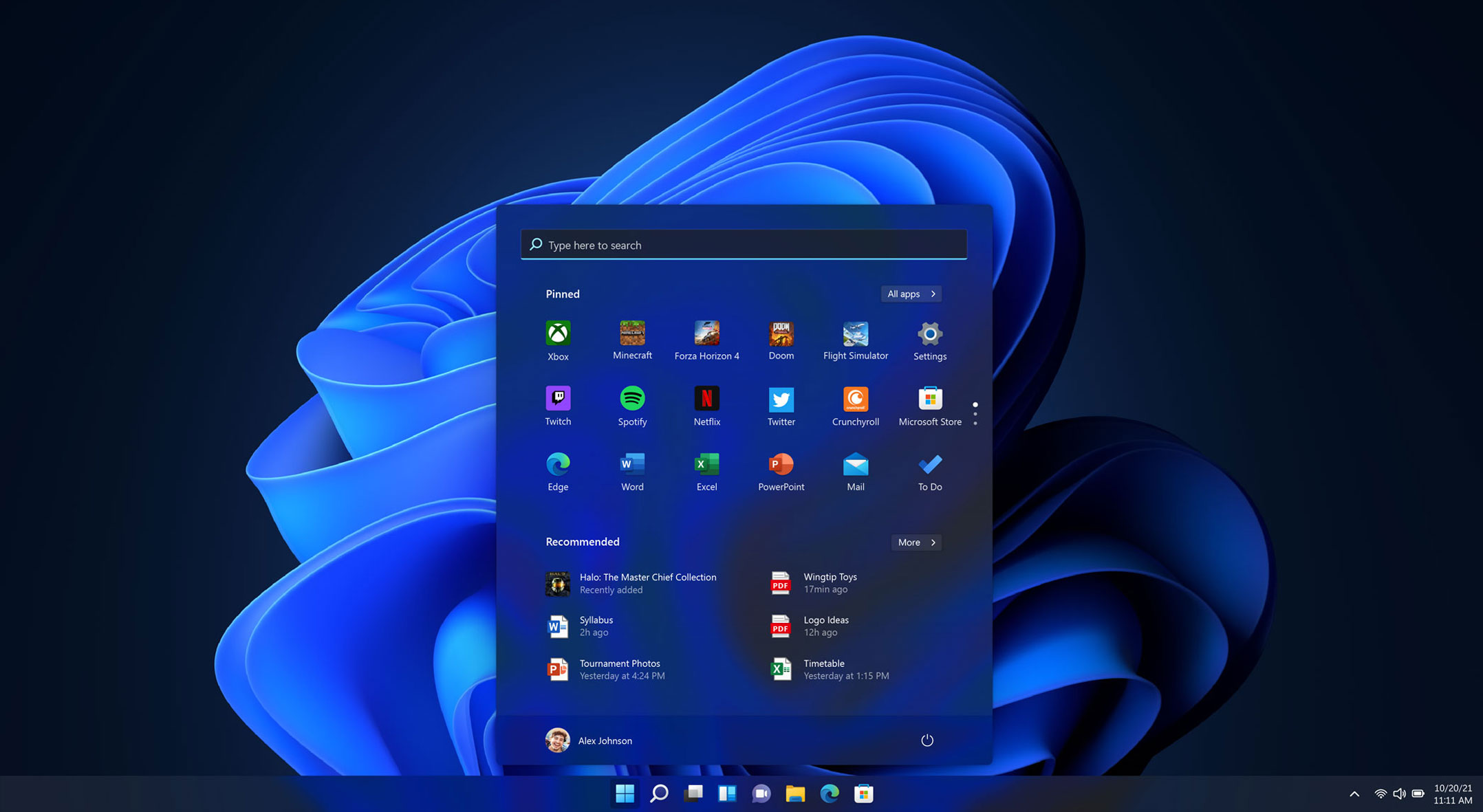
    Windows still dominates on the desktop but lost on mobile
    Windows still dominates on the desktop but lost on mobile

    The mobile earthquake

    The real earthquake hit after 2007. Apple unveiled the iPhone, and iOS burst onto the scene. Not long after, Android arrived, hitching a ride on cheap smartphones that swept through Asia, Africa and Latin America. In the video, Android’s bar doesn’t just grow – it rockets skyward, dwarfing Windows’ once-untouchable reign. By the 2010s, the world’s “computer” was no longer a desktop – it was the phone in your pocket.

    Lessons learnt

    What’s striking is how fragile dominance in operating systems can be. MS-DOS vanished; Windows, while still massive on desktops, lost its crown when the battle shifted to mobile; Apple never “won” by share but triumphed by creating a lucrative ecosystem; and Android proved that ubiquity matters more than prestige.

    Read: Android had a great 2024 – the iPhone, not so much

    So, what’s next? Smart glasses, brain-computer interfaces, quantum devices? If history teaches us anything, it’s that today’s titan can be tomorrow’s trivia. It serves as a reminder that in tech, change is not only likely — it’s guaranteed.  — (c) 2025 NewsCentral Media

    Get breaking news from TechCentral on WhatsApp. Sign up here.

    Don’t miss:

    TCS | Muggie van Staden: Linux fans should learn to trust Microsoft

    Follow TechCentral on Google News Add TechCentral as your preferred source on Google


    Android Apple Google IBM iOS macOS Microsoft MS-DOS PC DOS windows
    WhatsApp YouTube
    Share. Facebook Twitter LinkedIn WhatsApp Telegram Email Copy Link
    Previous ArticleSentech turns in loss despite hike in revenue, clean audit
    Next Article Apple’s Liquid Glass era has begun

    Related Posts

    Africa's most popular phones have a tracking problem

    Africa’s most popular phones have a tracking problem

    24 July 2026
    Intel is back in the game - Intel CEO Lip-Bu Tan. Laure Andrillon/Reuters

    Intel is back in the game

    24 July 2026
    Why Africa's cloud needs more than one path - Africa Data Centres

    Why Africa’s cloud needs more than one path

    23 July 2026
    Company News
    Why Europe is turning to South Africa for cross-border innovation - BBD Software

    Why Europe is turning to South Africa for cross-border innovation

    24 July 2026
    Green dashboards, stalled change: the CIO's blind spot - Change Logic Marchant van den Heever

    Green dashboards, stalled change: the CIO’s blind spot

    24 July 2026
    Why Africa's cloud needs more than one path - Africa Data Centres

    Why Africa’s cloud needs more than one path

    23 July 2026
    Opinion
    Selling vapour is corporate suicide in slow motion - Jannie van Zyl

    Selling vapour is corporate suicide in slow motion

    16 July 2026
    Brazil's online gambling crackdown is a lesson for South Africa

    How Amazon outmanoeuvred Starlink in South Africa

    15 July 2026
    The Popia problem with agentic AI - Herman Haasbroek

    The Popia problem with agentic AI

    14 July 2026

    Subscribe to Updates

    Get the best South African technology news and analysis delivered to your e-mail inbox every morning.

    Latest Posts
    Africa's most popular phones have a tracking problem

    Africa’s most popular phones have a tracking problem

    24 July 2026
    Vodacom taps UJ, AWS to build its AI talent pipeline - Vodacom Group CEO Shameel Joosub

    Vodacom taps UJ, AWS to build its AI talent pipeline

    24 July 2026
    Intel is back in the game - Intel CEO Lip-Bu Tan. Laure Andrillon/Reuters

    Intel is back in the game

    24 July 2026
    Why Europe is turning to South Africa for cross-border innovation - BBD Software

    Why Europe is turning to South Africa for cross-border innovation

    24 July 2026
    © 2009 - 2026 NewsCentral Media
    Built and maintained by Chronon
    • Cookie policy (ZA)
    • TechCentral – privacy and Popia

    Type above and press Enter to search. Press Esc to cancel.

    Manage consent

    TechCentral uses cookies to enhance its offerings. Consenting to these technologies allows us to serve you better. Not consenting or withdrawing consent may adversely affect certain features and functions of the website.

    Functional Always active
    The technical storage or access is strictly necessary for the legitimate purpose of enabling the use of a specific service explicitly requested by the subscriber or user, or for the sole purpose of carrying out the transmission of a communication over an electronic communications network.
    Preferences
    The technical storage or access is necessary for the legitimate purpose of storing preferences that are not requested by the subscriber or user.
    Statistics
    The technical storage or access that is used exclusively for statistical purposes. The technical storage or access that is used exclusively for anonymous statistical purposes. Without a subpoena, voluntary compliance on the part of your Internet Service Provider, or additional records from a third party, information stored or retrieved for this purpose alone cannot usually be used to identify you.
    Marketing
    The technical storage or access is required to create user profiles to send advertising, or to track the user on a website or across several websites for similar marketing purposes.
    • Manage options
    • Manage services
    • Manage {vendor_count} vendors
    • Read more about these purposes
    View preferences
    • {title}
    • {title}
    • {title}