Close Menu
TechCentralTechCentral

    Subscribe to the newsletter

    Get the best South African technology news and analysis delivered to your e-mail inbox every morning.

    Facebook X (Twitter) YouTube LinkedIn
    WhatsApp Facebook X (Twitter) LinkedIn YouTube
    TechCentralTechCentral
    • News
      Big changes at Lesaka as Bank Zero deal nears completion - Lincoln Mali

      Big changes at Lesaka as Bank Zero deal nears completion

      6 February 2026
      South Africa's stablecoin silence is becoming a policy failure

      South Africa’s stablecoin silence is becoming a policy failure

      6 February 2026
      Makro bets on refurbished tech as consumers hunt value

      Makro bets on refurbished tech as consumers hunt value

      6 February 2026
      Bitcoin faces another reckoning

      Bitcoin faces another reckoning

      6 February 2026
      MTN Group in talks to buy out IHS Towers

      MTN Group in talks to buy out IHS Towers

      5 February 2026
    • World
      AI won't replace software, says Nvidia CEO amid market rout - Jensen Huang

      AI won’t replace software, says Nvidia CEO amid market rout

      4 February 2026
      Apple acquires audio AI start-up Q.ai

      Apple acquires audio AI start-up Q.ai

      30 January 2026
      SpaceX IPO may be largest in history

      SpaceX IPO may be largest in history

      28 January 2026
      Nvidia throws AI at the weather

      Nvidia throws AI at weather forecasting

      27 January 2026
      Debate erupts over value of in-flight Wi-Fi

      Debate erupts over value of in-flight Wi-Fi

      26 January 2026
    • In-depth
      How liberalisation is rewiring South Africa's power sector

      How liberalisation is rewiring South Africa’s power sector

      21 January 2026
      The top-performing South African tech shares of 2025

      The top-performing South African tech shares of 2025

      12 January 2026
      Digital authoritarianism grows as African states normalise internet blackouts

      Digital authoritarianism grows as African states normalise internet blackouts

      19 December 2025
      TechCentral's South African Newsmakers of 2025

      TechCentral’s South African Newsmakers of 2025

      18 December 2025
      Black Friday goes digital in South Africa as online spending surges to record high

      Black Friday goes digital in South Africa as online spending surges to record high

      4 December 2025
    • TCS
      TCS+ | How Cloud On Demand is helping SA businesses succeed in the cloud - Xhenia Rhode, Dion Kalicharan

      TCS+ | Cloud On Demand and Consnet: inside a real-world AWS partner success story

      30 January 2026
      Watts & Wheels S1E3: 'BYD's Corolla Cross challenger'

      Watts & Wheels S1E3: ‘BYD’s Corolla Cross challenger’

      30 January 2026
      Watts & Wheels S1E3: 'BYD's Corolla Cross challenger'

      Watts & Wheels S1E2: ‘China attacks, BMW digs in, Toyota’s sublime supercar’

      23 January 2026

      TCS+ | Why cybersecurity is becoming a competitive advantage for SA businesses

      20 January 2026
      Watts & Wheels S1E3: 'BYD's Corolla Cross challenger'

      Watts & Wheels: S1E1 – ‘William, Prince of Wheels’

      8 January 2026
    • Opinion
      South Africa's skills advantage is being overlooked at home - Richard Firth

      South Africa’s skills advantage is being overlooked at home

      29 January 2026
      Why Elon Musk's Starlink is a 'hard no' for me - Songezo Zibi

      Why Elon Musk’s Starlink is a ‘hard no’ for me

      26 January 2026
      South Africa's new fibre broadband battle - Duncan McLeod

      South Africa’s new fibre broadband battle

      20 January 2026
      AI moves from pilots to production in South African companies - Nazia Pillay SAP

      AI moves from pilots to production in South African companies

      20 January 2026
      South Africa's new fibre broadband battle - Duncan McLeod

      ANC’s attack on Solly Malatsi shows how BEE dogma trumps economic reality

      14 December 2025
    • Company Hubs
      • Africa Data Centres
      • AfriGIS
      • Altron Digital Business
      • Altron Document Solutions
      • Altron Group
      • Arctic Wolf
      • AvertITD
      • Braintree
      • CallMiner
      • CambriLearn
      • CYBER1 Solutions
      • Digicloud Africa
      • Digimune
      • Domains.co.za
      • ESET
      • Euphoria Telecom
      • Incredible Business
      • iONLINE
      • IQbusiness
      • Iris Network Systems
      • LSD Open
      • NEC XON
      • Netstar
      • Network Platforms
      • Next DLP
      • Ovations
      • Paracon
      • Paratus
      • Q-KON
      • SevenC
      • SkyWire
      • Solid8 Technologies
      • Telit Cinterion
      • Tenable
      • Vertiv
      • Videri Digital
      • Vodacom Business
      • Wipro
      • Workday
      • XLink
    • Sections
      • AI and machine learning
      • Banking
      • Broadcasting and Media
      • Cloud services
      • Contact centres and CX
      • Cryptocurrencies
      • Education and skills
      • Electronics and hardware
      • Energy and sustainability
      • Enterprise software
      • Financial services
      • Information security
      • Internet and connectivity
      • Internet of Things
      • Investment
      • IT services
      • Lifestyle
      • Motoring
      • Public sector
      • Retail and e-commerce
      • Satellite communications
      • Science
      • SMEs and start-ups
      • Social media
      • Talent and leadership
      • Telecoms
    • Events
    • Advertise
    TechCentralTechCentral
    Home » Sections » Telecoms » Cloud giants live on the edge, and telcos should tremble

    Cloud giants live on the edge, and telcos should tremble

    By Agency Staff21 June 2019
    Twitter LinkedIn Facebook WhatsApp Email Telegram Copy Link
    News Alerts
    WhatsApp

    5G networks will allow vast gobs of data to be transmitted at great speeds. And more data usually means more money for mobile carriers like Deutsche Telekom and AT&T. But there’s a hitch. Cloud giants such as Amazon.com, Alphabet and Microsoft are lurking.

    The new tech enables ever more computational decision-making to be carried out by powerful processors sitting in the cloud. But when even a few milliseconds of lag can be a problem — as might be the case with high-frequency trading or connected factories — it’s worth trying to slash the time it takes to reach a cloud server.

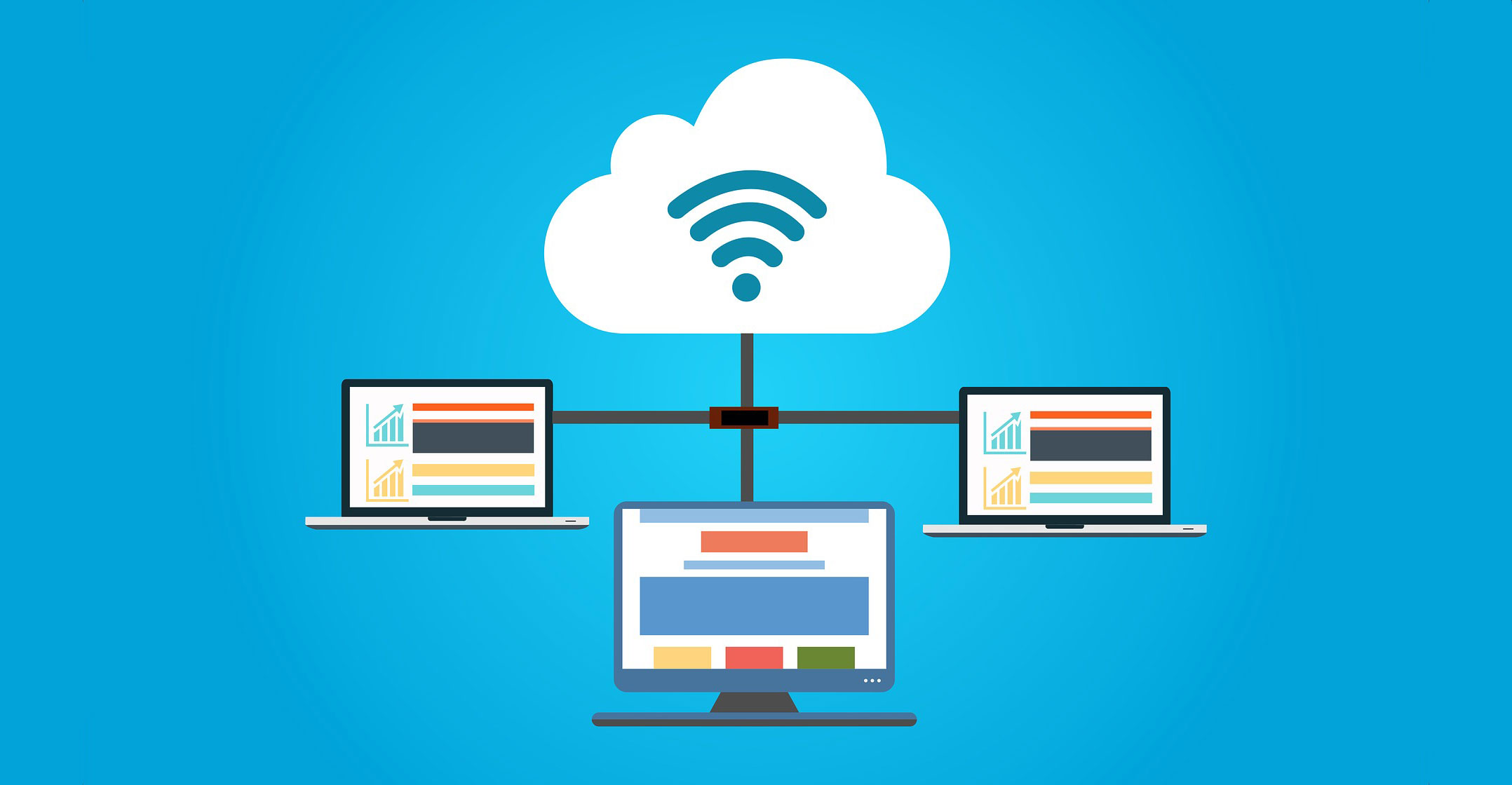
    That’s why the cloud giants are pushing what’s known as edge computing: where cloud functions run on servers that are physically closer to the end user, thereby cutting the distance to a computer making a given decision. They’re at the “edge” of the network. It’s a feature of the distributed cloud, where different functions are distributed across different parts of a network.

    The main cloud providers have a head-start when it comes to exploiting these opportunities

    For telecoms firms that could be a problem. They’re terrified of spending hundreds of billions of dollars on upgrading their networks, only to become the providers of dumb pipes exploited by technology behemoths, and miss the most profitable opportunities the investments could generate. They don’t want a repeat of WhatsApp, whose free messaging platform gobbled up carriers’ SMS revenues.

    The main cloud providers — Amazon Web Services, Microsoft Azure, Google Cloud and Alibaba Group — have a head-start when it comes to exploiting these opportunities. They have huge customer bases and developer ecosystems, in addition to their existing hordes of servers. In short, they have scale.

    It would therefore be foolish for a telco to try to build a cloud offering to rival that scale, according to Nick McQuire, head of enterprise research at CCS Insight. They seem to recognise this, and are instead trying to ensure they’re the gatekeepers for their customers’ relationships with the cloud operators. Unfortunately for the network firms, the lock they have on those relationships can be tenuous.

    An opportunity

    There are different ways carriers can try to control them. Just this month, Spain’s Telefonica announced it would sell Google Cloud solutions globally. Alone, that’s unlikely to generate much profit. But by inserting themselves into the transaction, they hope to be in prime position to offer additional lucrative services that run on a third party’s cloud. And when it comes to small- and medium-sized enterprises, network firms’ extensive local teams can offer comprehensive solutions. It’s less scaleable than what the cloud operators do, but it’s still an opportunity.

    Others such as France’s Orange think that owning the cybersecurity layer is the best way to manage the process. That encryption key ensures they control enterprise customers’ cloud access, also making it easier to sell value-added services.

    Both approaches are a gamble. Cloud providers have their own cybersecurity solutions, for one. Convincing customers that a carrier can do it better might be tough.

    Increasingly, the operators have little choice. The likes of Amazon and Google are proactive in creating demand for their products. Their customers then turn to their telecoms providers and request the cloud giants’ services. That all but forces them to play along.

    Consider Google’s new Netflix for games, Stadia. For a subscription fee, starting in November users can access a bevy of titles running on cloud servers rather than their own computers. They’ll be able to play on a computer more than twice as powerful as Sony ’s PlayStation 4 console using just a cellphone, which becomes little more than a screen and a controller. And since the data is never exposed to the public internet, carriers’ importance is diminished.

    A carrier who can boast about Stadia’s performance on its network might use it as a tool to win customers. The best gaming experience will have no perceptible lag, so the closer Stadia’s servers are to the user, the better.

    The race to the edge really does risk turning the network operators into providers of dumb pipes

    Amazon and Microsoft’s gambits, which are called AWS Outposts and Azure Stack respectively, have similar placement goals. While not yet widely available, they comprise server boxes which sit on customers’ premises — factories, oil rigs or offices — and provide a hybrid of local and cloud computing.

    The race to the edge really does risk turning the network operators into providers of dumb pipes: enterprise customers’ data enter the network via AWS Outpost at one end, and travel to and from centralised servers without being exposed to the public Internet, remaining on a private network. It raises carriers’ risk of disintermediation — that they get all but shut out of the most lucrative parts of the cloud business.

    Stadia is unlikely to eat the world any time soon, and Google is behind rivals Azure and AWS in many enterprise applications, which is where the real money lies. We’re in the very early days of this struggle.

    But edge computing could turn into something of a Trojan horse for other cloud services. Carriers have a real challenge on their hands.  — Reported by Alex Webb, (c) 2019 Bloomberg LP



    Amazon Google Microsoft top
    WhatsApp YouTube Follow on Google News Add as preferred source on Google
    Share. Facebook Twitter LinkedIn WhatsApp Telegram Email Copy Link
    Previous ArticleSpectrum policy direction within 30 days: Ramaphosa
    Next Article EOH strengthens board with new hires

    Related Posts

    Google goes from laggard to leader in AI

    Google goes from laggard to leader in AI

    5 February 2026
    Stellar year expected for Digicloud Africa and its reseller partners - Gregory MacLennan

    Stellar year expected for Digicloud Africa and its reseller partners

    2 February 2026
    SABC Plus to flight Microsoft AI training videos

    SABC Plus to flight Microsoft AI training videos

    30 January 2026
    Company News
    The skills gap is a thinking gap: why South African employers can't find problem solvers

    The skills gap is a thinking gap: why SA employers can’t find problem solvers

    6 February 2026
    Vox Kiwi Wireless: fibre-like broadband for South African homes

    Vox Kiwi Wireless: fibre-like broadband for South African homes

    5 February 2026
    NEC XON achieves an African first with full Fortinet accreditation - Ian Kruger

    NEC XON achieves an African first with full Fortinet accreditation

    5 February 2026
    Opinion
    South Africa's skills advantage is being overlooked at home - Richard Firth

    South Africa’s skills advantage is being overlooked at home

    29 January 2026
    Why Elon Musk's Starlink is a 'hard no' for me - Songezo Zibi

    Why Elon Musk’s Starlink is a ‘hard no’ for me

    26 January 2026
    South Africa's new fibre broadband battle - Duncan McLeod

    South Africa’s new fibre broadband battle

    20 January 2026

    Subscribe to Updates

    Get the best South African technology news and analysis delivered to your e-mail inbox every morning.

    Latest Posts
    The skills gap is a thinking gap: why South African employers can't find problem solvers

    The skills gap is a thinking gap: why SA employers can’t find problem solvers

    6 February 2026
    Big changes at Lesaka as Bank Zero deal nears completion - Lincoln Mali

    Big changes at Lesaka as Bank Zero deal nears completion

    6 February 2026
    South Africa's stablecoin silence is becoming a policy failure

    South Africa’s stablecoin silence is becoming a policy failure

    6 February 2026
    Makro bets on refurbished tech as consumers hunt value

    Makro bets on refurbished tech as consumers hunt value

    6 February 2026
    © 2009 - 2026 NewsCentral Media
    • Cookie policy (ZA)
    • TechCentral – privacy and Popia

    Type above and press Enter to search. Press Esc to cancel.

    Manage consent

    TechCentral uses cookies to enhance its offerings. Consenting to these technologies allows us to serve you better. Not consenting or withdrawing consent may adversely affect certain features and functions of the website.

    Functional Always active
    The technical storage or access is strictly necessary for the legitimate purpose of enabling the use of a specific service explicitly requested by the subscriber or user, or for the sole purpose of carrying out the transmission of a communication over an electronic communications network.
    Preferences
    The technical storage or access is necessary for the legitimate purpose of storing preferences that are not requested by the subscriber or user.
    Statistics
    The technical storage or access that is used exclusively for statistical purposes. The technical storage or access that is used exclusively for anonymous statistical purposes. Without a subpoena, voluntary compliance on the part of your Internet Service Provider, or additional records from a third party, information stored or retrieved for this purpose alone cannot usually be used to identify you.
    Marketing
    The technical storage or access is required to create user profiles to send advertising, or to track the user on a website or across several websites for similar marketing purposes.
    • Manage options
    • Manage services
    • Manage {vendor_count} vendors
    • Read more about these purposes
    View preferences
    • {title}
    • {title}
    • {title}