
Close Menu
TechCentralTechCentral

    Subscribe to the newsletter

    Get the best South African technology news and analysis delivered to your e-mail inbox every morning.

    Facebook X (Twitter) YouTube LinkedIn
    WhatsApp Facebook X (Twitter) LinkedIn YouTube
    TechCentralTechCentral
    • News
      Home affairs' R10 ID fee is forcing companies to rethink identity verification

      Standard Bank joins smart ID push with fee-free launch

      11 February 2026
      Zscaler assets seized from South African data centres

      Zscaler assets seized from South African data centres

      11 February 2026
      SA app wants to end guesswork in online grocery shopping - We Need Milk CEO Arjan van den Berg

      SA app wants to end guesswork in online grocery shopping

      11 February 2026
      Absa appoints M-Pesa boss to lead personal and private banking - Sitoyo Lopokoiyit

      Absa appoints M-Pesa boss to lead personal and private banking

      11 February 2026
      David Ellison just won't quit

      David Ellison just won’t quit

      11 February 2026
    • World
      EU regulators take aim at WhatsApp

      EU regulators take aim at WhatsApp

      9 February 2026
      Musk hits brakes on Mars mission

      Musk hits brakes on Mars mission

      9 February 2026
      Crypto firm accidentally sends R700-billion in bitcoin to its users

      Crypto firm accidentally sends R700-billion in bitcoin to its users

      8 February 2026
      AI won't replace software, says Nvidia CEO amid market rout - Jensen Huang

      AI won’t replace software, says Nvidia CEO amid market rout

      4 February 2026
      Apple acquires audio AI start-up Q.ai

      Apple acquires audio AI start-up Q.ai

      30 January 2026
    • In-depth
      How liberalisation is rewiring South Africa's power sector

      How liberalisation is rewiring South Africa’s power sector

      21 January 2026
      The top-performing South African tech shares of 2025

      The top-performing South African tech shares of 2025

      12 January 2026
      Digital authoritarianism grows as African states normalise internet blackouts

      Digital authoritarianism grows as African states normalise internet blackouts

      19 December 2025
      TechCentral's South African Newsmakers of 2025

      TechCentral’s South African Newsmakers of 2025

      18 December 2025
      Black Friday goes digital in South Africa as online spending surges to record high

      Black Friday goes digital in South Africa as online spending surges to record high

      4 December 2025
    • TCS
      Watts & Wheels S1E4: 'We drive an electric Uber'

      Watts & Wheels S1E4: ‘We drive an electric Uber’

      10 February 2026
      TCS+ | How Cloud On Demand is helping SA businesses succeed in the cloud - Xhenia Rhode, Dion Kalicharan

      TCS+ | Cloud On Demand and Consnet: inside a real-world AWS partner success story

      30 January 2026
      Watts & Wheels S1E4: 'We drive an electric Uber'

      Watts & Wheels S1E3: ‘BYD’s Corolla Cross challenger’

      30 January 2026
      Watts & Wheels S1E4: 'We drive an electric Uber'

      Watts & Wheels S1E2: ‘China attacks, BMW digs in, Toyota’s sublime supercar’

      23 January 2026

      TCS+ | Why cybersecurity is becoming a competitive advantage for SA businesses

      20 January 2026
    • Opinion
      South Africa's skills advantage is being overlooked at home - Richard Firth

      South Africa’s skills advantage is being overlooked at home

      29 January 2026
      Why Elon Musk's Starlink is a 'hard no' for me - Songezo Zibi

      Why Elon Musk’s Starlink is a ‘hard no’ for me

      26 January 2026
      South Africa's new fibre broadband battle - Duncan McLeod

      South Africa’s new fibre broadband battle

      20 January 2026
      AI moves from pilots to production in South African companies - Nazia Pillay SAP

      AI moves from pilots to production in South African companies

      20 January 2026
      South Africa's new fibre broadband battle - Duncan McLeod

      ANC’s attack on Solly Malatsi shows how BEE dogma trumps economic reality

      14 December 2025
    • Company Hubs
      • Africa Data Centres
      • AfriGIS
      • Altron Digital Business
      • Altron Document Solutions
      • Altron Group
      • Arctic Wolf
      • AvertITD
      • Braintree
      • CallMiner
      • CambriLearn
      • CYBER1 Solutions
      • Digicloud Africa
      • Digimune
      • Domains.co.za
      • ESET
      • Euphoria Telecom
      • Incredible Business
      • iONLINE
      • IQbusiness
      • Iris Network Systems
      • LSD Open
      • NEC XON
      • Netstar
      • Network Platforms
      • Next DLP
      • Ovations
      • Paracon
      • Paratus
      • Q-KON
      • SevenC
      • SkyWire
      • Solid8 Technologies
      • Telit Cinterion
      • Tenable
      • Vertiv
      • Videri Digital
      • Vodacom Business
      • Wipro
      • Workday
      • XLink
    • Sections
      • AI and machine learning
      • Banking
      • Broadcasting and Media
      • Cloud services
      • Contact centres and CX
      • Cryptocurrencies
      • Education and skills
      • Electronics and hardware
      • Energy and sustainability
      • Enterprise software
      • Financial services
      • Information security
      • Internet and connectivity
      • Internet of Things
      • Investment
      • IT services
      • Lifestyle
      • Motoring
      • Public sector
      • Retail and e-commerce
      • Satellite communications
      • Science
      • SMEs and start-ups
      • Social media
      • Talent and leadership
      • Telecoms
    • Events
    • Advertise
    TechCentralTechCentral
    Home » Sections » Social media » Democracy dies when Facebook and Twitter define the truth

    Democracy dies when Facebook and Twitter define the truth

    By Stephen L Carter29 October 2020
    Twitter LinkedIn Facebook WhatsApp Email Telegram Copy Link
    News Alerts
    WhatsApp

    US Democrats and Republicans alike missed the point on Wednesday, when members of the senate commerce committee had their last chance before the election to grill the CEOs of Facebook, Twitter and Google. With the Republican Party on the hunt for partisan bias and the Democrats urging greater efforts to reduce misinformation, both sides ignored some fundamental principles of democracy.

    The ostensible purpose of the hearing was to resume the argument over whether to amend section 230 of the Communications Decency Act. In truth, Republicans called the tech CEOs to press them on their handling of a controversial New York Post story that alleges wrongdoing by Hunter Biden, son of Democratic presidential nominee Joe Biden. Democratic senators responded that the GOP was trying to “bully” the techies.

    Well, goodness.

    There’s a lot of the falsely dramatic floating around out there, and people tend to gravitate toward the bits that make the other side look worse

    Let’s start with a reminder that the social media companies are private enterprises, and even in the run-up to an election — one might say especially in the run-up to an election — they’re clothed with a First Amendment right to curate content on their sites as they like. Yes, absolutely, one might sometimes wish that they acted in a more principled and even-handed manner, but did I happen to mention that they’re private enterprises?

    It’s true that misinformation is rampant online. One is reminded of what Isaac Asimov called Gennerat’s Law: “The falsely dramatic drives out the truly dull.” There’s a lot of the falsely dramatic floating around out there, and people tend to gravitate toward the bits that make the other side look worse.

    A kind of hubris

    Nevertheless, the tech giants, by passing judgment on what’s too unreliable to be seen, are taking tentative steps down a road that’s rarely led anywhere good. Even private restriction, although not matching any of the classic definitions of censorship, betrays a kind of hubris — what John Stuart Mill famously derided as a belief in one’s own infallibility. Worse, what tends to motivate the removal of bad information is a fear of the danger posed by whatever is being omitted or suppressed — a worry about what might happen should the wrong people wind up seeing it.

    The deep problem here isn’t that the companies often act as though they’re wearing partisan blinders. The problem is that even were the work done with perfect political neutrality, the determination to avoid the use of a platform to spread “misinformation” would still display the same basic attitude. When a platform spots a piece it considers suspect and its staff or review partners say, “Nope, can’t let people see this,” the unspoken message is, “We here at Twinstabook are clever enough to understand what’s really going on. The people who rely on our platform aren’t.”

    On issues from climate change to Covid-19, the social media companies often take the view that there are arguments too dangerous to allow their users to see. I agree that climate change poses a dangerous threat and that bad advice about the novel coronavirus could lead to a deadlier spread. But it’s an enormous leap from holding a position, even passionately, to believing that others shouldn’t be treated as wise enough to make up their own minds.
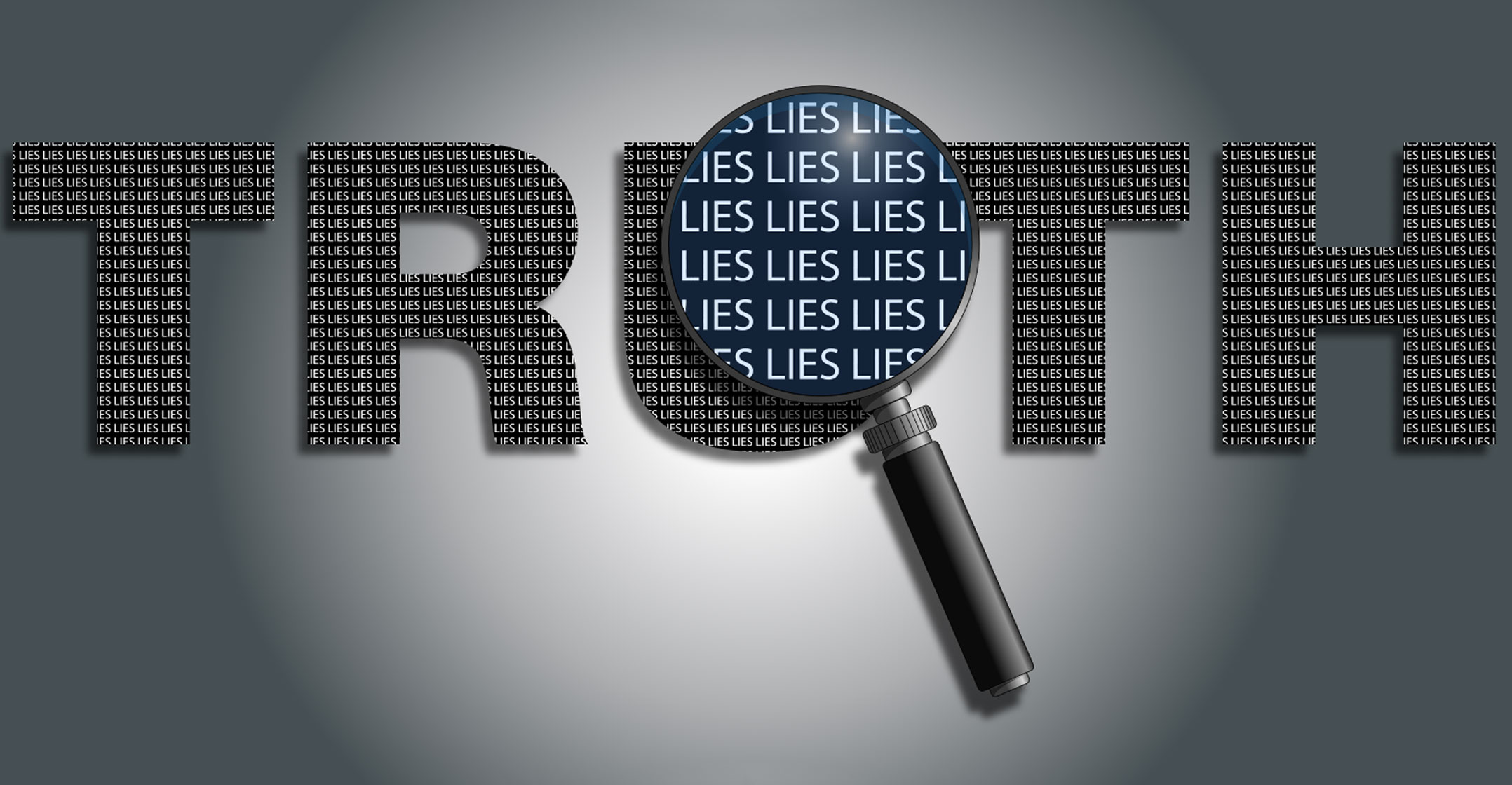
    Yes, the public square is awash in misinformation. It has been ever thus. I’m of the generation trained to believe that the cure for bad information is good information. If people are sometimes persuaded by the false, that’s a risk attendant upon the proper practice of democracy.

    Nowadays, when we say “democracy” we almost always think of voting. But I cling to a classical vision in which voting is only one piece of what makes democracy valuable. More vital is acknowledging our joint participation, together with co-equals, in a common enterprise of self-governance; an enterprise in which we respect, among other things, the ability of our fellow citizens to decide for themselves which argument to accept. When a point of view is suppressed because those who hold the power to shape dialogue consider it wrong — even dangerously wrong — we’re engaged in the opposite of democracy.

    My libertarian soul fears any effort by government to impose on privately owned companies a different set of rules

    Censorship deprives individuals of the ethical right to decide for themselves what to believe. The fact that a private company has the unquestioned freedom to violate that ethical right doesn’t mean that it should.

    None of this means that I oppose efforts by social media companies to moderate content. Given the influence of their platforms, I think it’s wise and good to edit out personal attacks, harassment and the like. But the same reason — the importance of the platforms — forces me to conclude that the companies are mistaken in restricting points of view they consider wrong.

    My libertarian soul fears any effort by government to impose on privately owned companies a different set of rules. And I’ll grieve for true democracy if the social media giants continue to display so much faith in the ability of their own employees and partners to make decisions about what’s true and what isn’t — and so little faith in the ability of the rest of us to make up our own minds.  — By Stephen L Carter, (c) 2020 Bloomberg LP

    • Stephen L Carter is a professor of law at Yale University


    Facebook Google Stephen L Carter top Twitter
    WhatsApp YouTube Follow on Google News Add as preferred source on Google
    Share. Facebook Twitter LinkedIn WhatsApp Telegram Email Copy Link
    Previous ArticleThe biggest IPO in history is stoking an investor frenzy
    Next Article Canal+ doubles its stake in MultiChoice as buying spree continues

    Related Posts

    Dr Google, meet Dr Chatbot - neither is ready to see you now

    Dr Google, meet Dr Chatbot – neither is ready to see you now

    10 February 2026
    AI chatbots are coming to Apple CarPlay

    AI chatbots are coming to Apple CarPlay

    8 February 2026
    From stocks to crypto, markets reel as AI doubts grow

    From stocks to crypto, markets reel as AI doubts grow

    6 February 2026
    Company News

    Why Acer is the strategic choice for South Africa’s educational future

    11 February 2026
    Fyndae is building Africa's human verification layer for community security and collaboration

    Fyndae wants to turn lost-item recovery into Africa’s trust infrastructure

    11 February 2026
    How NEC XON tackled identity risk for a major telco - Michael de Neuilly Rice

    How NEC XON tackled identity risk for a major telco

    11 February 2026
    Opinion
    South Africa's skills advantage is being overlooked at home - Richard Firth

    South Africa’s skills advantage is being overlooked at home

    29 January 2026
    Why Elon Musk's Starlink is a 'hard no' for me - Songezo Zibi

    Why Elon Musk’s Starlink is a ‘hard no’ for me

    26 January 2026
    South Africa's new fibre broadband battle - Duncan McLeod

    South Africa’s new fibre broadband battle

    20 January 2026

    Subscribe to Updates

    Get the best South African technology news and analysis delivered to your e-mail inbox every morning.

    Latest Posts

    Why Acer is the strategic choice for South Africa’s educational future

    11 February 2026
    Home affairs' R10 ID fee is forcing companies to rethink identity verification

    Standard Bank joins smart ID push with fee-free launch

    11 February 2026
    Zscaler assets seized from South African data centres

    Zscaler assets seized from South African data centres

    11 February 2026
    Fyndae is building Africa's human verification layer for community security and collaboration

    Fyndae wants to turn lost-item recovery into Africa’s trust infrastructure

    11 February 2026
    © 2009 - 2026 NewsCentral Media
    • Cookie policy (ZA)
    • TechCentral – privacy and Popia

    Type above and press Enter to search. Press Esc to cancel.

    Manage consent

    TechCentral uses cookies to enhance its offerings. Consenting to these technologies allows us to serve you better. Not consenting or withdrawing consent may adversely affect certain features and functions of the website.

    Functional Always active
    The technical storage or access is strictly necessary for the legitimate purpose of enabling the use of a specific service explicitly requested by the subscriber or user, or for the sole purpose of carrying out the transmission of a communication over an electronic communications network.
    Preferences
    The technical storage or access is necessary for the legitimate purpose of storing preferences that are not requested by the subscriber or user.
    Statistics
    The technical storage or access that is used exclusively for statistical purposes. The technical storage or access that is used exclusively for anonymous statistical purposes. Without a subpoena, voluntary compliance on the part of your Internet Service Provider, or additional records from a third party, information stored or retrieved for this purpose alone cannot usually be used to identify you.
    Marketing
    The technical storage or access is required to create user profiles to send advertising, or to track the user on a website or across several websites for similar marketing purposes.
    • Manage options
    • Manage services
    • Manage {vendor_count} vendors
    • Read more about these purposes
    View preferences
    • {title}
    • {title}
    • {title}