
Close Menu
TechCentralTechCentral

    Subscribe to the newsletter

    Get the best South African technology news and analysis delivered to your e-mail inbox every morning.

    Facebook X (Twitter) YouTube LinkedIn
    WhatsApp Facebook X (Twitter) LinkedIn YouTube
    TechCentralTechCentral
    • News
      Shoprite ranks cybersecurity as its number one risk - Pieter Engelbrecht

      Shoprite ranks cybersecurity as its number one risk

      9 October 2026
      Standard Bank to take up to $200-million stake in OPay - Sim Tshabalala

      Standard Bank to take up to $200-million stake in OPay

      9 October 2026
      Shoprite takes on the banking apps with airtime on Sixty60

      Shoprite takes on the banking apps with airtime on Sixty60

      9 October 2026
      How to tell telemarketers to get lost - officially

      How to tell telemarketers to get lost – officially

      9 October 2026
      Data centres are the new front line in the Russia-Ukraine war

      Data centres are the new front line in the Russia-Ukraine war

      9 October 2026
    • World
      SpaceX takes aim at US wireless carriers with spectrum acquisition

      Starlink is coming for your mobile operator

      9 October 2026
      The AI PC is finally here. It's just very expensive - Jensen Huang, Satya Nadella

      The AI PC is finally here. It’s just very expensive

      8 October 2026
      The memory crunch is making Samsung fabulously rich

      The memory crunch is making Samsung fabulously rich

      8 October 2026
      SpaceX to borrow $40-billion to buy Nvidia chips

      SpaceX to borrow $40-billion to buy Nvidia chips

      7 October 2026
      South Pole neutrino hunter wins Nobel Prize in Physics - Francis Halzen

      South Pole neutrino hunter wins Nobel Prize in Physics

      7 October 2026
    • In-depth

      10 days that changed the course of AI

      21 September 2026
      Meta to the AI industry: slow down without us - Mark Zuckerberg

      Meta to the AI industry: slow down without us

      16 September 2026
      Google DeepMind CEO Demis Hassabis. Image: John Sears

      The plan to stop AI from breaking the world

      16 July 2026
      The internet has a Strait of Hormuz problem

      The internet has a Strait of Hormuz problem

      15 July 2026
      AI boom sparks rally, frenzy and fear

      AI boom sparks rally, frenzy and fear

      11 June 2026
    • TCS
      W&W | LDV's Gerhard Moolman on electric bakkies, fleet orders and 'school fees'

      W&W | LDV’s Gerhard Moolman on electric bakkies and fleets

      9 October 2026
      TCS | Frogfoot sees bigger fibre deals coming - TechCentral Show guests Abraham van der Merwe and Shane Chorley

      TCS | Frogfoot sees bigger fibre deals coming

      8 October 2026
      Meet the CIO | Vodacom's Mohamed Sami on the agentic future

      Meet the CIO | Vodacom’s Mohamed Sami on the agentic future

      5 October 2026
      Lexi Novitske, general partner at Norrsken22, on the TechCentral Show

      TCS | Norrsken22’s Lexi Novitske on how China is winning African tech

      1 October 2026
      TCS | Dominic White and Adam Ely on AI agents going rogue

      TCS | Dominic White and Adam Ely on AI agents going rogue

      29 September 2026
    • Opinion
      When a machine can choose, who does it become? Fanie van Rooyen

      When a machine can choose, who does it become?

      9 October 2026
      Let South Africans jailbreak their way to digital sovereignty - Dirk de Vos

      Let South Africans jailbreak their way to digital sovereignty

      5 October 2026
      South Africa's next energy crisis is in the accounts department - Craig Holmes

      South Africa’s next energy crisis is in the accounts department

      29 September 2026
      The steam engine lesson AI doomsayers keep missing - Sam Clarke

      The steam engine lesson AI doomsayers keep missing

      28 September 2026
      Let South Africans jailbreak their way to digital sovereignty - Dirk de Vos

      Regulating AI: apply the laws we have first

      21 September 2026
    • Company News
      • 1Stream
      • Africa Data Centres
      • AfriGIS
      • Altron Digital Business
      • Altron Document Solutions
      • Altron Group
      • Arctic Wolf
      • Ascent Technology
      • AvertITD
      • BBD
      • Braintree
      • CallMiner
      • CambriLearn
      • CM.com
      • Contactable
      • CYBER1 Solutions
      • Digicloud Africa
      • Digimune
      • Domains.co.za
      • ESET
      • Euphoria Telecom
      • HOSTAFRICA
      • Incredible Business
      • iONLINE
      • IQbusiness
      • Iris Network Systems
      • Kaspersky
      • LSD Open
      • Mitel
      • NEC XON
      • Netstar
      • Network Platforms
      • Next DLP
      • Ovations
      • Paracon
      • Paratus
      • Publishared
      • Q-KON
      • SevenC
      • SkyWire
      • Solid8 Technologies
      • Telit Cinterion
      • Telviva
      • Tenable
      • Vertiv
      • Videri Digital
      • Vodacom Business
      • Vox
      • Wipro
      • Workday
      • XLink
    • Sections
      • AI and machine learning
      • Banking
      • Broadcasting and Media
      • Cloud services
      • Contact centres and CX
      • Cryptocurrencies
      • Education and skills
      • Electronics and hardware
      • Energy and sustainability
      • Enterprise software
      • Financial services
      • HealthTech
      • Information security
      • Internet and connectivity
      • Internet of Things
      • Investment
      • IT services
      • Lifestyle
      • Policy and regulation
      • Public sector
      • Retail and e-commerce
      • Satellite communications
      • Science
      • SMEs and start-ups
      • Social media
      • Talent and leadership
      • Telecoms
      • Watts & Wheels
    • Events
    • Advertise
    TechCentralTechCentral
    Home » Opinion » Mophethe Moletsane » Let’s not forget the feature phones

    Let’s not forget the feature phones

    By Mophethe Moletsane24 March 2015
    Twitter LinkedIn Facebook WhatsApp Email Telegram Copy Link
    Get breaking news on WhatsApp

    Mophethe-Moletsane-180Applications have revolutionised the use of smartphones to such a degree that “dialling” has now fallen off the list of the top five most-used functions.

    Apps are undoubtedly big business, and the race is on between the most popular mobile platforms. Google recently surpassed Apple in the number of apps it has on offer with more than 1,4m versus its rival’s 1,2m. Growth expectations for downloads are moreover enormous — forecasts of 269bn by 2017 are doing the rounds.

    These statistics easily explain why an average smartphone user spends approximately 90 minutes on their phone every day — a staggering total of 23 days a year, according to mobilestatistics.com. There are no prizes for guessing the most popular downloads: social, gaming and news lead the field, with gaming commanding a 40% share across all major app stores.

    In South Africa, banks have played a key role in raising awareness of the value of apps. One would have expected other, less security-constrained sectors to have led the migration of services to mobile, but they are only gradually starting to enter this space. As a result, the app revenue channel, which should form part of a broader e-commerce strategy, remains unexplored across a number of industries.

    The expectation is that the increase in smartphone penetration, currently pegged at 39,8%, coupled with the decline in data costs, will result in more traction. These factors, along with a few others, are commonly given in explanation for South Africa’s and Africa’s deviation from global mobile trends.

    But the reality is that there’s a lot of value in mobile services, and the opportunity cost of waiting for the realisation of some of these factors (for example penetration rates) equates to billions of rand and a mounting threat of industry disruption by global players.

    Facebook’s Internet.org initiative could be a sign that the tech giants are starting to eye low-income, under-penetrated mass markets.
    There is also no clear benefit to waiting. Take PC penetration rates by way of illustration: it is rather unsettling that less than 10% of South Africa’s population has a PC. A number of factors have contributed to this, among them heavy operating systems that require more powerful specifications, which in turn curtailed the decline in PC prices.

    A similar scenario could easily play out with smartphones. Android’s code base increased from 4,1m lines in 2009 to 15,2m in 2012 for the “Jelly Bean” version.

    It is therefore worth our while to investigate new ways of enabling mobile services for the 60% of mobile users who are less likely to carry a high-end device in the near future.

    The Sim Application Toolkit (commonly referred to as STK) is one option that could be revisited and marketed as a means to provide mobile services on Sim modules, independently of the handset or network. The functionality has its limitations but has been used globally to enable services like mobile banking, proving that it can be secure. Telecommunications operators are currently using STK to provide services such as airtime balances, news, please call services, etc.
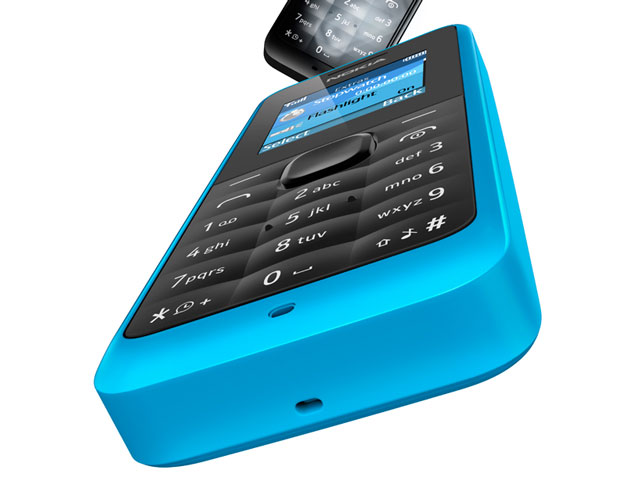
    Not everyone has a smartphone
    Not everyone has a smartphone

    An STK-based app model supported by an integration platform similar to eBay’s X.Commerce concept could encourage businesses to leverage the capability. The Sim menus are text-based and could be supplemented by MMS to provide an improved end-to-end experience. Exposing the most commonly used services could attract large numbers of audiences and create a medium for advertising and other revenue streams.

    India’s Gupshup and Uganda’s UReport are good examples of how other markets are connecting a large percentage of the population using text based platforms.

    The large feature phone user base presents a potential market for a different form of social networking.

    Voice should also be a key consideration for a different form of social networking. A model similar to the 1990s’ chatrooms could be adopted for voice social networking. People were comfortable with selecting a person to chat with based only on their username. “asl” (age, sex & location) was the universal ice breaker that would lead into hours and hours of conversations. An STK menu to select available “chatter” through a “social” price plan may just change the direction of the declining voice revenues. Operators could even use airtime to include audio adverts during or before connecting to chats.

    The supporting systems are a challenge most final year computer science students would gladly accept.

    • Mophethe Moletsane is media and entertainment leader at Accenture in South Africa

    Add TechCentral as a preferred source on GoogleFollow TechCentral on Google NewsGet breaking news on WhatsApp


    Accenture Apple Google Mophethe Moletsane
    WhatsApp YouTube
    Share. Facebook Twitter LinkedIn WhatsApp Telegram Email Copy Link
    Previous ArticleTechnologies to supercharge mobile broadband
    Next Article Samsung’s Galaxy A3 and A5 reviewed

    Related Posts

    Claude is turning into an office suite

    Claude is turning into an office suite

    9 October 2026
    The AI PC is finally here. It's just very expensive - Jensen Huang, Satya Nadella

    The AI PC is finally here. It’s just very expensive

    8 October 2026
    AI spending now dwarfs the railway and dot-com booms

    AI spending now dwarfs the railway and dot-com booms

    4 October 2026
    Company News
    Why fintechs need an insurance partner they can trust - Hollard Insurance

    Why fintechs need an insurance partner they can trust

    8 October 2026
    Reusable KYC means the end of 'please upload your ID' - Contactable

    Reusable KYC means the end of ‘please upload your ID’

    8 October 2026
    Eliminating the 'toggle tax': how CRM integration changes customer experience - Martie de Beer

    Eliminating the ‘toggle tax’: how CRM integration changes customer experience

    8 October 2026
    Opinion
    When a machine can choose, who does it become? Fanie van Rooyen

    When a machine can choose, who does it become?

    9 October 2026
    Let South Africans jailbreak their way to digital sovereignty - Dirk de Vos

    Let South Africans jailbreak their way to digital sovereignty

    5 October 2026
    South Africa's next energy crisis is in the accounts department - Craig Holmes

    South Africa’s next energy crisis is in the accounts department

    29 September 2026

    Subscribe to Updates

    Get the best South African technology news and analysis delivered to your e-mail inbox every morning.

    Latest Posts
    Shoprite ranks cybersecurity as its number one risk - Pieter Engelbrecht

    Shoprite ranks cybersecurity as its number one risk

    9 October 2026
    Standard Bank to take up to $200-million stake in OPay - Sim Tshabalala

    Standard Bank to take up to $200-million stake in OPay

    9 October 2026
    Shoprite takes on the banking apps with airtime on Sixty60

    Shoprite takes on the banking apps with airtime on Sixty60

    9 October 2026
    How to tell telemarketers to get lost - officially

    How to tell telemarketers to get lost – officially

    9 October 2026
    © 2009 - 2026 NewsCentral Media
    Built and maintained by Chronon
    • Cookie policy (ZA)
    • TechCentral – privacy and Popia

    Type above and press Enter to search. Press Esc to cancel.

    Manage consent

    TechCentral uses cookies to enhance its offerings. Consenting to these technologies allows us to serve you better. Not consenting or withdrawing consent may adversely affect certain features and functions of the website.

    Functional Always active
    The technical storage or access is strictly necessary for the legitimate purpose of enabling the use of a specific service explicitly requested by the subscriber or user, or for the sole purpose of carrying out the transmission of a communication over an electronic communications network.
    Preferences
    The technical storage or access is necessary for the legitimate purpose of storing preferences that are not requested by the subscriber or user.
    Statistics
    The technical storage or access that is used exclusively for statistical purposes. The technical storage or access that is used exclusively for anonymous statistical purposes. Without a subpoena, voluntary compliance on the part of your Internet Service Provider, or additional records from a third party, information stored or retrieved for this purpose alone cannot usually be used to identify you.
    Marketing
    The technical storage or access is required to create user profiles to send advertising, or to track the user on a website or across several websites for similar marketing purposes.
    • Manage options
    • Manage services
    • Manage {vendor_count} vendors
    • Read more about these purposes
    View preferences
    • {title}
    • {title}
    • {title}
    🇿🇦 Sign up to the TechCentral newsletter