Close Menu
TechCentralTechCentral

    Subscribe to the newsletter

    Get the best South African technology news and analysis delivered to your e-mail inbox every morning.

    Facebook X (Twitter) YouTube LinkedIn
    WhatsApp Facebook X (Twitter) LinkedIn YouTube
    TechCentralTechCentral
    • News
      Pepkor builds R21-billion fintech giant - and plans to list it - Pieter Erasmus

      Pepkor builds R21-billion fintech giant – and plans to list it

      22 July 2026
      Samsung Fold8 series unveiled as folding phone war looms

      Samsung Fold8 series unveiled as folding phone war looms

      22 July 2026
      Everything you wanted to know about EVs but were afraid to ask

      Everything you wanted to know about EVs but were afraid to ask

      22 July 2026
      Bitcoin at $65 000: stalled, or simply early?

      Bitcoin at $65 000: stalled, or simply early?

      22 July 2026
      Smart ID renewals go mobile - Absa CEO Kenny Fihla with home affairs minister Leon Schreiber

      Smart ID renewals go mobile

      22 July 2026
    • World
      Meta AI will now tell parents if their teen is in crisis

      Meta AI will now tell parents if their teen is in crisis

      17 July 2026
      IBM shares crash 25% as AI upends software spending - Arvind Krishna

      IBM shares crash 25% as AI upends software spending

      15 July 2026
      Jony Ive's first OpenAI device: an AI smart speaker - Jony Ive and Sam Altman

      Jony Ive’s first OpenAI device: an AI smart speaker

      15 July 2026
      Stripe, Advent in talks to buy PayPal for $53-billion

      Stripe, Advent in talks to buy PayPal for $53-billion

      15 July 2026
      Memory crisis sends smartphone market into steep decline

      Memory crisis sends smartphone market into steep decline

      13 July 2026
    • In-depth
      The plan to stop AI from breaking the world - Google DeepMind CEO Demis Hassabis. Image: John Sears

      The plan to stop AI from breaking the world

      16 July 2026
      The internet has a Strait of Hormuz problem

      The internet has a Strait of Hormuz problem

      15 July 2026
      AI boom sparks rally, frenzy and fear

      AI boom sparks rally, frenzy and fear

      11 June 2026
      Every plug-in hybrid on sale in South Africa, ranked by price - Lamborghini Temerario

      Every plug-in hybrid on sale in South Africa, ranked by price

      7 June 2026
      What Wi-Fi 8 will mean for wireless networks

      What Wi-Fi 8 will mean for wireless networks

      1 June 2026
    • TCS
      The rands-and-cents case for electric trucks - William Kelly Watts & Wheels with Wills

      The rands-and-cents case for electric trucks

      20 July 2026
      Watts & Wheels S1E7: 'Ferrari's EV breaks the internet'

      Watts & Wheels S1E7: ‘Ferrari’s EV breaks the internet’

      8 July 2026
      TCS+ | How Tracker is turning vehicle data into business strategy - Silvia Schollenberger

      TCS+ | How Tracker is turning vehicle data into business strategy

      1 July 2026
      TCS+ | IBM Bob: an AI-powered 'development partner' for the enterprise - David Spurway

      TCS+ | IBM Bob: an AI-powered development partner for the enterprise

      30 June 2026
      Watts & Wheels S1E6: 'A flawless Alfa and a bakkie that divides'

      Watts & Wheels S1E6: ‘A flawless Alfa and a bakkie that divides’

      17 June 2026
    • Opinion
      Selling vapour is corporate suicide in slow motion - Jannie van Zyl

      Selling vapour is corporate suicide in slow motion

      16 July 2026
      Brazil's online gambling crackdown is a lesson for South Africa

      How Amazon outmanoeuvred Starlink in South Africa

      15 July 2026
      The Popia problem with agentic AI - Herman Haasbroek

      The Popia problem with agentic AI

      14 July 2026
      The author, Fanie van Rooyen

      South Africa can still catch the AI wave – here’s how

      7 July 2026
      The author, Fanie van Rooyen

      The AI utopia South Africa can’t afford

      1 July 2026
    • Company Hubs
      • 1Stream
      • Africa Data Centres
      • AfriGIS
      • Altron Digital Business
      • Altron Document Solutions
      • Altron Group
      • Arctic Wolf
      • Ascent Technology
      • AvertITD
      • BBD
      • Braintree
      • CallMiner
      • CambriLearn
      • CM Telecom
      • Contactable
      • CYBER1 Solutions
      • Digicloud Africa
      • Digimune
      • Domains.co.za
      • ESET
      • Euphoria Telecom
      • HOSTAFRICA
      • Incredible Business
      • iONLINE
      • IQbusiness
      • Iris Network Systems
      • Kaspersky
      • LSD Open
      • Mitel
      • NEC XON
      • Netstar
      • Network Platforms
      • Next DLP
      • Ovations
      • Paracon
      • Paratus
      • Q-KON
      • SevenC
      • SkyWire
      • Solid8 Technologies
      • Telit Cinterion
      • Telviva
      • Tenable
      • Vertiv
      • Videri Digital
      • Vodacom Business
      • Vox
      • Wipro
      • Workday
      • XLink
    • Sections
      • AI and machine learning
      • Banking
      • Broadcasting and Media
      • Cloud services
      • Contact centres and CX
      • Cryptocurrencies
      • Education and skills
      • Electronics and hardware
      • Energy and sustainability
      • Enterprise software
      • Financial services
      • HealthTech
      • Information security
      • Internet and connectivity
      • Internet of Things
      • Investment
      • IT services
      • Lifestyle
      • Policy and regulation
      • Public sector
      • Retail and e-commerce
      • Satellite communications
      • Science
      • SMEs and start-ups
      • Social media
      • Talent and leadership
      • Telecoms
      • Watts & Wheels
    • Events
    • Advertise
    TechCentralTechCentral
    Home » News » Meet Africa’s most powerful supercomputer

    Meet Africa’s most powerful supercomputer

    By Editor9 December 2011
    Twitter LinkedIn Facebook WhatsApp Email Telegram Copy Link
    News Alerts
    WhatsApp
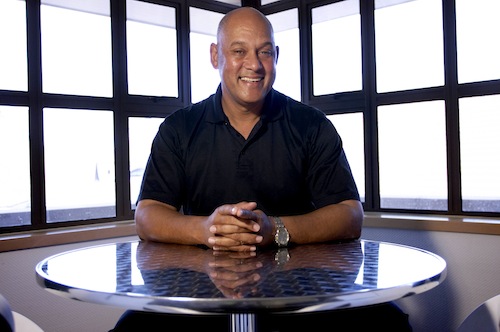
    Dell Africa GM Stewart van Graan

    Imagine a computer with 23TB of RAM and 2 800 processor cores, generating 60 trillion floating-point operations per second. That’s what Dell, the CSIR, the Centre for High Performance Computing and the University of Cambridge have built in Cape Town.

    It’s being billed as the fastest supercomputer in Africa. Housed by a CSIR facility, the setup was ranked as one of the top-500 supercomputers on earth at this year’s Supercomputing Conference in Seattle.

    The CSIR hopes it can put it to use solving African problems, empowering African research and encouraging foreign academics to come to SA to work.

    The CSIR’s requirements were simple: it needed a new supercomputer and it wanted it to rank in the prestigious list put out by the Supercomputing Conference — and it needed it in less than a month if it was to qualify.

    Dell Africa GM Stewart van Graan says the company had the machine operational within three weeks of receiving the order. Dell, he says, is seeing more interest in supercomputers from mainstream businesses such as retailers and mining and exploration companies. “Any time you’re dealing with as much data as they do, the application of a supercomputer becomes relevant.”

    Much of the research required to build a computer like the one the CSIR requested comes from Dell’s longstanding relationship with Cambridge University, where it assists in the formulation of white papers concerning supercomputing.

    Though the CSIR hopes to make the computer available to anyone in Africa in need of its capabilities, Van Graan says the greatest obstacle — and one that affects much of Africa — is lack of bandwidth. “Power and bandwidth are the two biggest challenges in Africa,” he says.

    Though Dell says it “leveraged global relationships” in building the machine, local people were trained to maintain it. This was one of the stipulations of the deal with the CSIR.

    Van Graan says that as supercomputers become more common in Africa, they will be invaluable in solving real-world problems through simulations, like looking at traffic systems and urban growth. He says more university departments, from finance to the humanities, have to crunch more data and that SA is now better equipped to deal with it.

    “Big data is no longer just the realm of scientific research,” he says.

    The new supercomputer occupies two and a half server racks at the CSIR instead of the 12 previously required. Nevertheless, it consists of 2 800 cores, of which most jobs only require 100 or 200. Fortunately, the cores can be split and used to process simultaneous batch jobs.

    The system supports both Intel and AMD processors, though Intel chips are used in this instance.

    The CSIR’s previous supercomputer processed about 30 trillion floating-point operations a second, better known as teraflops. Not only has the new machine doubled performance and greatly reduced its use of electricity, but cost a third of its predecessor and occupies less than a quarter of the space.

    Van Graan declines to say how much the machine cost. The CSIR’s system was paid for by the department of science & technology.

    He is quick to put the Cape Town supercomputer in context: though its having 2 800 cores sounds impressive, the biggest supercomputer in the world has 500 000 cores. “The gap between the top 20 and top 100 is huge, as is the gap between the top 100 and, say, the top 200.”

    Dell’s most powerful supercomputer ranked at 31st on the list and consists of 15 500 cores. It’s located at the University of Colorado.

    Happy Sithole, director of the Centre for High Performance Computing who was involved with the project from the outset, says the CSIR hopes the system will allow it to work on solutions for challenges such as HIV/Aids, malaria and climate change by building complex scientific and mathematical models.

    The complexity of a model used to assess the impact of a tsunami, for example, requires huge data sets. Sithole says the supercomputer is already being used by different research groups around the country who have been selected for the type of work they do.

    “For example, the group that works on the HIV mutation mechanism looks at understanding how the HI virus mutates in a human immune system,” Sithole says. “This type of study requires a large number of combinations that should be computed and thus the supercomputer provides a quick way of understanding all the possible scenarios, which could otherwise not have been explored.”

    Academic institutions are provided access if their projects “meet the criteria of problems that are relevant for parallel processing” and if the research is in areas that are in the government priority areas and helps train students.  — Craig Wilson, TechCentral

    • Subscribe to our free daily newsletter
    • Follow us on Twitter or on Google+ or on Facebook
    • Visit our sister website, SportsCentral (still in beta)

    Follow TechCentral on Google News Add TechCentral as your preferred source on Google


    CSIR Dell Stewart van Graan
    WhatsApp YouTube
    Share. Facebook Twitter LinkedIn WhatsApp Telegram Email Copy Link
    Previous ArticleInfraco promises to ramp up spending
    Next Article MTN in R1,4bn Uganda tower deal

    Related Posts

    Battlefield tech could save lives on South Africa's roads - Dithoto Modungwa

    Battlefield tech could save lives on South Africa’s roads

    10 July 2026
    Dell guns for MacBook Neo with low-cost laptop

    Dell guns for MacBook Neo with low-cost laptop

    1 June 2026
    South Africa's leap to modern Wi-Fi has barely begun

    Mobile operators locked out as Icasa opens 900MHz of spectrum

    27 May 2026
    Company News
    Samsung's new Galaxy Z series: foldables, perfected

    Samsung’s new Galaxy Z series: foldables, perfected

    22 July 2026
    Is your cloud PBX a hacker's back door? Centracom

    Is your cloud PBX a hacker’s back door?

    22 July 2026

    Africa’s biggest entrepreneurship gathering heads for Cape Town

    22 July 2026
    Opinion
    Selling vapour is corporate suicide in slow motion - Jannie van Zyl

    Selling vapour is corporate suicide in slow motion

    16 July 2026
    Brazil's online gambling crackdown is a lesson for South Africa

    How Amazon outmanoeuvred Starlink in South Africa

    15 July 2026
    The Popia problem with agentic AI - Herman Haasbroek

    The Popia problem with agentic AI

    14 July 2026

    Subscribe to Updates

    Get the best South African technology news and analysis delivered to your e-mail inbox every morning.

    Latest Posts
    Pepkor builds R21-billion fintech giant - and plans to list it - Pieter Erasmus

    Pepkor builds R21-billion fintech giant – and plans to list it

    22 July 2026
    Samsung Fold8 series unveiled as folding phone war looms

    Samsung Fold8 series unveiled as folding phone war looms

    22 July 2026
    Everything you wanted to know about EVs but were afraid to ask

    Everything you wanted to know about EVs but were afraid to ask

    22 July 2026
    Bitcoin at $65 000: stalled, or simply early?

    Bitcoin at $65 000: stalled, or simply early?

    22 July 2026
    © 2009 - 2026 NewsCentral Media
    Built and maintained by Chronon
    • Cookie policy (ZA)
    • TechCentral – privacy and Popia

    Type above and press Enter to search. Press Esc to cancel.

    Manage consent

    TechCentral uses cookies to enhance its offerings. Consenting to these technologies allows us to serve you better. Not consenting or withdrawing consent may adversely affect certain features and functions of the website.

    Functional Always active
    The technical storage or access is strictly necessary for the legitimate purpose of enabling the use of a specific service explicitly requested by the subscriber or user, or for the sole purpose of carrying out the transmission of a communication over an electronic communications network.
    Preferences
    The technical storage or access is necessary for the legitimate purpose of storing preferences that are not requested by the subscriber or user.
    Statistics
    The technical storage or access that is used exclusively for statistical purposes. The technical storage or access that is used exclusively for anonymous statistical purposes. Without a subpoena, voluntary compliance on the part of your Internet Service Provider, or additional records from a third party, information stored or retrieved for this purpose alone cannot usually be used to identify you.
    Marketing
    The technical storage or access is required to create user profiles to send advertising, or to track the user on a website or across several websites for similar marketing purposes.
    • Manage options
    • Manage services
    • Manage {vendor_count} vendors
    • Read more about these purposes
    View preferences
    • {title}
    • {title}
    • {title}