
Close Menu
TechCentralTechCentral

    Subscribe to the newsletter

    Get the best South African technology news and analysis delivered to your e-mail inbox every morning.

    Facebook X (Twitter) YouTube LinkedIn
    WhatsApp Facebook X (Twitter) LinkedIn YouTube
    TechCentralTechCentral
    • News
      Vodacom to take control of Safaricom in R36-billion deal - Shameel Joosub

      Vodacom to take control of Safaricom in R36-billion deal

      4 December 2025
      Black Friday goes digital in South Africa as online spending surges to record high

      Black Friday goes digital in South Africa as online spending surges to record high

      4 December 2025
      BYD takes direct aim at Toyota with launch of sub-R500 000 Sealion 5 PHEV

      BYD takes direct aim at Toyota with launch of sub-R500 000 Sealion 5 PHEV

      4 December 2025
      'Get it now': Takealot in new instant deliveries pilot

      ‘Get it now’: Takealot in new instant deliveries pilot

      4 December 2025
      What South Africans searched for most in 2025

      What South Africans searched for most in 2025, according to Google

      4 December 2025
    • World
      Amazon and Google launch multi-cloud service for faster connectivity

      Amazon and Google launch multi-cloud service for faster connectivity

      1 December 2025
      Google makes final court plea to stop US breakup

      Google makes final court plea to stop US breakup

      21 November 2025
      Bezos unveils monster rocket: New Glenn 9x4 set to dwarf Saturn V

      Bezos unveils monster rocket: New Glenn 9×4 set to dwarf Saturn V

      21 November 2025
      Tech shares turbocharged by Nvidia's stellar earnings

      Tech shares turbocharged by stellar Nvidia earnings

      20 November 2025
      Config file blamed for Cloudflare meltdown that disrupted the web

      Config file blamed for Cloudflare meltdown that disrupted the web

      19 November 2025
    • In-depth
      Jensen Huang Nvidia

      So, will China really win the AI race?

      14 November 2025
      Valve's Linux console takes aim at Microsoft's gaming empire

      Valve’s Linux console takes aim at Microsoft’s gaming empire

      13 November 2025
      iOCO's extraordinary comeback plan - Rhys Summerton

      iOCO’s extraordinary comeback plan

      28 October 2025
      Why smart glasses keep failing - no, it's not the tech - Mark Zuckerberg

      Why smart glasses keep failing – it’s not the tech

      19 October 2025
      BYD to blanket South Africa with megawatt-scale EV charging network - Stella Li

      BYD to blanket South Africa with megawatt-scale EV charging network

      16 October 2025
    • TCS
      TCS+ | How Cloud on Demand helps partners thrive in the AWS ecosystem - Odwa Ndyaluvane and Xenia Rhode

      TCS+ | How Cloud On Demand helps partners thrive in the AWS ecosystem

      4 December 2025
      TCS | MTN Group CEO Ralph Mupita on competition, AI and the future of mobile

      TCS | Ralph Mupita on competition, AI and the future of mobile

      28 November 2025
      TCS | Dominic Cull on fixing South Africa's ICT policy bottlenecks

      TCS | Dominic Cull on fixing South Africa’s ICT policy bottlenecks

      21 November 2025
      TCS | BMW CEO Peter van Binsbergen on the future of South Africa's automotive industry

      TCS | BMW CEO Peter van Binsbergen on the future of South Africa’s automotive industry

      6 November 2025
      TCS | Why Altron is building an AI factory - Bongani Andy Mabaso

      TCS | Why Altron is building an AI factory in Johannesburg

      28 October 2025
    • Opinion
      Your data, your hardware: the DIY AI revolution is coming - Duncan McLeod

      Your data, your hardware: the DIY AI revolution is coming

      20 November 2025
      Zero Carbon Charge founder Joubert Roux

      The energy revolution South Africa can’t afford to miss

      20 November 2025
      It's time for a new approach to government IT spend in South Africa - Richard Firth

      It’s time for a new approach to government IT spend in South Africa

      19 November 2025
      How South Africa's broken Rica system fuels murder and mayhem - Farhad Khan

      How South Africa’s broken Rica system fuels murder and mayhem

      10 November 2025
      South Africa's AI data centre boom risks overloading a fragile grid - Paul Colmer

      South Africa’s AI data centre boom risks overloading a fragile grid

      30 October 2025
    • Company Hubs
      • Africa Data Centres
      • AfriGIS
      • Altron Digital Business
      • Altron Document Solutions
      • Altron Group
      • Arctic Wolf
      • AvertITD
      • Braintree
      • CallMiner
      • CambriLearn
      • CYBER1 Solutions
      • Digicloud Africa
      • Digimune
      • Domains.co.za
      • ESET
      • Euphoria Telecom
      • Incredible Business
      • iONLINE
      • IQbusiness
      • Iris Network Systems
      • LSD Open
      • NEC XON
      • Netstar
      • Network Platforms
      • Next DLP
      • Ovations
      • Paracon
      • Paratus
      • Q-KON
      • SevenC
      • SkyWire
      • Solid8 Technologies
      • Telit Cinterion
      • Tenable
      • Vertiv
      • Videri Digital
      • Vodacom Business
      • Wipro
      • Workday
      • XLink
    • Sections
      • AI and machine learning
      • Banking
      • Broadcasting and Media
      • Cloud services
      • Contact centres and CX
      • Cryptocurrencies
      • Education and skills
      • Electronics and hardware
      • Energy and sustainability
      • Enterprise software
      • Financial services
      • Information security
      • Internet and connectivity
      • Internet of Things
      • Investment
      • IT services
      • Lifestyle
      • Motoring
      • Public sector
      • Retail and e-commerce
      • Satellite communications
      • Science
      • SMEs and start-ups
      • Social media
      • Talent and leadership
      • Telecoms
    • Events
    • Advertise
    TechCentralTechCentral
    Home » Sections » Electronics and hardware » Apple makes big progress with health feature first championed by Steve Jobs

    Apple makes big progress with health feature first championed by Steve Jobs

    Apple has a moonshot-style project under way that dates back to the Steve Jobs era: noninvasive and continuous blood glucose monitoring.
    By Mark Gurman23 February 2023
    Twitter LinkedIn Facebook WhatsApp Email Telegram Copy Link
    News Alerts
    WhatsApp
    The Apple Watch Ultra

    Apple has a moonshot-style project under way that dates back to the Steve Jobs era: noninvasive and continuous blood glucose monitoring.

    The goal of this secret endeavor — dubbed E5 — is to measure how much glucose is in someone’s body without needing to prick the skin for blood. After hitting major milestones recently, the company now believes it could eventually bring glucose monitoring to market, according to people familiar with the effort.

    If perfected, such a breakthrough would be a boon to diabetics and help cement Apple as a powerhouse in health care. Adding the monitoring system to the Apple Watch, the ultimate goal, would also make that device an essential item for millions of diabetics around the world.

    There’s still years of work ahead, but the move could upend a multibillion-dollar industry

    There’s still years of work ahead, but the move could upend a multibillion-dollar industry. Roughly one in 10 Americans have diabetes, and they typically rely on a device that pokes the skin for a blood sample. There are also patches from Dexcom and Abbott Laboratories that are inserted into the skin but need to be replaced about every two weeks.

    Apple is taking a different approach, using a chip technology known as silicon photonics and a measurement process called optical absorption spectroscopy. The system uses lasers to emit specific wavelengths of light into an area below the skin where there is interstitial fluid — substances that leak out of capillaries — that can be absorbed by glucose. The light is then reflected back to the sensor in a way that indicates the concentration of glucose. An algorithm then determines a person’s blood glucose level.

    Hundreds of engineers are working on the project as part of Apple’s Exploratory Design Group, or XDG, a previously unreported effort akin to Google X. It’s one of the most covert initiatives at the famously secretive Apple. Even fewer people are involved in it than the company’s self-driving car undertaking, overseen by the Special Projects Group, or the mixed-reality headset, which is being developed by its Technology Development Group.

    Human trials

    A spokesman for Cupertino, California-based Apple declined to comment.

    The company has tested the glucose technology on hundreds of people over the past decade. In human trials, it has used the system with people who don’t know if they’re diabetic, as well as people with prediabetes and type-2 diabetes. It has compared its own technology to standard tests on blood drawn from veins and samples taken from a prick in the skin, known as capillary blood.

    Apple’s system — more than 12 years in the making — is now considered to be at a proof-of-concept stage, said the people, who asked not to be identified because the project is confidential. The company believes the technology is viable but needs to be shrunk down to a more practical size.

    Engineers are working to develop a prototype device about the size of an iPhone that can be strapped to a person’s bicep. That would be a significant reduction from an early version of the system that sat atop a table.

    One of Apple’s goals for the technology is to create a preventative measure that warns people if they’re prediabetic. They then could make lifestyle changes to try to avoid developing type-2 diabetes, which occurs when a person’s body doesn’t use insulin properly. Apple’s regulatory team has already held early discussions about getting government approval for the system.
    But there’s a reason it’s considered a moonshot goal. Numerous start-ups — and some of the world’s largest companies — have tried and failed to develop a noninvasive monitoring system. In 2014, Google announced plans to make smart contact lenses that could measure blood glucose through teardrops. It shelved the complex project in 2018.

    Apple’s senior executives believe this problem is one that it’s uniquely positioned to crack, given the company’s expertise in hardware and software integration — along with its deep pockets. CEO Tim Cook, chief operating officer Jeff Williams and Apple Watch hardware head Eugene Kim all have a hand in the project, and it’s already cost hundreds of millions of dollars, according to the people familiar with the situation.

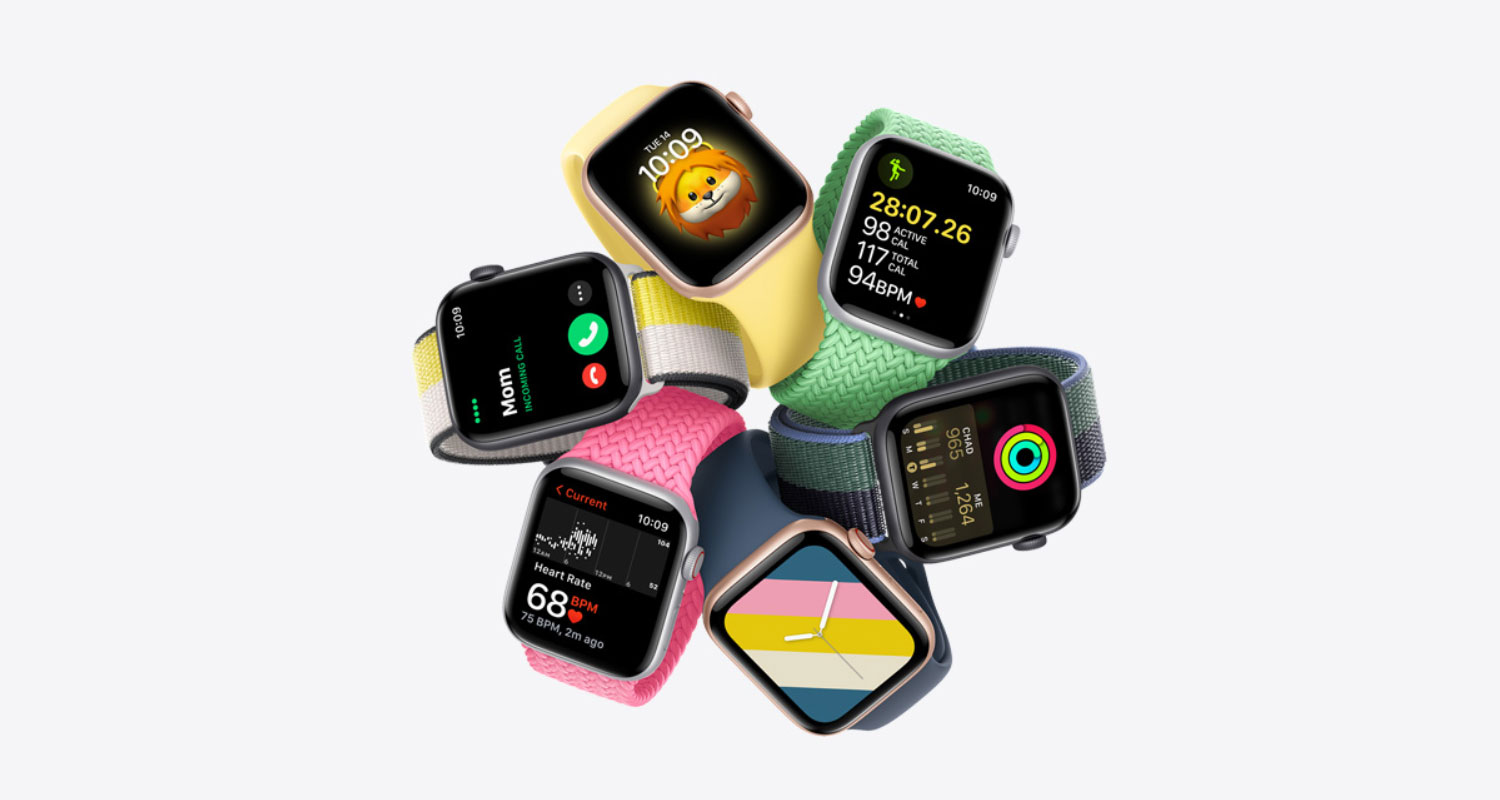
    The Apple Watch has gradually become more of a health tool. The first model, launched in 2015, included a heart-rate sensor but was more focused on fitness tracking. The device gained the ability to take electrocardiograms, or ECGs, from the wrist in 2018. It also can now sense body temperature — for women’s health tracking — and calculate blood oxygen levels.

    The glucose system will rely on a slate of Apple-designed silicon photonics chips and sensors. The company tapped TSMC to build the main chip to power the feature. TSMC, a key Apple partner, already builds the main processors inside of iPhones, iPads and Macs.

    While Apple has made major technology strides on the glucose effort, it suffered a recent setback

    Before shifting to TSMC, Apple had worked with Rockley Photonics Holdings to develop the sensors and chip for the technology. In 2021, Rockley publicly disclosed its work with Apple, stoking interest in the supplier. Apple later ended the partnership, and Rockley filed for bankruptcy last month.

    While Apple has made major technology strides on the glucose effort, it suffered a recent setback: the group’s leader, longtime scientist and engineering executive Bill Athas, passed away unexpectedly at the end of 2022. The work is now led by a few of Athas’s top deputies, including managers Dave Simon and Jeff Koller. They report to Johny Srouji, Apple’s chips chief.

    Before becoming part of the XDG team, the project was cloaked in even more secrecy: it operated as its own start-up called Avolonte Health that was, to any outside observer, unaffiliated with Apple.

    The start-up was run out of a small office building in Palo Alto, about 20km from Apple’s headquarters. Team members had Avolonte employee badges, rather than ones from Apple. That strategy kept Apple’s work under wraps during human trials, as well as its efforts to gain patents and line up partners.

    The project began in 2010 when Apple purchased a start-up named RareLight that touted an early approach to noninvasive blood glucose monitoring.

    Steve Jobs died in 2011. Image by Surian Soosay

    Apple co-founder Steve Jobs, dealing with his own health problems, directed the iPhone maker to buy the company. Apple tapped Bob Messerschmidt, RareLight’s founder, to kick off its own work on a glucose monitor, which was initially codenamed E68. Messerschmidt now runs a health company called Cor Health.

    The deal ultimately happened because of “Jobs’s vision of health care combined with technology”, he said in an interview. Former senior Apple hardware executives Bob Mansfield and Michael Culbert were also driving forces behind the project, people involved said.

    Messerschmidt was replaced as the project head in 2011 by Apple veteran Michael Hillman, who left in 2015. Upon his departure, Avolonte Health wound down and the endeavour became part of Athas’s XDG. The team now works near the Apple Park headquarters.  — (c) 2023 Bloomberg LP

    Get TechCentral’s daily newsletter


    Apple Apple Watch Steve Jobs Tim Cook
    Subscribe to TechCentral Subscribe to TechCentral
    Share. Facebook Twitter LinkedIn WhatsApp Telegram Email Copy Link
    Previous ArticleThe silicon giant cashing in on the AI boom
    Next Article Investors in Eskom cheer government debt plan

    Related Posts

    Samsung goes trifold while Apple folds its arms

    Samsung goes trifold while Apple folds its arms

    2 December 2025
    Samsung's first trifold smartphone is here

    Samsung’s first trifold smartphone is here

    2 December 2025
    Your data, your hardware: the DIY AI revolution is coming - Duncan McLeod

    Your data, your hardware: the DIY AI revolution is coming

    20 November 2025
    Company News
    AI is not a technology problem - iqbusiness

    AI is not a technology problem – iqbusiness

    5 December 2025
    Telcos are sitting on a data gold mine - but few know what do with it - Phillip du Plessis

    Telcos are sitting on a data gold mine – but few know what do with it

    4 December 2025
    Unlock smarter computing with your surface Copilot+ PC

    Unlock smarter computing with your Surface Copilot+ PC

    4 December 2025
    Opinion
    Your data, your hardware: the DIY AI revolution is coming - Duncan McLeod

    Your data, your hardware: the DIY AI revolution is coming

    20 November 2025
    Zero Carbon Charge founder Joubert Roux

    The energy revolution South Africa can’t afford to miss

    20 November 2025
    It's time for a new approach to government IT spend in South Africa - Richard Firth

    It’s time for a new approach to government IT spend in South Africa

    19 November 2025

    Subscribe to Updates

    Get the best South African technology news and analysis delivered to your e-mail inbox every morning.

    Latest Posts
    AI is not a technology problem - iqbusiness

    AI is not a technology problem – iqbusiness

    5 December 2025
    Vodacom to take control of Safaricom in R36-billion deal - Shameel Joosub

    Vodacom to take control of Safaricom in R36-billion deal

    4 December 2025
    Black Friday goes digital in South Africa as online spending surges to record high

    Black Friday goes digital in South Africa as online spending surges to record high

    4 December 2025
    BYD takes direct aim at Toyota with launch of sub-R500 000 Sealion 5 PHEV

    BYD takes direct aim at Toyota with launch of sub-R500 000 Sealion 5 PHEV

    4 December 2025
    © 2009 - 2025 NewsCentral Media
    • Cookie policy (ZA)
    • TechCentral – privacy and Popia

    Type above and press Enter to search. Press Esc to cancel.

    Manage consent

    TechCentral uses cookies to enhance its offerings. Consenting to these technologies allows us to serve you better. Not consenting or withdrawing consent may adversely affect certain features and functions of the website.

    Functional Always active
    The technical storage or access is strictly necessary for the legitimate purpose of enabling the use of a specific service explicitly requested by the subscriber or user, or for the sole purpose of carrying out the transmission of a communication over an electronic communications network.
    Preferences
    The technical storage or access is necessary for the legitimate purpose of storing preferences that are not requested by the subscriber or user.
    Statistics
    The technical storage or access that is used exclusively for statistical purposes. The technical storage or access that is used exclusively for anonymous statistical purposes. Without a subpoena, voluntary compliance on the part of your Internet Service Provider, or additional records from a third party, information stored or retrieved for this purpose alone cannot usually be used to identify you.
    Marketing
    The technical storage or access is required to create user profiles to send advertising, or to track the user on a website or across several websites for similar marketing purposes.
    • Manage options
    • Manage services
    • Manage {vendor_count} vendors
    • Read more about these purposes
    View preferences
    • {title}
    • {title}
    • {title}