
Close Menu
TechCentralTechCentral

    Subscribe to the newsletter

    Get the best South African technology news and analysis delivered to your e-mail inbox every morning.

    Facebook X (Twitter) YouTube LinkedIn
    WhatsApp Facebook X (Twitter) LinkedIn YouTube
    TechCentralTechCentral
    • News
      Vodacom to take control of Safaricom in R36-billion deal - Shameel Joosub

      Vodacom to take control of Safaricom in R36-billion deal

      4 December 2025
      Black Friday goes digital in South Africa as online spending surges to record high

      Black Friday goes digital in South Africa as online spending surges to record high

      4 December 2025
      BYD takes direct aim at Toyota with launch of sub-R500 000 Sealion 5 PHEV

      BYD takes direct aim at Toyota with launch of sub-R500 000 Sealion 5 PHEV

      4 December 2025
      'Get it now': Takealot in new instant deliveries pilot

      ‘Get it now’: Takealot in new instant deliveries pilot

      4 December 2025
      What South Africans searched for most in 2025

      What South Africans searched for most in 2025, according to Google

      4 December 2025
    • World
      Amazon and Google launch multi-cloud service for faster connectivity

      Amazon and Google launch multi-cloud service for faster connectivity

      1 December 2025
      Google makes final court plea to stop US breakup

      Google makes final court plea to stop US breakup

      21 November 2025
      Bezos unveils monster rocket: New Glenn 9x4 set to dwarf Saturn V

      Bezos unveils monster rocket: New Glenn 9×4 set to dwarf Saturn V

      21 November 2025
      Tech shares turbocharged by Nvidia's stellar earnings

      Tech shares turbocharged by stellar Nvidia earnings

      20 November 2025
      Config file blamed for Cloudflare meltdown that disrupted the web

      Config file blamed for Cloudflare meltdown that disrupted the web

      19 November 2025
    • In-depth
      Jensen Huang Nvidia

      So, will China really win the AI race?

      14 November 2025
      Valve's Linux console takes aim at Microsoft's gaming empire

      Valve’s Linux console takes aim at Microsoft’s gaming empire

      13 November 2025
      iOCO's extraordinary comeback plan - Rhys Summerton

      iOCO’s extraordinary comeback plan

      28 October 2025
      Why smart glasses keep failing - no, it's not the tech - Mark Zuckerberg

      Why smart glasses keep failing – it’s not the tech

      19 October 2025
      BYD to blanket South Africa with megawatt-scale EV charging network - Stella Li

      BYD to blanket South Africa with megawatt-scale EV charging network

      16 October 2025
    • TCS
      TCS+ | How Cloud on Demand helps partners thrive in the AWS ecosystem - Odwa Ndyaluvane and Xenia Rhode

      TCS+ | How Cloud On Demand helps partners thrive in the AWS ecosystem

      4 December 2025
      TCS | MTN Group CEO Ralph Mupita on competition, AI and the future of mobile

      TCS | Ralph Mupita on competition, AI and the future of mobile

      28 November 2025
      TCS | Dominic Cull on fixing South Africa's ICT policy bottlenecks

      TCS | Dominic Cull on fixing South Africa’s ICT policy bottlenecks

      21 November 2025
      TCS | BMW CEO Peter van Binsbergen on the future of South Africa's automotive industry

      TCS | BMW CEO Peter van Binsbergen on the future of South Africa’s automotive industry

      6 November 2025
      TCS | Why Altron is building an AI factory - Bongani Andy Mabaso

      TCS | Why Altron is building an AI factory in Johannesburg

      28 October 2025
    • Opinion
      Your data, your hardware: the DIY AI revolution is coming - Duncan McLeod

      Your data, your hardware: the DIY AI revolution is coming

      20 November 2025
      Zero Carbon Charge founder Joubert Roux

      The energy revolution South Africa can’t afford to miss

      20 November 2025
      It's time for a new approach to government IT spend in South Africa - Richard Firth

      It’s time for a new approach to government IT spend in South Africa

      19 November 2025
      How South Africa's broken Rica system fuels murder and mayhem - Farhad Khan

      How South Africa’s broken Rica system fuels murder and mayhem

      10 November 2025
      South Africa's AI data centre boom risks overloading a fragile grid - Paul Colmer

      South Africa’s AI data centre boom risks overloading a fragile grid

      30 October 2025
    • Company Hubs
      • Africa Data Centres
      • AfriGIS
      • Altron Digital Business
      • Altron Document Solutions
      • Altron Group
      • Arctic Wolf
      • AvertITD
      • Braintree
      • CallMiner
      • CambriLearn
      • CYBER1 Solutions
      • Digicloud Africa
      • Digimune
      • Domains.co.za
      • ESET
      • Euphoria Telecom
      • Incredible Business
      • iONLINE
      • IQbusiness
      • Iris Network Systems
      • LSD Open
      • NEC XON
      • Netstar
      • Network Platforms
      • Next DLP
      • Ovations
      • Paracon
      • Paratus
      • Q-KON
      • SevenC
      • SkyWire
      • Solid8 Technologies
      • Telit Cinterion
      • Tenable
      • Vertiv
      • Videri Digital
      • Vodacom Business
      • Wipro
      • Workday
      • XLink
    • Sections
      • AI and machine learning
      • Banking
      • Broadcasting and Media
      • Cloud services
      • Contact centres and CX
      • Cryptocurrencies
      • Education and skills
      • Electronics and hardware
      • Energy and sustainability
      • Enterprise software
      • Financial services
      • Information security
      • Internet and connectivity
      • Internet of Things
      • Investment
      • IT services
      • Lifestyle
      • Motoring
      • Public sector
      • Retail and e-commerce
      • Satellite communications
      • Science
      • SMEs and start-ups
      • Social media
      • Talent and leadership
      • Telecoms
    • Events
    • Advertise
    TechCentralTechCentral
    Home » Sections » Telecoms » Cell towers in space: inside the race to connect planet Earth

    Cell towers in space: inside the race to connect planet Earth

    Competition to deliver satellite mobile broadband connectivity from space is intensifying.
    By Nkosinathi Ndlovu9 January 2024
    Twitter LinkedIn Facebook WhatsApp Email Telegram Copy Link
    News Alerts
    WhatsApp

    Competition to deliver satellite mobile broadband connectivity from space is intensifying as the race for solutions that solve the universal coverage problem hots up.

    Low-Earth-orbit (LEO) satellite constellations are proving to be the most practical way of connecting people in rural and remote regions to the internet.

    A number of companies including Elon Musk’s Starlink, Amazon.com’s Project Kuiper and others including OneWeb, Telesat and AST SpaceMobile are all challengers in the rapidly expanding LEO satellite space.

    Lynk Global is an American firm leading the charge in satellite direct-to-mobile technology

    However, although all these companies use the same general principle of deploying constellations of orbiting satellites close enough to the Earth’s surface to reduce latency – network round-trip times – compared to satellites in higher orbits, there are differences in the LEO technologies employed and the problems each is trying to solve.

    Starlink and Project Kuiper, for example, are focused on the provision of fixed-wireless internet access. Enterprise data backhaul, internet-of-things connectivity and high-capacity data transport represent three other focus areas.

    Direct-to-mobile connectivity, which uses LEO satellites to connect mobile devices to terrestrial mobile networks without the need for any additional hardware, is one of LEO technology’s more promising solutions – and could even threaten mobile operators in the longer term.

    Cell towers in space

    Lynk Global is an American firm leading the charge in satellite direct-to-mobile technology. TechCentral caught up with Lynk Global chief commercial officer Dan Dooley to find out more about the direct-to-mobile space, some of the technical challenges the company (and its rivals) have to overcome and what it’s doing on the African continent.

    “We’re the only company on the planet that has patented, proven and is commercially licensed to handle sat-to-phone. Essentially, we build satellites that act as cell towers in space, and these cell towers allow MNOs (mobile network operators) like MTN to use their spectrum to connect to our satellite so they can put a cell site down in a geography where they don’t have a cell site today,” Dooley explained.

    Last month, MTN group chief technology and information officer Mazen Mroué announced that the operator was testing various LEO satellite solutions with several partners in Africa. Mroué said MTN was testing direct-to-mobile satellite in partnership with Lynk Global in both South Africa and Ghana.

    Dooley confirmed to TechCentral that Lynk Global has also completed another successful trial in Liberia, another MTN partnership, and is active with other operators elsewhere on the continent.
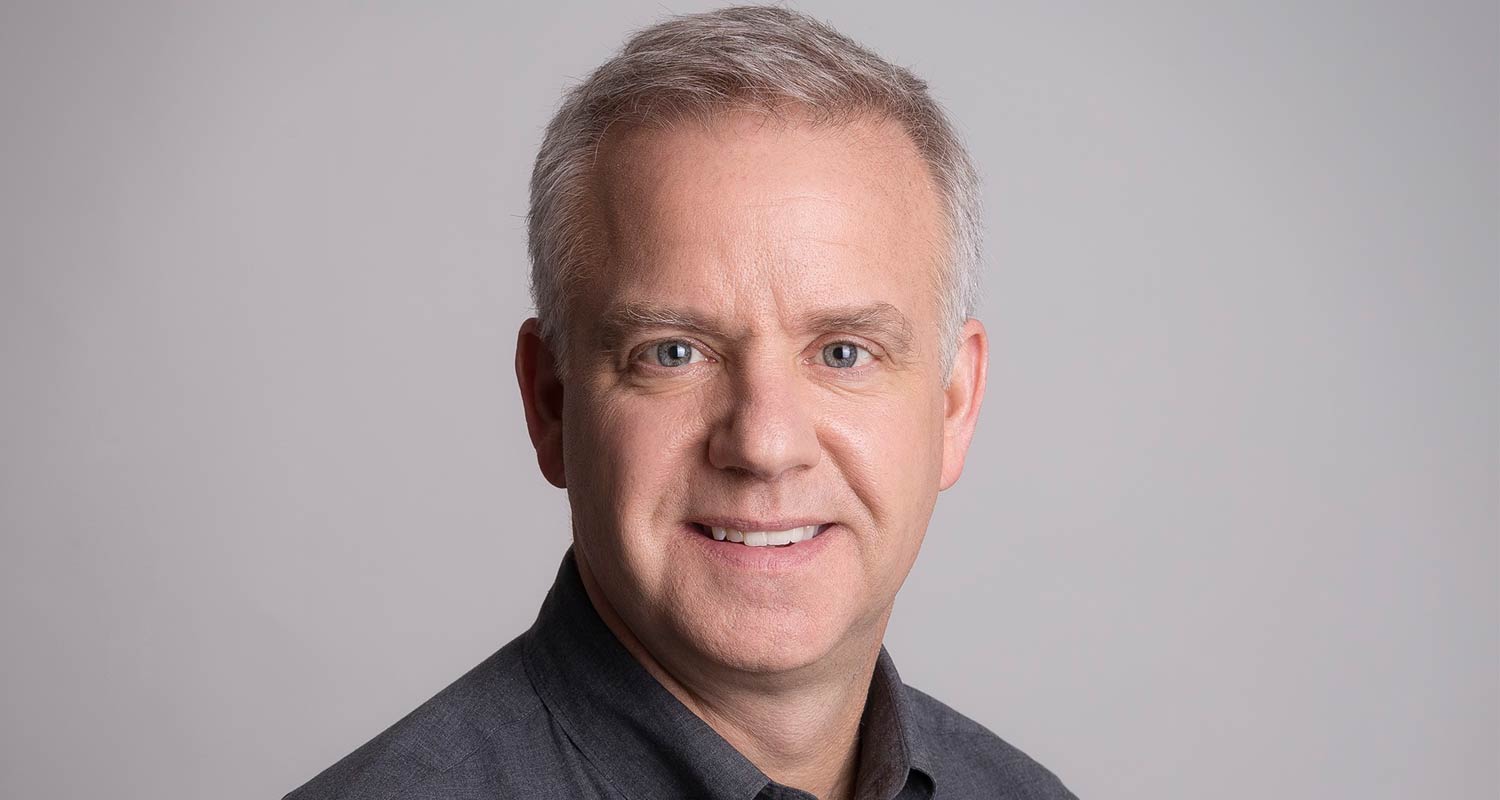
    Lynk Global’s Dan Dooley

    “We have relationships with Vodafone Ghana and Telecel in the Central African Republic. We have two or three others including a partnership in Zimbabwe, but those are yet to be made public. All in all, we’ve partnered with over 35 mobile network operators across the globe covering over 50 countries.”

    African mobile operators face a troika of inhibitors when it comes to expanding coverage:

    • Vast, sparsely populated landscapes make the cost of deploying infrastructure prohibitive.
    • Much of the continent is underdeveloped, making it difficult to access certain regions easily to build network infrastructure.
    • Affordability is also an issue: high-end hardware that accompanies fixed-wireless solutions like Starlink’s is not feasible for most Africans.

    “We provide the cell towers in space that mobile network operators use to extend their coverage to places they could not extend it before. All phones work on the satellite, even feature phones,” said Dooley.

    Founded in 2017, Lynk Global has always focused on direct-to-mobile connectivity. Co-founders Charles Miller, Margo Deckard and Tyghe Speidel worked as missionaries in Africa and often had to ship in telecoms equipment for personal use.

    Read: MTN partners with Starlink, AST for African connectivity

    “The gear didn’t always work and it was often clunky, so they decided that a way to connect ordinary phones directly to the satellites was needed,” said Dooley.

    The solution they devised was to put a “cell tower in the sky”, but this posed challenges. One issue is that because the satellite moves quicky – 480km/h – the company must solve the problem of doppler shift.

    A Starlink terminal, used for fixed-wireless internet access

    The other, Dooley said, is timing. Phones traditionally look for cell towers at about 35km for 2G and about 110km for 4G, not the 500km above the Earth where the satellite is orbiting. “We have to essentially trick the phone into thinking that the tower is not only stationary but that it’s also [relatively] close to the phone,” he said.

    There is a misconception that LEO direct-to-mobile solutions will deplete battery life faster than terrestrial connections because the signal has to travel so far. This stems from the fact that traditional satellite phones, which use satellites in geostationary orbit 35 000km above the planet, usually have large, clunky batteries that don’t last very long. But the distance travelled by a signal to or from a LEO satellite is orders of magnitude smaller.

    “Looking for a signal is what drains the battery, not a connection with the satellite. Once the phone has a connection with the satellite the battery use is essentially the same [as connecting to a terrestrial tower],” said Dooley.

    In some ways, it’s a better experience for the user because they are no longer bouncing between networks

    “In some ways, it’s a better experience for the user because they are no longer bouncing between networks since they have a solid connection to the satellite,” he said.

    Since the satellites are in orbit, and not stationary, they only cover a specific region of Earth for a few minutes at a time. To maintain a connection to a device on the ground, a satellite that is moving out of range must periodically “hand over” to another that’s coming into the range. This is no different to the handovers that terrestrial towers perform when a person is driving out of the range of a tower they are currently connected to and must connect to a new tower.

    “You do have to hand over frequently, every few minutes, but it’s very predictable,” Dooley said. “Voice and data work but we don’t have enough satellites deployed yet to have those connections between the satellites work. To offer continuous, redundant voice and data services everywhere around the globe, we will need about 900 satellites,” said Dooley.

    ‘Doable’

    The company aims to have more than 900 satellites deployed by 2026. It manufactures its own satellites, so it is the production component of its workflow that needs to ramp up before its constellation can reach critical mass. Even so, a number of “intermittent” services, such as emergency messaging and a three-minute voice service, are possible with a smaller constellation.

    According to Dooley, launching “hundreds of satellites at a time” will be doable once production reaches scale. Like many others in the LEO space, including OneWeb and AST SpaceMobile, Lynk Global uses SpaceX – the owner of rival Starlink – to launch its satellites.

    In December, Lynk Global announced that it had signed a letter of intent that would see the company combining with Nasdaq-listed Slam, a special purpose acquisitions company, in a reverse listing. It is expected that the combined company will be valued “at no less than US$800-million” upon listing.

    It’s not difficult to imagine that companies like Lynk Global, once their LEO constellations are in orbit in the coming years, might decide to compete directly with the mobile operators by taking advantage of the global economies of scale that their solutions provide. But Dooley believes this is unlikely.

    Read: Direct-to-mobile satellite will change the game: Vodacom

    “That is theoretically, or academically, an option. But we are a wholesale-only provider. There is a lot of hassle that comes with being in that end-user space, especially if you include multiple geographies. We are much better suited to partnering with the mobile network operators, which have the spectrum and customers already.”  — © 2024 NewsCentral Media

    Get breaking news alerts from TechCentral on WhatsApp


    Amazon AST SpaceMobile Elon Musk Kuiper Lynk Global Mazen Mroue MTN OneWeb Project Kuiper SpaceX Starlink Telesat
    Subscribe to TechCentral Subscribe to TechCentral
    Share. Facebook Twitter LinkedIn WhatsApp Telegram Email Copy Link
    Previous ArticleEskom names transmission company board
    Next Article Amazon debuts streaming feature that rivals Apple AirPlay

    Related Posts

    Black Friday goes digital in South Africa as online spending surges to record high

    Black Friday goes digital in South Africa as online spending surges to record high

    4 December 2025
    TCS | MTN Group CEO Ralph Mupita on competition, AI and the future of mobile

    TCS | Ralph Mupita on competition, AI and the future of mobile

    28 November 2025
    Why MTN still won't rule out a deal with Telkom - Ralph Mupita

    Why MTN still won’t rule out a deal with Telkom

    26 November 2025
    Company News
    Telcos are sitting on a data gold mine - but few know what do with it - Phillip du Plessis

    Telcos are sitting on a data gold mine – but few know what do with it

    4 December 2025
    Unlock smarter computing with your surface Copilot+ PC

    Unlock smarter computing with your Surface Copilot+ PC

    4 December 2025
    Building trust in a digital world: Vodacom Business's approach to security

    Building trust in a digital world – the Vodacom Business approach to security

    4 December 2025
    Opinion
    Your data, your hardware: the DIY AI revolution is coming - Duncan McLeod

    Your data, your hardware: the DIY AI revolution is coming

    20 November 2025
    Zero Carbon Charge founder Joubert Roux

    The energy revolution South Africa can’t afford to miss

    20 November 2025
    It's time for a new approach to government IT spend in South Africa - Richard Firth

    It’s time for a new approach to government IT spend in South Africa

    19 November 2025

    Subscribe to Updates

    Get the best South African technology news and analysis delivered to your e-mail inbox every morning.

    Latest Posts
    Vodacom to take control of Safaricom in R36-billion deal - Shameel Joosub

    Vodacom to take control of Safaricom in R36-billion deal

    4 December 2025
    Black Friday goes digital in South Africa as online spending surges to record high

    Black Friday goes digital in South Africa as online spending surges to record high

    4 December 2025
    BYD takes direct aim at Toyota with launch of sub-R500 000 Sealion 5 PHEV

    BYD takes direct aim at Toyota with launch of sub-R500 000 Sealion 5 PHEV

    4 December 2025
    'Get it now': Takealot in new instant deliveries pilot

    ‘Get it now’: Takealot in new instant deliveries pilot

    4 December 2025
    © 2009 - 2025 NewsCentral Media
    • Cookie policy (ZA)
    • TechCentral – privacy and Popia

    Type above and press Enter to search. Press Esc to cancel.

    Manage consent

    TechCentral uses cookies to enhance its offerings. Consenting to these technologies allows us to serve you better. Not consenting or withdrawing consent may adversely affect certain features and functions of the website.

    Functional Always active
    The technical storage or access is strictly necessary for the legitimate purpose of enabling the use of a specific service explicitly requested by the subscriber or user, or for the sole purpose of carrying out the transmission of a communication over an electronic communications network.
    Preferences
    The technical storage or access is necessary for the legitimate purpose of storing preferences that are not requested by the subscriber or user.
    Statistics
    The technical storage or access that is used exclusively for statistical purposes. The technical storage or access that is used exclusively for anonymous statistical purposes. Without a subpoena, voluntary compliance on the part of your Internet Service Provider, or additional records from a third party, information stored or retrieved for this purpose alone cannot usually be used to identify you.
    Marketing
    The technical storage or access is required to create user profiles to send advertising, or to track the user on a website or across several websites for similar marketing purposes.
    • Manage options
    • Manage services
    • Manage {vendor_count} vendors
    • Read more about these purposes
    View preferences
    • {title}
    • {title}
    • {title}