Close Menu
TechCentralTechCentral

    Subscribe to the newsletter

    Get the best South African technology news and analysis delivered to your e-mail inbox every morning.

    Facebook X (Twitter) YouTube LinkedIn
    WhatsApp Facebook X (Twitter) LinkedIn YouTube
    TechCentralTechCentral
    • News
      Eskom's profit doubles even as it sells less electricity - Mteto Nyati

      Mteto Nyati to stay on as Eskom chairman

      25 September 2026
      Meta's new gadget is a pocket watch for its viral AI agent - Muse Charm

      Meta’s new gadget is a pocket watch for its viral AI agent

      25 September 2026
      Insurers carry the can for MIP breach, regulators say

      Insurers carry the can for MIP breach, regulators say

      25 September 2026
      South Africa's car exports face an EV reckoning

      South Africa’s car exports face an EV reckoning

      25 September 2026
      Rogue AI agents are already loose inside big companies

      Rogue AI agents are already loose inside big companies

      23 September 2026
    • World
      Anthropic weighs new model launch to blunt OpenAI's Astra surge - Anthropic CEO Dario Amodei and OpenAI CEO Sam Altman

      Anthropic weighs new model launch to blunt OpenAI’s Astra surge

      21 September 2026
      Hackers hack hackers: ShinyHunters seizes cl0p's dark web site

      Hackers hack hackers as dark web feud erupts

      21 September 2026
      Film piracy malware is reaching corporate machines

      Film piracy malware is reaching corporate machines

      21 September 2026
      Crypto's big bet fails as US senate sinks Clarity Act

      Crypto’s big bet fails as US senate sinks Clarity Act

      16 September 2026
      'This is not circular': Jensen Huang defends $3.5-billion MediaTek deal

      ‘This is not circular’: Jensen Huang defends $3.5-billion MediaTek deal

      2 September 2026
    • In-depth
      Meta to the AI industry: slow down without us - Mark Zuckerberg

      Meta to the AI industry: slow down without us

      16 September 2026
      Google DeepMind CEO Demis Hassabis. Image: John Sears

      The plan to stop AI from breaking the world

      16 July 2026
      The internet has a Strait of Hormuz problem

      The internet has a Strait of Hormuz problem

      15 July 2026
      AI boom sparks rally, frenzy and fear

      AI boom sparks rally, frenzy and fear

      11 June 2026
      Every plug-in hybrid on sale in South Africa, ranked by price - Lamborghini Temerario

      Every plug-in hybrid on sale in South Africa, ranked by price

      7 June 2026
    • TCS
      TCS | Octotel's Trevor van Zyl on the fibre merger question

      TCS | Octotel’s Trevor van Zyl on the MetroFibre merger question

      16 September 2026
      Meet the CIO | Shoprite's Chris Shortt on what a supermarket becomes

      Meet the CIO | Shoprite’s Chris Shortt on what a supermarket becomes

      9 September 2026
      Rubicon's EV charging network is profitable - and growing fast - Watts & Wheels

      Rubicon’s EV charging network is profitable – and growing fast

      8 September 2026
      Winstone Jordaan on building a national EV charging network

      Winstone Jordaan on building a national EV charging network

      2 September 2026
      Watts & Wheels S1E8: 'Tesla lands in Africa, just not here'

      Watts & Wheels S1E8: ‘Tesla lands in Africa, just not here’

      24 August 2026
    • Opinion
      Regulating AI: apply the laws we have first - Dirk de Vos

      Regulating AI: apply the laws we have first

      21 September 2026
      The end is nigh, and the shares go on sale in October - Duncan McLeod

      The end is nigh, and the shares go on sale in October

      14 September 2026
      The fragile joint in the Capitec machine - Pambos Soteriades

      The R197-billion market the banks can’t reach

      25 August 2026
      South African tech's compounding debt problem - Jannie van Zyl

      Management consulting as we know it is over

      21 August 2026
      South African tech's compounding debt problem - Jannie van Zyl

      The most dangerous customer is the quiet one

      10 August 2026
    • Company Hubs
      • 1Stream
      • Africa Data Centres
      • AfriGIS
      • Altron Digital Business
      • Altron Document Solutions
      • Altron Group
      • Arctic Wolf
      • Ascent Technology
      • AvertITD
      • BBD
      • Braintree
      • CallMiner
      • CambriLearn
      • CM.com
      • Contactable
      • CYBER1 Solutions
      • Digicloud Africa
      • Digimune
      • Domains.co.za
      • ESET
      • Euphoria Telecom
      • HOSTAFRICA
      • Incredible Business
      • iONLINE
      • IQbusiness
      • Iris Network Systems
      • Kaspersky
      • LSD Open
      • Mitel
      • NEC XON
      • Netstar
      • Network Platforms
      • Next DLP
      • Ovations
      • Paracon
      • Paratus
      • Q-KON
      • SevenC
      • SkyWire
      • Solid8 Technologies
      • Telit Cinterion
      • Telviva
      • Tenable
      • Vertiv
      • Videri Digital
      • Vodacom Business
      • Vox
      • Wipro
      • Workday
      • XLink
    • Sections
      • AI and machine learning
      • Banking
      • Broadcasting and Media
      • Cloud services
      • Contact centres and CX
      • Cryptocurrencies
      • Education and skills
      • Electronics and hardware
      • Energy and sustainability
      • Enterprise software
      • Financial services
      • HealthTech
      • Information security
      • Internet and connectivity
      • Internet of Things
      • Investment
      • IT services
      • Lifestyle
      • Policy and regulation
      • Public sector
      • Retail and e-commerce
      • Satellite communications
      • Science
      • SMEs and start-ups
      • Social media
      • Talent and leadership
      • Telecoms
      • Watts & Wheels
    • Events
    • Advertise
    TechCentralTechCentral
    Home » Company News » South Africa’s heavy hitters opt for a cloud-based future

    South Africa’s heavy hitters opt for a cloud-based future

    By Suse12 March 2020
    Twitter LinkedIn Facebook WhatsApp Email Telegram Copy Link
    Get breaking news on WhatsApp

    A host of organisations core to keeping South Africa running are moving their operations into the cloud.

    Eskom, Transnet, the Reserve Bank, South African Airways, Sasol, the Post Office and Vodacom all have a cloud-focused strategy to enhance their stability and reliability and cut their running costs.

    They’re also expecting the cloud to enhance as well as support their operations, with these old institutions hoping new cloud-based software will make them more agile and competitive.

    Seeing the cloud simply as a safety measure is to underestimate its real value of creating agility and resolving business problems

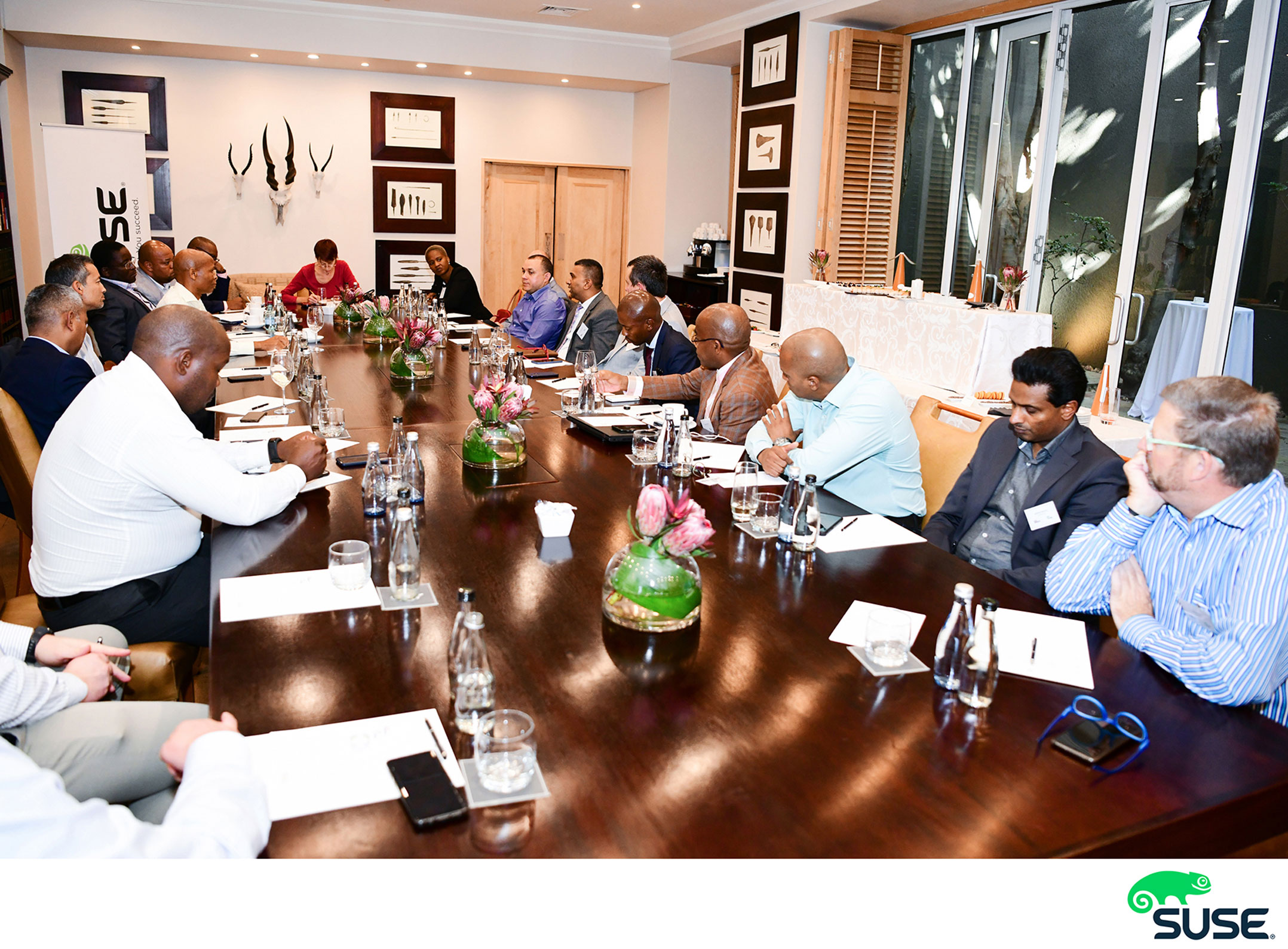
    IT leaders from many vital organisations exchanged ideas, pain points and advice recently at a TechCentral CIO Perspectives Roundtable, sponsored by SUSE, to discuss “using the cloud for business survival”.

    While South Africa is usually a follower rather than an early adopter of technologies, two factors here make business as usual impossible: the erratic electricity supply and the dire shortage of people with the necessary IT skills.

    Moving their infrastructure, data and applications into the cloud is enticing, with the massive resources of service providers like Microsoft, Amazon and Google able to offer 24/7 uptime. There’s also the benefit of being able to scale their processing power or storage capacity up and down as their requirements rise and fall, without investing in their own infrastructure.

    Seeing the cloud simply as a safety measure is to underestimate its real value of creating agility and resolving business problems through the new technologies it makes available, some panellists stressed.

    Value proposition

    Discovery has benefited by quickly plugging in facial biometric systems from Amazon Web Services (AWS), short-cutting the long development period that would have otherwise required, says Marcus Portman, Discovery’s chief enterprise architect. The value proposition of the cloud varies according to the type of business you run, he said.

    Discovery’s Vitality division is purely cloud based, while its banking side has very strict governance regimes to adhere to. “It’s not always a good idea to drop traditional applications into the cloud unless you can structure them properly,” he says.

    Discovery’s Marcus Portman, right

    Sasol has a two-sided approach, says its global head of infrastructure, Tshepo Mokgoto. Moving the technologies that run its core operations to the cloud would be difficult, but it’s an obvious step to put its analytical systems there and enhance them with new software available from the cloud service providers.

    Sasol’s Tshepo Mokgoto, second from right

    The cloud is core to Absa’s strategy, says Ebrahim Samodien, its CIO of enterprise functions. “We feel we are on a constant back foot because we are not as advanced as we want to be, yet we are quite advanced compared to other organisations. We benchmark ourselves with organisations that are born in the cloud, and they have a level of flexibility and scalability that we don’t have.”

    Samodien points out that South Africa depends heavily on the organisations represented at the TechCentral debate, yet they’re all struggling for growth. “It’s the speed at which we can adopt new technologies,” he says. “A lot of born-in-the-clouds are growing at unbelievable rates because it’s part of their DNA and we are trying to build it into ours.”

    Absa finds working with AWS a pleasure, he says, because they’re engineers, not salesmen. “They solve business problems, they don’t solve storage problems. We are looking at how we can use their AI technologies and they’re available to us much more freely than if we had to build it ourselves.”

    Absa’s Ebrahim Samodien, centre

    The South African Post Office could also gain a technology refresh via the cloud, says Maclaud Mafaiti, GM of IT security. Much of the Post Office’s IT is obsolete, and instead of buying new technologies it can access what it needs from the cloud. But he echoes Portman’s worry that moving existing apps to the cloud could be risky. “For new organisations it’s easy to come up with cloud-native apps, but some Post Office apps have been there for ages and it might be very difficult to port and recreate it in the cloud,” he says.

    The Post Office’s Maclaud Mafaiti, right

    A further hindrance is that people in charge of the budgets often think the cloud isn’t secure. They need to be shown that security measures are in place, and that an organisation can choose where it wants its data to be housed.

    The participants agree that security is a shared responsibility. A company needs to understand its own role in ensuring security at the apps level, while the cloud service providers handle security at their level, says Samodien. “Our budget compared with theirs is a drop in the ocean. I’m confident I’m going to get much better security from Amazon than I will ever afford myself.”

    It’s also sensible to have a multi-cloud strategy so you can “lift and shift” if something goes wrong, the panellists believe, which you don’t have with physical infrastructure.

    Eskom has invested heavily in data centres and is well placed for a cloud-based future, but compliance is a major challenge

    While all companies must decide what they are willing or able to put in the cloud, that decision is far more crucial at state-owned entities governed by the National Critical Infrastructure Bill. Eskom was one of the first organisations in the country to aggressively adopt a cloud strategy, seeing it as a better and cheaper way of operating, says its IT portfolio manager, Ezzard de Lange.

    Eskom has invested heavily in data centres and is well placed for a cloud-based future, but compliance is a major challenge. Classification tools are being used to determine what data Eskom has and to specify where the infrastructure it sits is physically based, and then to determine what to move.

    Some aspects will be handed to a third-party provider with strict service-level agreements, and some services will be bought from the cloud, but some things are off limits. “It would be irresponsible to assume all information can be moved. Some can never, ever traverse into the cloud because it’s highly top secret,” De Lange says. “If that link from a third party goes down, you are down, so you have to adhere to the National Critical Infrastructure Bill. As much as you are unhappy with load shedding, you’d be a lot unhappier if there’s no power at all,” he says.

    Eskom’s Ezzard de Lange

    Transnet also has a cloud-based strategy, and is wrangling over what to move and what to retain on-premise. To help with the task, it’s assembled a panel of experts from various IT companies, says project director Shakespeare Hadebe. He complains that one company brought on as a partner in the journey has simply been telling him what he already knew, as it hasn’t bothered to come up with a specific road map for Transnet.

    “We had to stop this sales pitch halfway through. A partnership should be mutually beneficial. You must understand my pain points and come up with a solution that understands my infrastructure, because just coming up with emerging technologies and a sales pitch without understanding my dependencies and infrastructure doesn’t assist us,” he says.

    Transnet’s Shakespeare Hadebe

    For Pretoria Portland Cement (PPC), edge computing will stay around for some time because without it, this business with some far-flung factories lacking network coverage will struggle, says its CIO, Kgomotso Molefe. “It’s quite easy to get lost in the hype of ‘cloud first’, but there are some businesses that you will literally kill if you try to move them to the cloud.”

    PPC’s Kgomotso Molefe, left

    Another balance is the adaptability or “intransience” of people, he believes. PPC has a workforce that’s 65% older people and 35% younger. Molefe doesn’t want to make changes that will drive experienced people away, yet he needs to make PPC innovative enough to excite young job-hunters.

    Vodacom’s executive head of cloud, hosting and security, Tando Mtintsilana, tallied the various concerns being cited around the table, including the recession paring IT budgets, job security, re-skilling, legacy apps, business readiness, connectivity issues, the legal fine print, how to structure contracts and the inability to customise features in the public cloud. Yet cloud services providers are making record-breaking amounts of money, so obviously their offerings are meeting the needs of businesses around the world, he says. Instead of seeing the cloud as a path to economies of scale, they should focus more on how it can accelerate innovation and solve business problems.

    Vodacom’s Tando Mtintsilana, left

    An innovative company eager to move at speed will accept the upfront cost of the move now to gain the benefits of speed, agility, reduced risks and elasticity, agrees Deloitte director Kevin Govender. If the ability to customise certain features is important, they should opt for a private cloud where they own the software and can make adaptations, he says.

    Deloitte’s Kevin Govender, centre

    As for security, Govender says companies must start by moving only those things that won’t create a major impact if they’re compromised. “Once you are comfortable with that service provider, it gives you the ability over time to transition more and more, while any new app you get goes straight into the cloud,” he says.

    • This promoted content was paid for by the party concerned

    Add TechCentral as a preferred source on GoogleFollow TechCentral on Google NewsGet breaking news on WhatsApp


    Absa Deloitte Discovery Ebrahim Samodien Eskom Ezzard de Lange Kevin Govender Kgomotso Molefe Maclaud Mafaiti Marcus Portman Post Office PPC Sasol Shakespeare Hadebe Suse Tando Mtintsilana Transnet Tshepo Mokgoto Vodacom
    WhatsApp YouTube
    Share. Facebook Twitter LinkedIn WhatsApp Telegram Email Copy Link
    Previous Article‘An enormous sacrifice’: Rob Shuter on why he’s leaving MTN
    Next Article Tim Berners-Lee warns ‘Web not working for women’

    Related Posts

    Eskom's profit doubles even as it sells less electricity - Mteto Nyati

    Mteto Nyati to stay on as Eskom chairman

    25 September 2026
    South Africa's car exports face an EV reckoning

    South Africa’s car exports face an EV reckoning

    25 September 2026
    Cell C boss buys into his own turnaround - Jorge Mendes

    Cell C boss buys into his own turnaround

    22 September 2026
    Company News
    The Courier Guy enhances customer engagement with Telviva

    The Courier Guy enhances customer engagement with Telviva

    23 September 2026
    Pinnacle takes its channel to Mauritius for TechScape 2026

    Pinnacle takes its channel to Mauritius for TechScape 2026

    23 September 2026
    Why true customer enablement starts on the inside - Backspace Technologies COO Graeme Thomson

    Why true customer enablement starts on the inside

    23 September 2026
    Opinion
    Regulating AI: apply the laws we have first - Dirk de Vos

    Regulating AI: apply the laws we have first

    21 September 2026
    The end is nigh, and the shares go on sale in October - Duncan McLeod

    The end is nigh, and the shares go on sale in October

    14 September 2026
    The fragile joint in the Capitec machine - Pambos Soteriades

    The R197-billion market the banks can’t reach

    25 August 2026

    Subscribe to Updates

    Get the best South African technology news and analysis delivered to your e-mail inbox every morning.

    Latest Posts
    Eskom's profit doubles even as it sells less electricity - Mteto Nyati

    Mteto Nyati to stay on as Eskom chairman

    25 September 2026
    Meta's new gadget is a pocket watch for its viral AI agent - Muse Charm

    Meta’s new gadget is a pocket watch for its viral AI agent

    25 September 2026
    Insurers carry the can for MIP breach, regulators say

    Insurers carry the can for MIP breach, regulators say

    25 September 2026
    South Africa's car exports face an EV reckoning

    South Africa’s car exports face an EV reckoning

    25 September 2026
    © 2009 - 2026 NewsCentral Media
    Built and maintained by Chronon
    • Cookie policy (ZA)
    • TechCentral – privacy and Popia

    Type above and press Enter to search. Press Esc to cancel.

    Manage consent

    TechCentral uses cookies to enhance its offerings. Consenting to these technologies allows us to serve you better. Not consenting or withdrawing consent may adversely affect certain features and functions of the website.

    Functional Always active
    The technical storage or access is strictly necessary for the legitimate purpose of enabling the use of a specific service explicitly requested by the subscriber or user, or for the sole purpose of carrying out the transmission of a communication over an electronic communications network.
    Preferences
    The technical storage or access is necessary for the legitimate purpose of storing preferences that are not requested by the subscriber or user.
    Statistics
    The technical storage or access that is used exclusively for statistical purposes. The technical storage or access that is used exclusively for anonymous statistical purposes. Without a subpoena, voluntary compliance on the part of your Internet Service Provider, or additional records from a third party, information stored or retrieved for this purpose alone cannot usually be used to identify you.
    Marketing
    The technical storage or access is required to create user profiles to send advertising, or to track the user on a website or across several websites for similar marketing purposes.
    • Manage options
    • Manage services
    • Manage {vendor_count} vendors
    • Read more about these purposes
    View preferences
    • {title}
    • {title}
    • {title}
    🇿🇦 Sign up to the TechCentral newsletter