Close Menu
TechCentralTechCentral

    Subscribe to the newsletter

    Get the best South African technology news and analysis delivered to your e-mail inbox every morning.

    Facebook X (Twitter) YouTube LinkedIn
    WhatsApp Facebook X (Twitter) LinkedIn YouTube
    TechCentralTechCentral
    • News
      How Amazon outmanoeuvred Starlink in South Africa

      How Amazon outmanoeuvred Starlink in South Africa

      15 July 2026
      Amazon Leo all set for South African launch - From left, Maziv CEO Dietlof Mare, communications minister Solly Malatsi, Herotel CEO Van Zyl Botha and Amazon's David Zapolsky

      Amazon Leo all set for South African launch

      15 July 2026
      SpaceX is the Dutch East India Company of the space age

      SpaceX is the Dutch East India Company of the space age

      15 July 2026
      The internet has a Strait of Hormuz problem

      The internet has a Strait of Hormuz problem

      15 July 2026
      Cape Town's Cue raises R82-million to take AI service agents global

      Cape Town’s Cue raises R82-million to take AI service agents global

      15 July 2026
    • World
      Swingeing jobs cuts at Microsoft's Xbox unit

      Swingeing jobs cuts at Microsoft’s Xbox unit

      6 July 2026

      SK Hynix ends Samsung’s 26-year reign at the top

      22 June 2026
      Google on the hook for what its AI tells users, court rules

      Google on the hook for what its AI tells users, court rules

      15 June 2026
      How Russians juggle VPNs to outwit the Kremlin

      How Russians juggle VPNs to outwit the Kremlin

      15 June 2026
      Amazon CEO flagged Anthropic AI risks to Washington - Andy Jassy

      Amazon CEO flagged Anthropic AI risks to Washington

      14 June 2026
    • In-depth
      AI boom sparks rally, frenzy and fear

      AI boom sparks rally, frenzy and fear

      11 June 2026
      Every plug-in hybrid on sale in South Africa, ranked by price - Lamborghini Temerario

      Every plug-in hybrid on sale in South Africa, ranked by price

      7 June 2026
      What Wi-Fi 8 will mean for wireless networks

      What Wi-Fi 8 will mean for wireless networks

      1 June 2026
      Alfa's electric rebel - Alfa Romeo Junior Elettrica Veloce

      Alfa’s electric rebel

      29 April 2026
      Africa switches on as Europe dims the lights

      Africa switches on as Europe dims the lights

      9 April 2026
    • TCS
      Watts & Wheels S1E7: 'Ferrari's EV breaks the internet'

      Watts & Wheels S1E7: ‘Ferrari’s EV breaks the internet’

      8 July 2026
      TCS+ | How Tracker is turning vehicle data into business strategy - Silvia Schollenberger

      TCS+ | How Tracker is turning vehicle data into business strategy

      1 July 2026
      TCS+ | IBM Bob: an AI-powered 'development partner' for the enterprise - David Spurway

      TCS+ | IBM Bob: an AI-powered development partner for the enterprise

      30 June 2026
      Watts & Wheels S1E6: 'A flawless Alfa and a bakkie that divides'

      Watts & Wheels S1E6: ‘A flawless Alfa and a bakkie that divides’

      17 June 2026
      Watts & Wheels S1E6: 'A flawless Alfa and a bakkie that divides'

      Watts & Wheels S1E5: ‘A Bentley of the bush and a car that swims’

      8 June 2026
    • Opinion
      The author, Fanie van Rooyen

      South Africa can still catch the AI wave – here’s how

      7 July 2026
      The author, Fanie van Rooyen

      The AI utopia South Africa can’t afford

      1 July 2026
      The author, Jannie van Zyl

      South Africa’s broadband future is being decided in orbit, not in Pretoria

      30 June 2026
      The author, Pambos Soteriades

      The pivot South Africa’s MVNOs cannot afford to miss

      23 June 2026
      Brazil's online gambling crackdown is a lesson for South Africa

      Brazil’s online gambling crackdown is a lesson for South Africa

      22 June 2026
    • Company Hubs
      • 1Stream
      • Africa Data Centres
      • AfriGIS
      • Altron Digital Business
      • Altron Document Solutions
      • Altron Group
      • Arctic Wolf
      • Ascent Technology
      • AvertITD
      • BBD
      • Braintree
      • CallMiner
      • CambriLearn
      • CM Telecom
      • Contactable
      • CYBER1 Solutions
      • Digicloud Africa
      • Digimune
      • Domains.co.za
      • ESET
      • Euphoria Telecom
      • HOSTAFRICA
      • Incredible Business
      • iONLINE
      • IQbusiness
      • Iris Network Systems
      • Kaspersky
      • LSD Open
      • Mitel
      • NEC XON
      • Netstar
      • Network Platforms
      • Next DLP
      • Ovations
      • Paracon
      • Paratus
      • Q-KON
      • SevenC
      • SkyWire
      • Solid8 Technologies
      • Telit Cinterion
      • Telviva
      • Tenable
      • Vertiv
      • Videri Digital
      • Vodacom Business
      • Wipro
      • Workday
      • XLink
    • Sections
      • AI and machine learning
      • Banking
      • Broadcasting and Media
      • Cloud services
      • Contact centres and CX
      • Cryptocurrencies
      • Education and skills
      • Electronics and hardware
      • Energy and sustainability
      • Enterprise software
      • Financial services
      • HealthTech
      • Information security
      • Internet and connectivity
      • Internet of Things
      • Investment
      • IT services
      • Lifestyle
      • Policy and regulation
      • Public sector
      • Retail and e-commerce
      • Satellite communications
      • Science
      • SMEs and start-ups
      • Social media
      • Talent and leadership
      • Telecoms
      • Watts & Wheels
    • Events
    • Advertise
    TechCentralTechCentral
    Home » Sections » Investment » SpaceX is the Dutch East India Company of the space age

    SpaceX is the Dutch East India Company of the space age

    Four centuries separate the VOC and SpaceX, but both asked the public to fund a frontier.
    By Fanie van Rooyen15 July 2026
    Twitter LinkedIn Facebook WhatsApp Email Telegram Copy Link
    News Alerts
    WhatsApp

    SpaceX is the Dutch East India Company of the space age

    In August 1602, more than 1 100 investors – from wealthy merchants to ordinary craftsmen – subscribed to the world’s first initial public offering. The Dutch East India Company, the VOC, raised Gld6.4-million to build a maritime trade network stretching from Amsterdam to the East Indies.

    On 12 June 2026, SpaceX raised US$75-billion in the largest IPO in Wall Street history, pricing at $135/share and closing its first session more than 19% higher. Demand was roughly double the shares on offer – and South Africans were not left out, pouring R179-million into the stock through EasyEquities in just two days.

    Separated by 424 years, the parallel is worth taking seriously. Neither company was first into its frontier – Portuguese fleets reached the East Indies long before the Dutch, and governments have been launching rockets since the 1950s. What both did first was ask the public capital markets to fund a frontier, at a scale and time horizon no private syndicate would stomach.

    SpaceX holds no royal charter, yet its position is not far off a monopoly in practice

    The VOC’s real innovations were financial. As economic historian Gerard Koot notes in his history of the company, it introduced limited liability for shareholders and, unlike earlier ventures wound up after a single voyage, locked in its capital for a decade – a permanent fund for voyages that took years to pay off. Tradeable shares made the risk bearable, and gave the world the Amsterdam Stock Exchange as a by-product.

    SpaceX’s logic is strikingly similar. The capital-hungry Starship programme – the company wants to be flying a rocket every 53 minutes within five years – and the Starlink constellation that is rewriting the economics of global connectivity consume cash on a scale that outgrew even Silicon Valley’s deepest private pockets. As in 1602, the public market was the only pool of capital big enough.

    State-like influence

    The VOC’s monopoly came stamped with sovereign powers: the right to make treaties with Asian governments, enlist soldiers, wage war, and build and administer forts – a company that behaved like a state.

    SpaceX holds no royal charter, yet its position is not far off a monopoly in practice. In 2025 it accounted for roughly half of all orbital launches worldwide and, by mass delivered to orbit, more than 80% of global upmass. It is also the de facto ferryman for Nasa astronauts: when a bungled test flight of Boeing’s Starliner left two astronauts stuck on the International Space Station for 286 days, it was a SpaceX capsule that brought them home last year.

    Read: China nets a falling rocket in reusability race with SpaceX

    More telling still is Starlink’s geopolitical weight. The constellation became crucial to Ukraine’s communications infrastructure within days of Russia’s invasion, and decisions about its coverage have shaped battlefield outcomes – leading Foreign Policy to argue that Starlink has effectively privatised a slice of geopolitics. Buyers of SPCX are not simply buying a technology company; they are buying into an entity with sovereign-level leverage over who connects, where and on what terms.

    The VOC was never just a shipping line: it ran an inter-Asian trading system from Persia to Japan, dealt in spices, textiles, porcelain and silver, and administered territory – a diversified enterprise built on control of a frontier’s logistics.
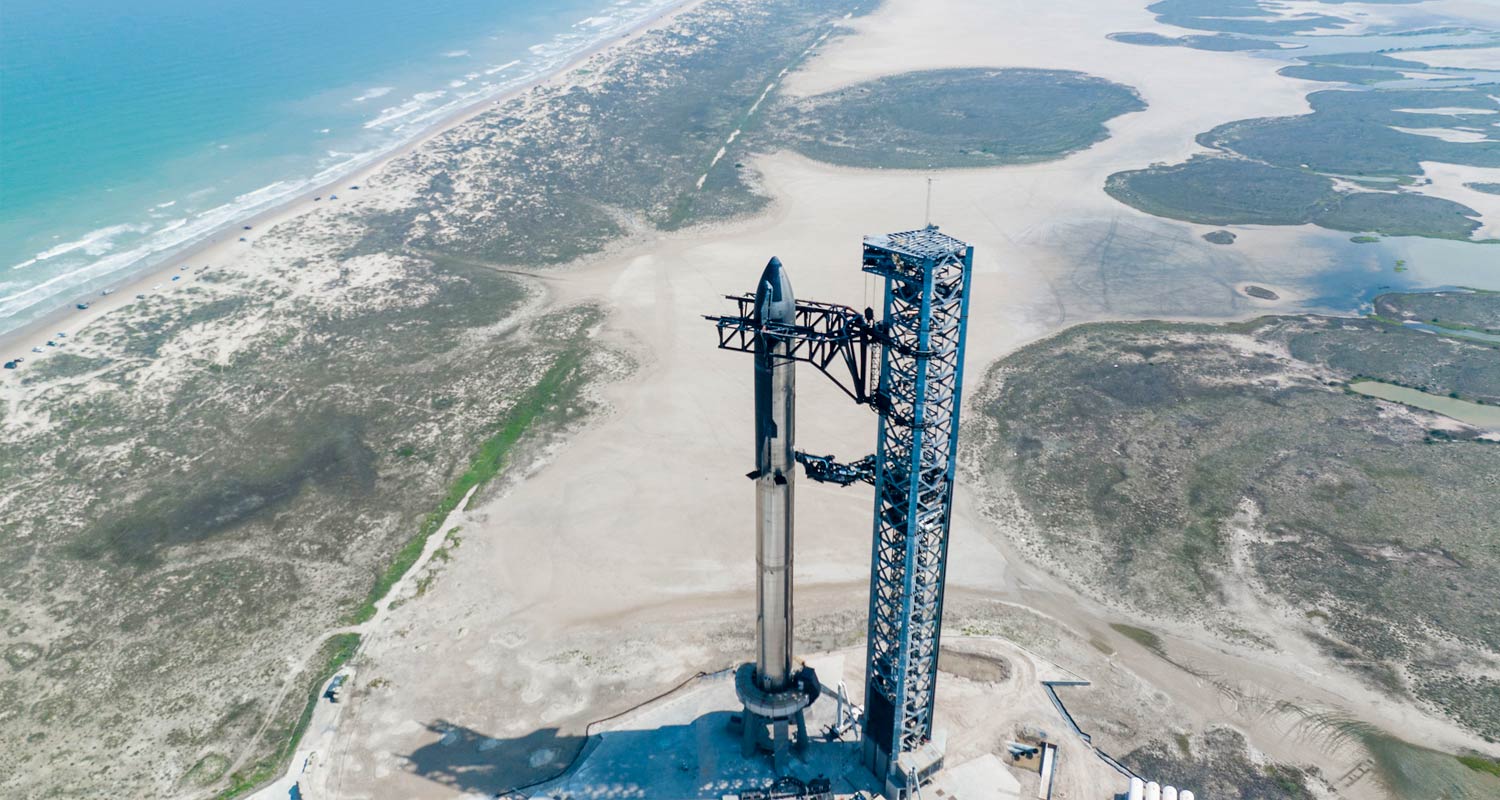
    On the launchpad

    SpaceX, likewise, is no longer just a rocket company. In February 2026, it executed the largest M&A deal on record: an all-stock acquisition of Elon Musk’s xAI valued at $250-billion, folding the X social platform and Grok AI models into the listed entity in service of Musk’s ambition to build orbital data centres. The result is a company betting the rocket farm on AI: a space, connectivity and AI conglomerate whose parts reinforce one another the way the VOC’s ships, ports and monopolies once did.

    The VOC is one of the few frontier enterprises with a share price record spanning two centuries – and its first lesson is patience. Shareholders waited more than seven years for a dividend, and the first, in 1610, was paid in mace – the spice, not money. Frontier infrastructure pays out slowly. There is no SpaceX moonbase yet, let alone Mars colonies.

    The second is that the frontier premium was real, but earned over decades. Economist and historian Lodewijk Petram, who reconstructed the price record from 17th-century merchants’ papers, calculates an average annual return of 8.69% between 1603 and 1697 – comfortably above the 4-6% paid on Dutch government bonds.

    Going boldly where no company has gone before carries immense potential reward – and immense risk

    The third is that the premium decays as the frontier matures. After 1650, returns settled at a bond-like 3.5-4% a year. As economic historians Jan de Vries and Ad van der Woude concluded: “The profits earned by the Company’s actual equity were modest after the 1650s, and vanishingly small after 1730.”

    The fourth is that price and reality can part ways entirely. The VOC’s share price hit its all-time high in 1720 – not because of anything happening in Batavia, but because a speculative frenzy had spread from London across the continent. By then the company’s underlying returns were already bond-like. (And the viral claim that the VOC was once worth $8-trillion in today’s money is, as Petram has shown, off by a factor of roughly 8 000. SpaceX, at over $2-trillion, is already far larger in real terms than the VOC ever was – the comparison is about the category of enterprise, not its size.)

    Where the analogy strains

    The last lesson is the bleakest: dominance is not a perpetuity. From 1730, the VOC paid dividends it had not earned, funding them by drawing down its capital. War with Britain finished the job, the state nationalised the wreck in 1795 and the charter lapsed on 31 December 1799.

    There are caveats. The VOC’s monopoly was granted by the state and enforced by cannon – its most profitable decades followed ruthless violence in the Banda Islands – while SpaceX’s dominance is commercial and contestable. Rivals are massing: Europe’s Iris2 constellation and Amazon Leo, which is heading for South Africa before Starlink is even licensed here. And as TechCentral has noted, the biggest IPO ever is also one of the riskiest, given its dependence on one man and on programmes whose economics remain unproven.

    None of this is a prediction about the share price. What the comparison establishes is the category of thing investors have just been offered: not a stake in a product company but a stake in the infrastructure of a frontier, with all the reach, entanglement and political gravity that implies. The VOC’s record suggests such an investment can beat the market for decades – and that the premium fades once the frontier is tamed, and that the price, at the moment of greatest euphoria, can be the least reliable guide to what lies beneath.
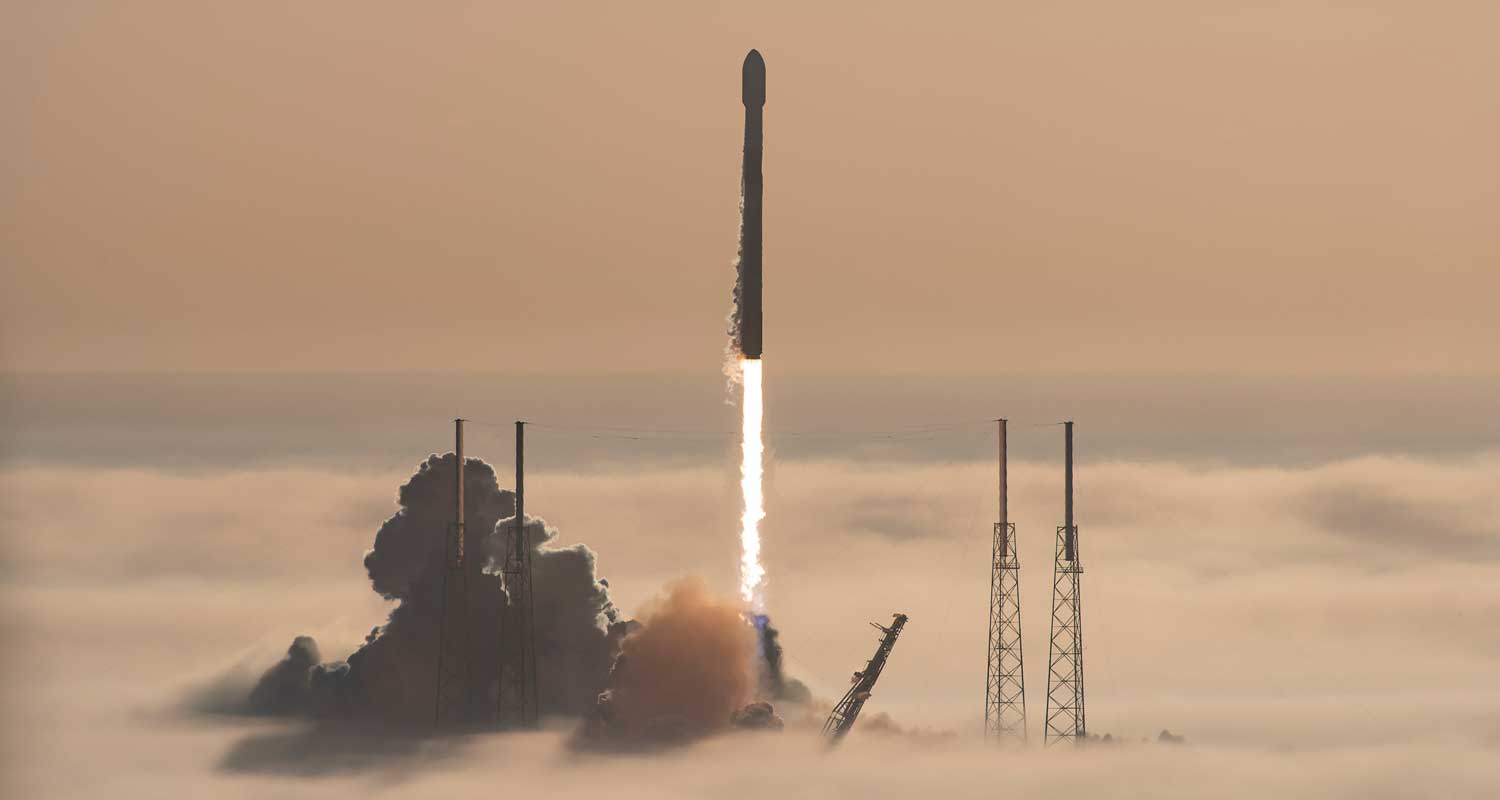
    Starlink plans to lower satellite orbit to enhance safety
    Starlink satellites being blasted into space aboard a SpaceX rocket in an undated file photo

    Space is the “final frontier”, after all: no one knows how it will play out. Going boldly where no company has gone before carries immense potential reward – and equally immense risk.  – © 2026 NewsCentral Media

    • In the spirit of transparency, the author holds a laughably small investment in SpaceX – largely for romantic reasons
    • The author, Fanie van Rooyen, is deputy editor of TechCentral
    • Subscribe to TechCentral’s daily newsletter
    • Get breaking news alerts on WhatsApp

    Follow TechCentral on Google News Add TechCentral as your preferred source on Google


    Amazon Boeing Dutch East India Company EasyEquities Elon Musk Nasa SpaceX Starlink xAI
    WhatsApp YouTube
    Share. Facebook Twitter LinkedIn WhatsApp Telegram Email Copy Link
    Previous ArticleThe internet has a Strait of Hormuz problem
    Next Article Amazon Leo all set for South African launch

    Related Posts

    How Amazon outmanoeuvred Starlink in South Africa

    How Amazon outmanoeuvred Starlink in South Africa

    15 July 2026
    Amazon Leo all set for South African launch - From left, Maziv CEO Dietlof Mare, communications minister Solly Malatsi, Herotel CEO Van Zyl Botha and Amazon's David Zapolsky

    Amazon Leo all set for South African launch

    15 July 2026
    Djima Antaley delivers a package for Afrety in Dakar, Senegal. Ricci Shryock/Reuters

    The middlemen powering Africa’s online shopping boom

    14 July 2026
    Company News
    Biometrics alone won't stop AI-powered fraud - Contactable

    Biometrics alone won’t stop AI-powered fraud

    15 July 2026
    How Paratus and Eutelsat are connecting Southern Africa's mines

    How Paratus and Eutelsat are connecting Southern Africa’s mines

    14 July 2026
    Rain supercharges 5G with Huawei

    Rain supercharges 5G with Huawei

    10 July 2026
    Opinion
    The author, Fanie van Rooyen

    South Africa can still catch the AI wave – here’s how

    7 July 2026
    The author, Fanie van Rooyen

    The AI utopia South Africa can’t afford

    1 July 2026
    The author, Jannie van Zyl

    South Africa’s broadband future is being decided in orbit, not in Pretoria

    30 June 2026

    Subscribe to Updates

    Get the best South African technology news and analysis delivered to your e-mail inbox every morning.

    Latest Posts
    How Amazon outmanoeuvred Starlink in South Africa

    How Amazon outmanoeuvred Starlink in South Africa

    15 July 2026
    Amazon Leo all set for South African launch - From left, Maziv CEO Dietlof Mare, communications minister Solly Malatsi, Herotel CEO Van Zyl Botha and Amazon's David Zapolsky

    Amazon Leo all set for South African launch

    15 July 2026
    SpaceX is the Dutch East India Company of the space age

    SpaceX is the Dutch East India Company of the space age

    15 July 2026
    The internet has a Strait of Hormuz problem

    The internet has a Strait of Hormuz problem

    15 July 2026
    © 2009 - 2026 NewsCentral Media
    Built and maintained by Chronon
    • Cookie policy (ZA)
    • TechCentral – privacy and Popia

    Type above and press Enter to search. Press Esc to cancel.

    Manage consent

    TechCentral uses cookies to enhance its offerings. Consenting to these technologies allows us to serve you better. Not consenting or withdrawing consent may adversely affect certain features and functions of the website.

    Functional Always active
    The technical storage or access is strictly necessary for the legitimate purpose of enabling the use of a specific service explicitly requested by the subscriber or user, or for the sole purpose of carrying out the transmission of a communication over an electronic communications network.
    Preferences
    The technical storage or access is necessary for the legitimate purpose of storing preferences that are not requested by the subscriber or user.
    Statistics
    The technical storage or access that is used exclusively for statistical purposes. The technical storage or access that is used exclusively for anonymous statistical purposes. Without a subpoena, voluntary compliance on the part of your Internet Service Provider, or additional records from a third party, information stored or retrieved for this purpose alone cannot usually be used to identify you.
    Marketing
    The technical storage or access is required to create user profiles to send advertising, or to track the user on a website or across several websites for similar marketing purposes.
    • Manage options
    • Manage services
    • Manage {vendor_count} vendors
    • Read more about these purposes
    View preferences
    • {title}
    • {title}
    • {title}